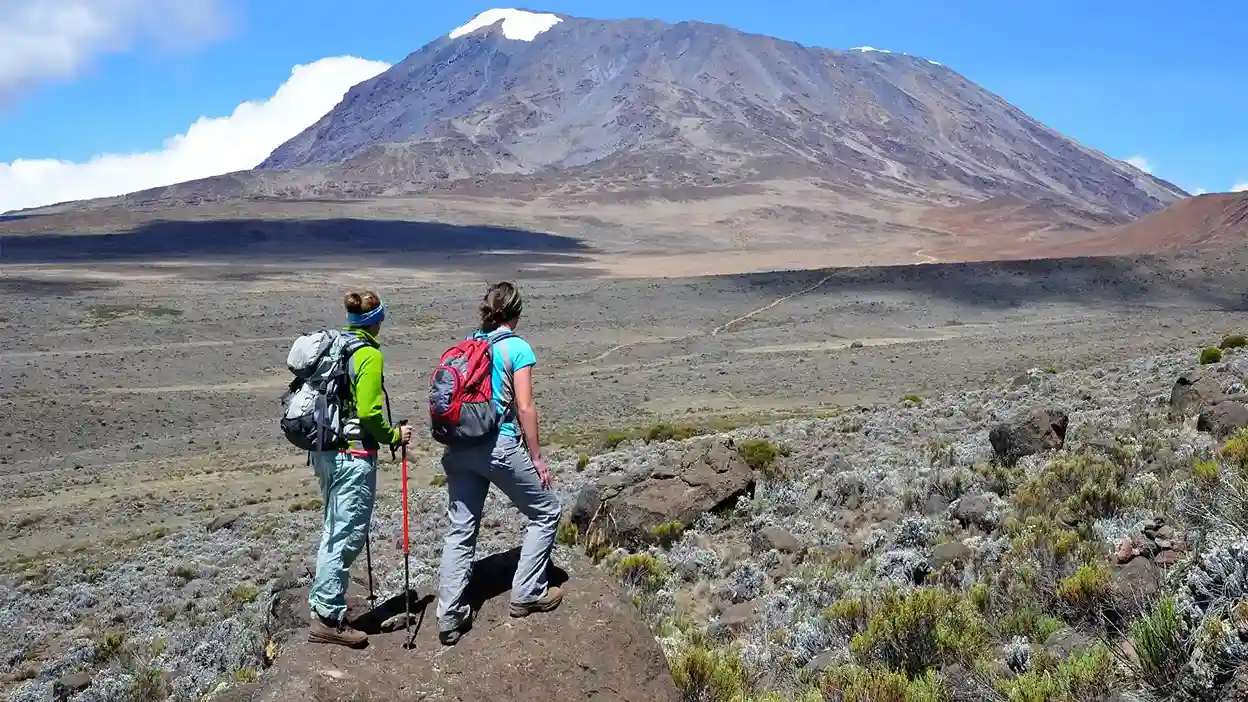
Machame Route
The classic: varied scenery and a scramble up the Barranco Wall.
From $1,845
View route
Private climbs on five routes, run by a licensed team from our office in Moshi at the foot of the mountain.
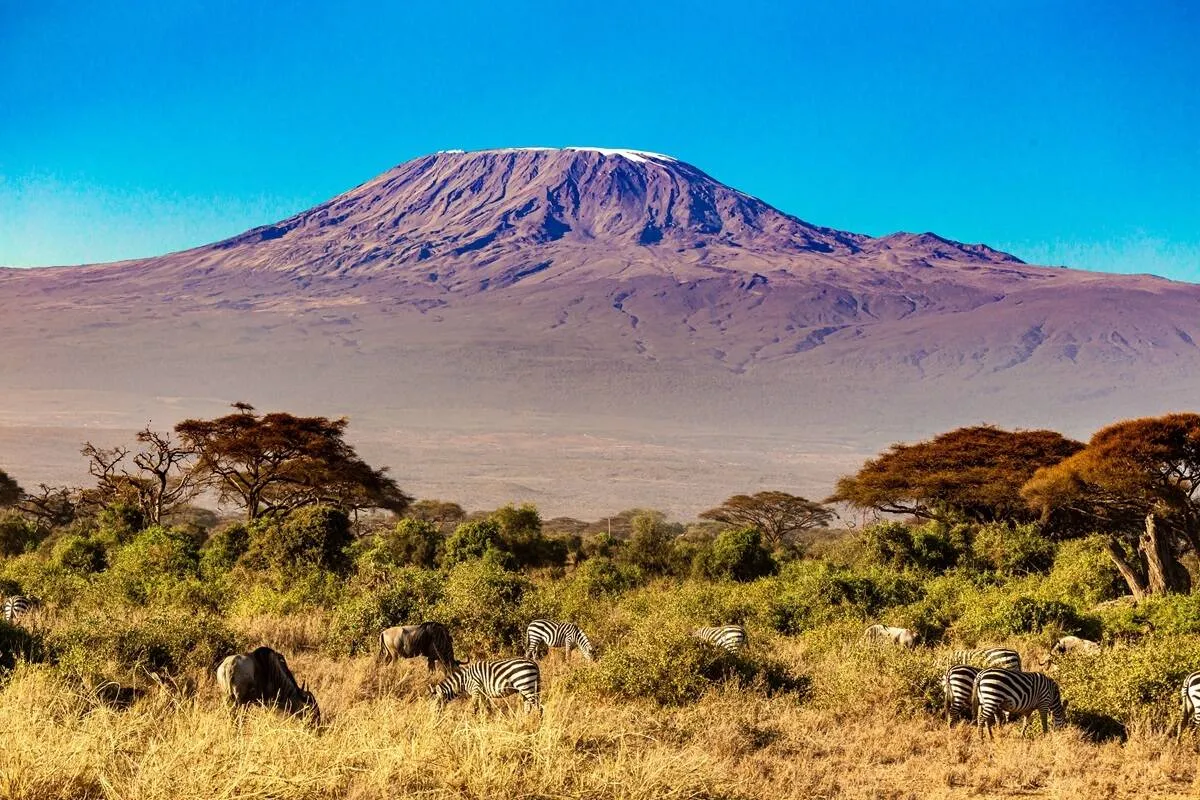
Climbing Mount Kilimanjaro is one of the few great mountain journeys open to people with no climbing experience. There are no ropes and no ice axes, and every year people of all ages walk to the roof of Africa at 5,895 meters (19,341 feet). But plenty of fit people also turn back, usually for the same reason: they tried to go up too quickly. The choices you make before you book matter more than most first-time climbers realize.
Our team runs private Kilimanjaro climbs from an office on Mawenzi Road in Moshi, the town at the foot of the mountain. Our climbs start from $1,600 per person and include park fees, airport transfers, two nights in a mid-range hotel and your own crew of one guide, five porters and one cook. This guide covers what you need to decide: which route to take, how many days to allow, what it costs, when to go and how to prepare.
To climb Kilimanjaro, you book a licensed operator, choose one of the established routes and spend between 5 and 9 days on the mountain with a guide and support crew. Independent climbing is not allowed. For a first climb, we recommend at least 7 days, because time is the single thing that most improves your chance of feeling well at the top.
If you only want one recommendation, it is the 8-day Lemosho Route, which offers the best balance of pacing, scenery and quiet trails. If you want the classic climb for a lower price, take the 7-day Machame Route.
Five routes make up almost all of what we run, and every one reaches the same summit. They differ in how long you have to adjust, where you sleep and how many people you share the path with. The table below gives the quick view, and our full route comparison goes through the decision step by step.
| Route | Days | Start | Sleep in | Crowds | Best for |
|---|---|---|---|---|---|
| Machame | 6 or 7 | South | Tents | Busy | Scenery and value |
| Lemosho | 7 or 8 | West | Tents | Quiet at first | First-timers with time |
| Marangu | 5 or 6 | South-east | Huts | Busy | People who prefer huts |
| Rongai | 6 or 7 | North | Tents | Quiet | Wetter months, no scrambling |
| Northern Circuit | 9 | West, then north | Tents | Very quiet | Most time to adapt |
The classic: varied scenery and a scramble up the Barranco Wall.
From $1,845
View route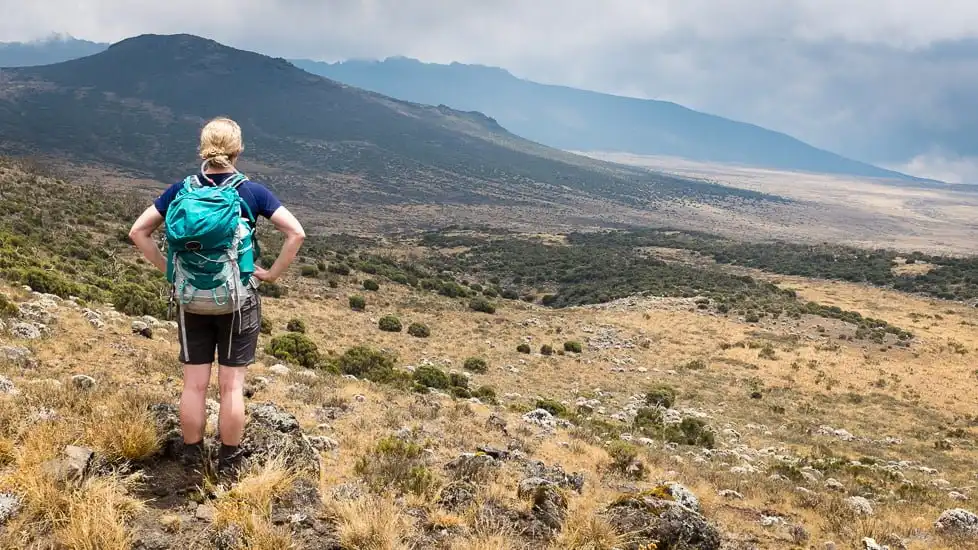
A quiet western start, fine views and our top pick for first-timers.
From $2,090
View route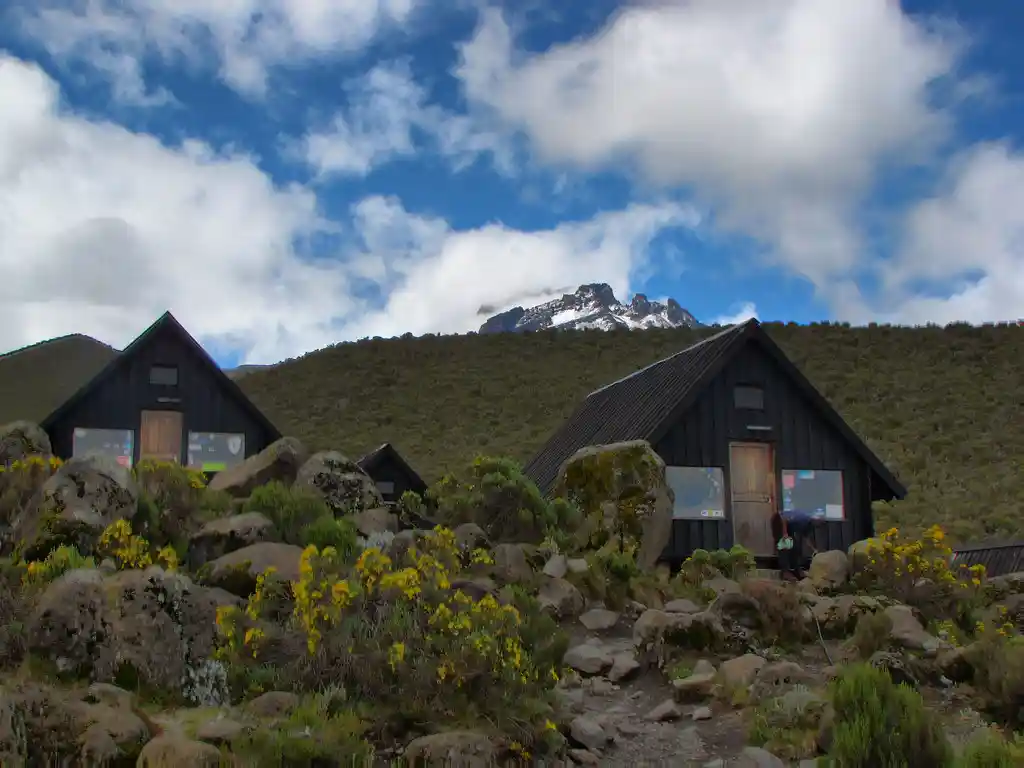
The only route with a bed in a hut each night, up and down one path.
From $1,600
View route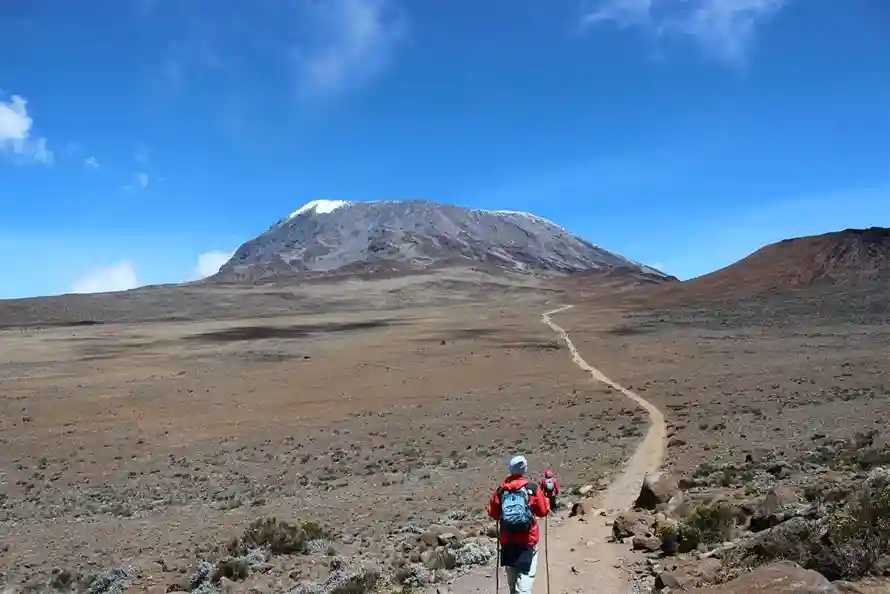
The quiet, drier northern approach, with steady walking and no scrambling.
From $1,845
View route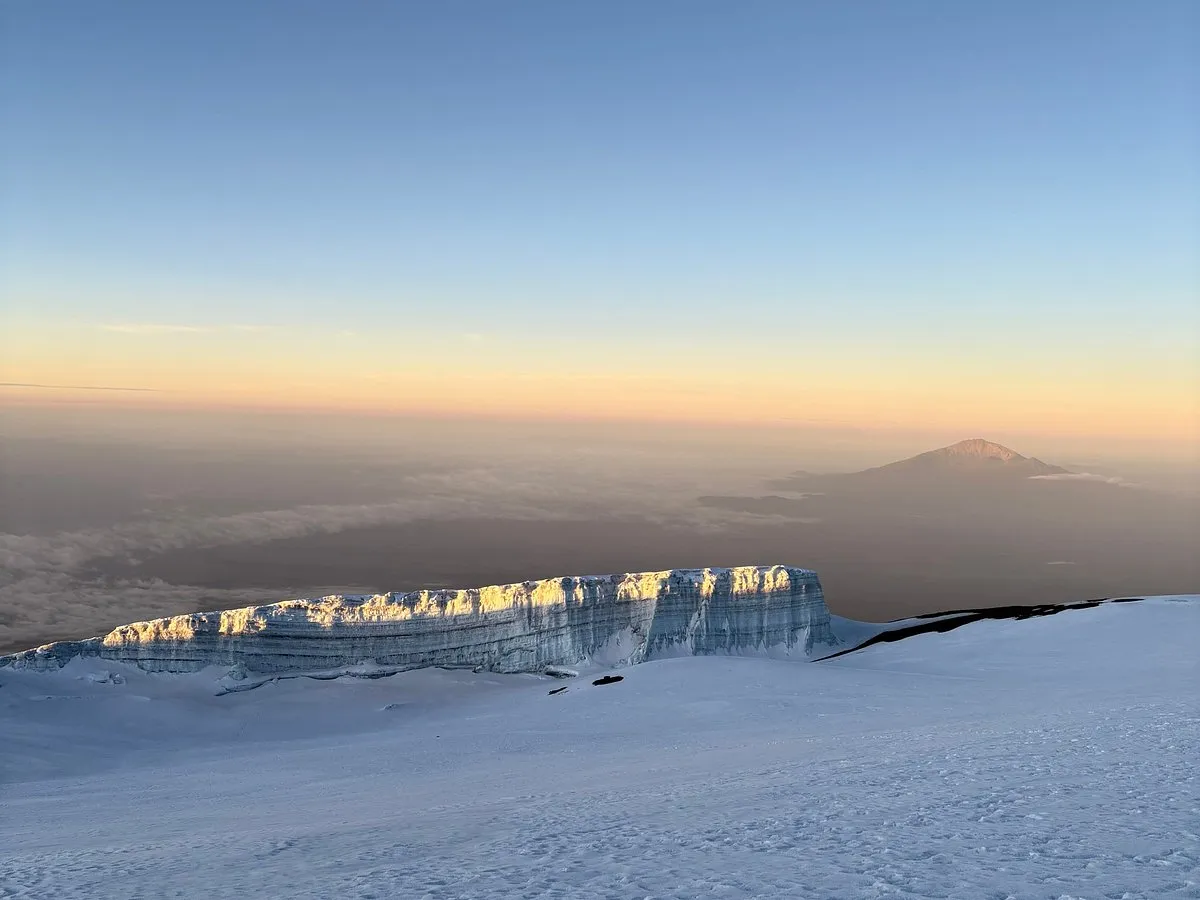
The longest route, with the most time to adapt and very few people.
From $2,580
View routeMost climbers ask which route is easiest, but days on the mountain are a better question. Your body adapts to altitude slowly, and no amount of gym time speeds it up. A longer climb gives it time, keeps your daily walking shorter and leaves you stronger for summit night.
Operators publish very different summit figures and none are independently audited, so treat any single number with caution. Commonly quoted ranges run from about 27 to 42 percent on 5-day climbs, and from about 64 to 92 percent on 7-day climbs, with 8 and 9-day climbs reported higher still. The exact figures matter less than the pattern: more days means better odds.
Each extra day adds about $245 per person. Compared with the cost of flying to Tanzania and then not reaching the top, it is usually the best money you will spend on this trip.
Kilimanjaro is a long, high walk rather than a technical climb, and that makes it easy to underestimate. Expect 4 to 8 hours of walking on most days, often on rocky paths, with a daypack on your back. Summit night is the real test: 11 to 15 hours on your feet, mostly in the dark, in temperatures that can reach about -20°C (-4°F) with wind.
Mild headaches, nausea and poor sleep are common above 3,000 meters (10,000 feet). Serious altitude sickness is less common but dangerous, and it needs an immediate descent. Young, very fit climbers can be hit as hard as anyone, often because they walk too fast. Read our guide to altitude sickness on Kilimanjaro before you decide on a route.
You should be comfortable walking on hills for 6 to 8 hours, two days in a row. Regular walkers and runners who train for about 12 weeks do well, and our Kilimanjaro training plan shows you how. Your age and speed matter less than patience. If you have a heart or lung condition, or are unsure about your health, talk to your doctor first.
Climbing Kilimanjaro has a simple rhythm, and most people come to enjoy it. You wake to a hot drink at your tent, eat breakfast and set off walking by about 8 a.m. with your guide. Your porters pack up camp, pass you on the path and have the next camp ready by the time you arrive. You carry only a daypack with water, snacks, rain gear and spare layers.
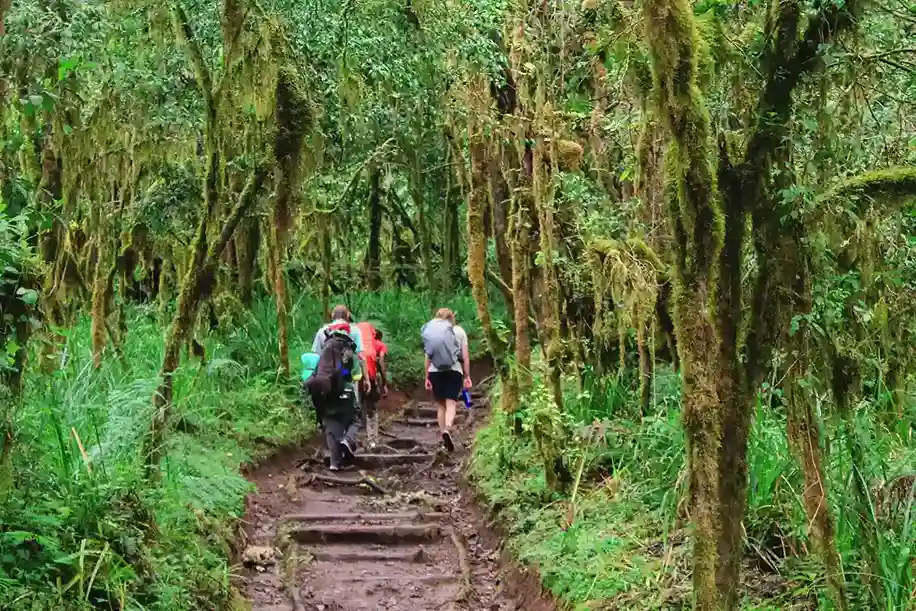
The landscape changes faster than on almost any other mountain. You start in farmland and rainforest, climb through heather and open moorland, cross a bare alpine desert and finish among ice and rock near the summit. Colobus monkeys in the forest and giant groundsels on the moorland are highlights that many people do not expect.
You start around midnight and follow a line of headlamps up long zigzags of scree. It is slow, cold and mentally tough. Most climbers reach the crater rim around sunrise, and Uhuru Peak follows soon after. Then the long walk down begins, and you sleep at a much lower camp that same day.
| When | What happens |
|---|---|
| Arrival | We meet you at Kilimanjaro International Airport and take you to your mid-range hotel in Moshi. Your guide holds a briefing and checks your gear, and you can rent what you are missing. |
| Lower days | You walk through forest and moorland. Porters carry the loads and set up camp. |
| Daily routine | Wake-up with a hot drink, breakfast, a morning walk, lunch, more walking, then afternoon rest and dinner. |
| Summit night | You set off around midnight and reach the crater rim around sunrise. |
| Last day | A final walk down to the gate, your certificate, and the drive back to your hotel. |
There are hundreds of operators on this mountain, so here is what you actually get with us.
Our office is on the 3rd floor of the WMA building on Mawenzi Road in Moshi, so you can meet us before and after your climb. We hold TALA Licence No. 545789 and are registered with BRELA under No. 715317. We are a new company with an experienced team, and we are happy to explain exactly how we work.
Our guides have worked on Tanzania tours for 7 years. They are graduates of the College of African Wildlife Management, Mweka, and the National College of Tourism, and they hold certification from those institutions.
Every climber on our Kilimanjaro climbs has one guide, five porters and one cook. A group of two therefore has two guides, ten porters and two cooks. That ratio is higher than many operators offer, and it means that if one climber needs to slow down or turn back, the other can continue with their own guide.
We carry pulse oximeters to track your blood-oxygen levels each day, emergency oxygen cylinders for emergency descents and severe altitude illness, and a Gamow bag, a portable pressure chamber used to treat advanced altitude sickness.
We are also a partner of the Kilimanjaro Porters Assistance Project (KPAP), which works for the fair treatment of mountain crews. When you compare quotes, ask each company the same question: how many crew will I have, and who do you partner with?
You choose when you climb. We run private climbs and have no joining dates of our own. If you would like company, we can ask trusted partner companies whether one of their departures matches your dates, at the same price with nothing added. There is no maximum group size.
Our climbs start from $1,600 per person, and the price rises by about $245 for each extra day on the mountain. Prices are for two people sharing and include two hotel nights in Moshi.
| Climb length | Routes | Starting price per person |
|---|---|---|
| 5 days | Marangu | $1,600 |
| 6 days | Machame, Marangu, Rongai | $1,845 |
| 7 days | Machame, Lemosho, Rongai | $2,090 |
| 8 days | Lemosho | $2,335 |
| 9 days | Northern Circuit | $2,580 |
Budget separately for flights, your visa, insurance, gear rental and tips. Our Kilimanjaro cost guide breaks down the full budget and explains why very cheap climbs should worry you.
The best months are in the two dry seasons, January to mid-March and June to October. You get clearer skies and drier paths, and July to September is the busiest period. The long rains from mid-March to May make the climb harder, and the short rains in November bring more cloud. See our month-by-month guide to pick your dates.
Start about 12 weeks before you fly, with long hikes on back-to-back days.
You need warm layers, broken-in boots and a good sleeping bag. Our Kilimanjaro packing list covers everything, and you can rent some items in Moshi.
We carry pulse oximeters to track your blood-oxygen levels each day, emergency oxygen cylinders for emergency descents and severe altitude illness, and a Gamow bag, a portable pressure chamber used to treat advanced altitude sickness. Helicopter evacuation is available through providers including Kili MedAir and Proflight Helicopters, with fees starting from $3,500 per person. It is not part of the climb price, so check that your travel insurance covers trekking to 6,000 meters (19,685 feet) and evacuation before you buy it. See a travel clinic six to eight weeks before you leave to talk about vaccinations, malaria tablets for the lower areas and altitude medication.
Many climbers follow the mountain with a northern circuit safari. Moshi is a good base, and we can put it all in one quote.
Between 5 and 9 days on the mountain, depending on the route. We recommend at least 7 days for first-time climbers, because more time means better acclimatization.
No. All five routes are walks that need no ropes or technical skill. The Barranco Wall on the Machame and Lemosho routes needs some use of your hands, but no equipment.
No route is easy, because the altitude is the same. For gentle walking, Rongai and Marangu have the fewest steep sections. For the best chance to adapt, choose a longer climb such as the 8-day Lemosho or 9-day Northern Circuit.
No. Park rules require climbers to go with a licensed guide and a registered operator.
Yes. Your policy must cover trekking to 6,000 meters and evacuation. Helicopter evacuation starts from $3,500 per person and is not in the climb price.
Common guidance is about $20 to $30 a day for a guide, $12 to $20 for a cook and $5 to $10 for each porter. With our crew of seven, that is about $57 to $100 per climber per day.
Uhuru Peak, the summit, stands at 5,895 meters (19,341 feet). It is the highest point in Africa.
Do not let the shortest or cheapest climb make this decision for you. Decide how many days you can give the mountain, then choose the route that suits you and find a team you trust. If you have the time, we would point you to the 8-day Lemosho. Send us your dates and we will give you an honest recommendation.
Tell us your preferred route, dates and group size, and we will send a full quote from our office in Moshi.