Why is the Northern Circuit the longest route on Kilimanjaro?
It circles the northern side of Kibo instead of heading straight for the southern path. That adds distance and nights, which gives your body more time to adapt.

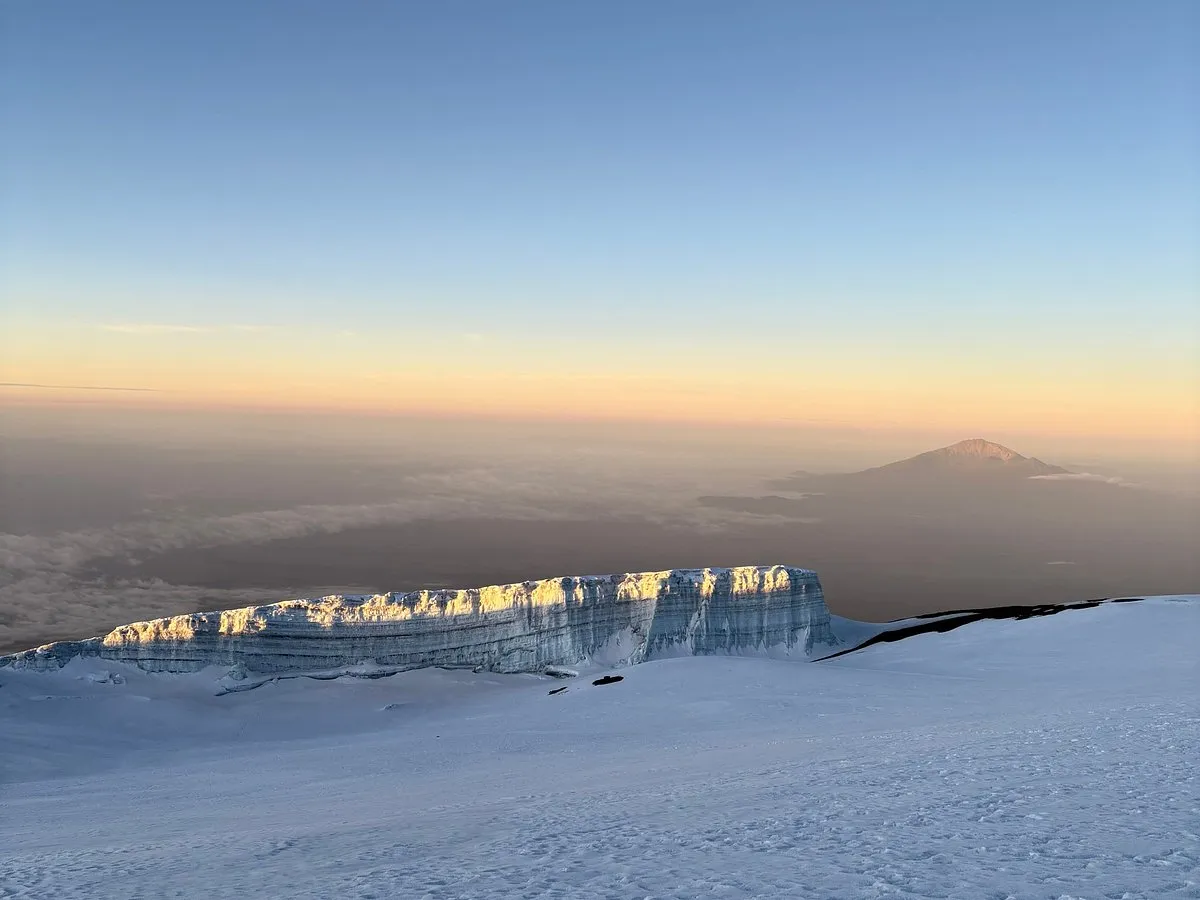
The 9-day Northern Circuit is the longest route on Kilimanjaro, and it gives you more time to adapt to altitude than any other climb we offer. It starts on the western side like Lemosho, then circles around the quiet northern slopes that few climbers see, and it goes for the summit from School Hut. Prices start from $2,580 per person.
If reaching the top is what matters most, or if you would simply rather have the mountain to yourself, this is the climb to choose. It takes more time and costs more than other routes, but those extra days are the reason people pick it.
| Route | Lemosho start, northern traverse, Mweka down |
|---|---|
| Days on the mountain | 9 days, 8 nights in tents |
| Total distance | About 90 km (56 mi) |
| Start and finish | Londorossi Gate (western side), Mweka Gate (1,650 m / 5,410 ft) |
| Summit | Uhuru Peak, 5,895 m (19,341 ft) |
| Difficulty | Hard, but the most gradual |
| Best seasons | January to mid-March, June to October |
| Price | From $2,580 per person, two sharing |
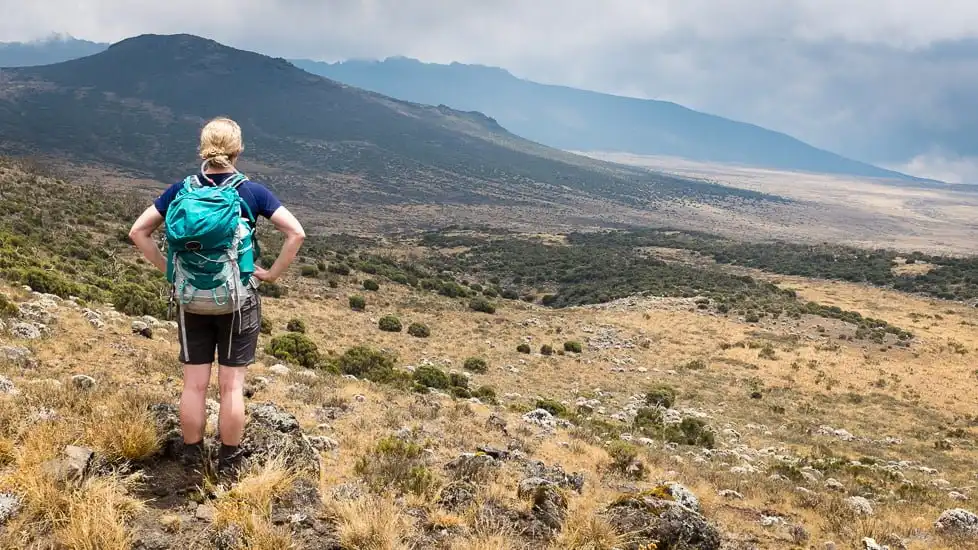
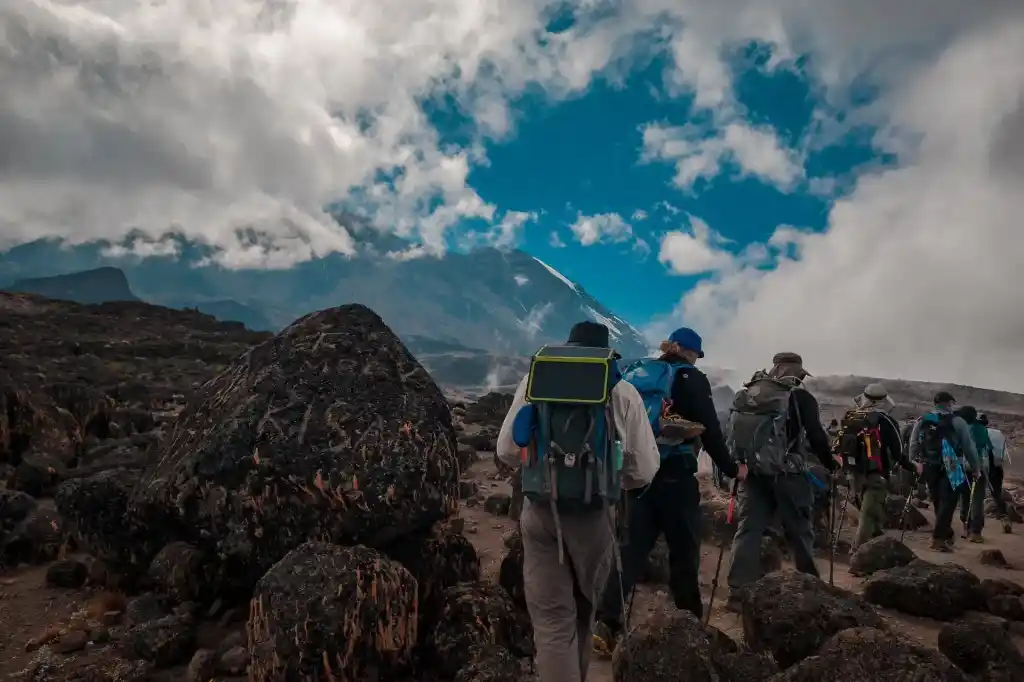
Two things: time and space. You spend longer at moderate altitude before the summit attempt, with several days of going up and down across the north side. That helps your body more than any amount of training can. You also spend most of the climb away from the busier southern camps.
Operators publish very different summit figures and none are independently audited, so treat any single number with caution. Commonly quoted ranges run from about 27 to 42 percent on 5-day climbs, and from about 64 to 92 percent on 7-day climbs, with 8 and 9-day climbs reported higher still. The exact figures matter less than the pattern: more days means better odds.
Choose it if reaching the summit matters most, if you have struggled at altitude before, or if you want the mountain with few other people on it. You pay for two extra days compared with the 7-day Lemosho and spend more nights in a tent, but the days themselves are usually shorter and easier. If nine days is too long, the 8-day Lemosho is a very good alternative.
Here is how the 9-day Northern Circuit climb runs from gate to gate. Distances and walking times are typical figures, and your guide will set a pace that is slower than you expect. You also spend one night in a Moshi hotel before the climb and one after it.
The drive from Moshi to Londorossi Gate on the western side of the mountain takes about three hours and includes park registration, so this is a late start. A short walk through quiet, rich forest follows, with far fewer climbers than on the southern routes. Colobus monkeys are the most likely sighting. Elephant and buffalo live in this forest too, although you are unlikely to see them. Mti Mkubwa means "big tree", and the camp sits among huge old trees.
You leave the forest behind and climb through heath and moorland to the rim of the Shira Plateau, one of the highest plateaus in the world and the remains of a collapsed volcano. When you come over the top, Kibo fills the view for the first time, and most climbers stop for a long moment here. Shira 1 feels remote and quiet, and the night sky can be spectacular if it stays clear.
A gentle crossing of the plateau with only a modest gain in height. This easy day is what the extra night on the 8-day route buys you, because your body gets a chance to catch up before you go any higher. You arrive at Shira 2 by early afternoon, where the path joins the one used by Machame climbers. Many guides take a short walk higher in the afternoon to help you acclimatize.
You climb to Lava Tower (4,600 m / 15,090 ft) for lunch, then turn north to Moir Hut in a quiet valley below the Lent Group. This is where you leave the path used by the southern routes. Most climbers stop seeing other groups from this point on, and the sense of space grows every day.
You begin the crossing of the northern slopes, which few climbers ever see. The path rises and falls over ridges, with wide views across the plains toward Kenya. Going up and down like this is hard on the legs, but it is excellent for acclimatization, and you will likely have the path almost to yourself.
Another day on the remote north side, and a good example of climbing high and sleeping lower. By now most climbers feel well adjusted to the altitude, and meals and sleep often improve. Your guide will talk through summit night during these quieter days.
A steady climb across the Saddle brings you to the high camp. You arrive with time to eat, prepare your layers and rest before the midnight start. Because you have spent so long at altitude, this climb usually feels easier than it would on a shorter route.
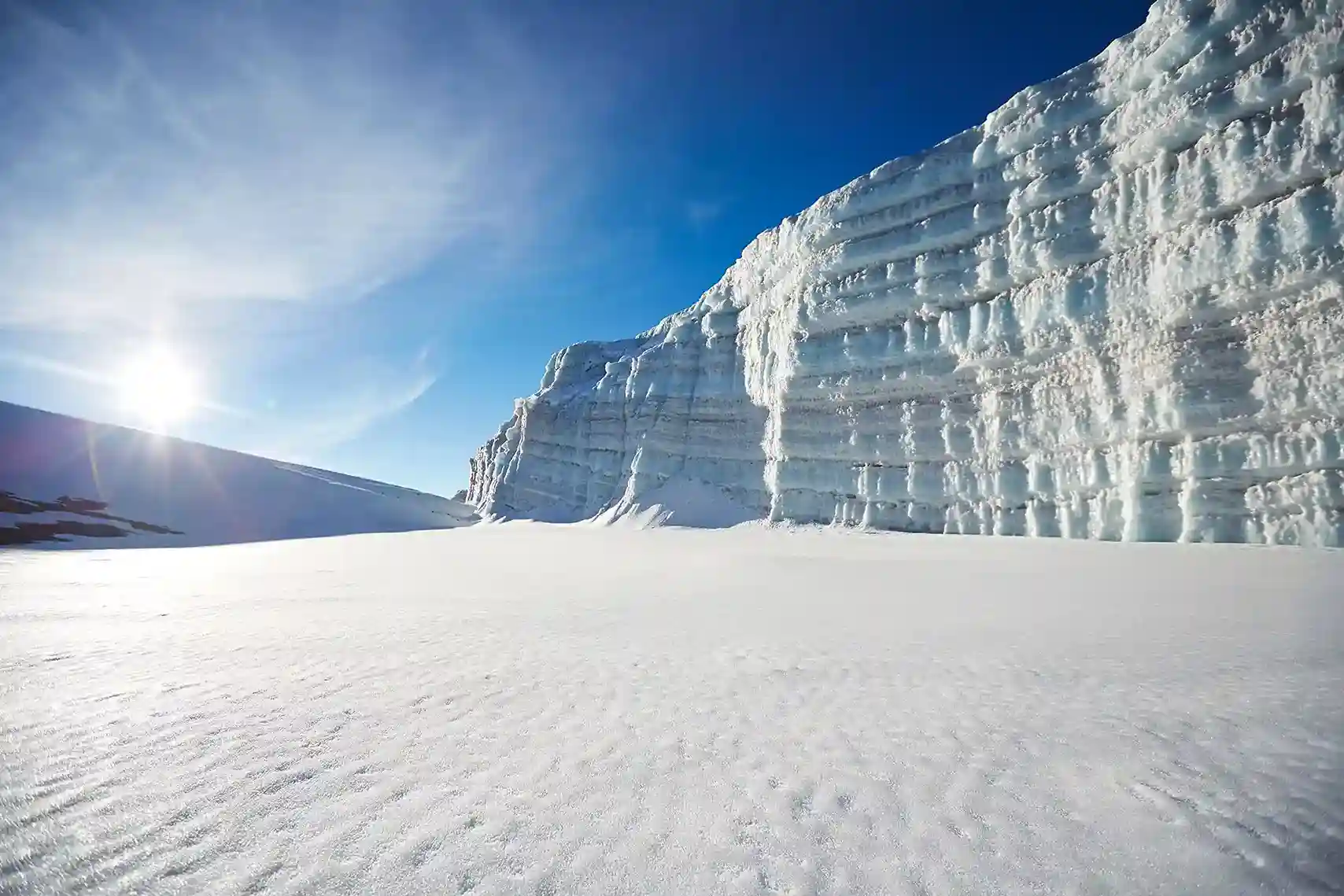
You climb to Gilman's Point (5,685 m / 18,652 ft) around dawn and walk the crater rim past Stella Point to Uhuru Peak (5,895 m / 19,341 ft), with the glaciers beside you. Then you descend the southern side through Barafu to Mweka Camp, completing the circle of the mountain. It is a very long day, even after this much preparation, and it is the one you will remember.
The final morning is a walk through rainforest on tired legs, and the thick air feels wonderful. The path can be slippery after rain, so stay careful even though the hard part is over. At the gate you sign out and receive your certificate: Uhuru Peak earns a gold summit certificate, and Stella Point earns a green one. Then we drive you back to your hotel in Moshi for a long shower and your second included night.
The Northern Circuit is the longest route on Kilimanjaro, but it is also the most gradual. Most walking days are moderate, and the ups and downs across the north side help you adapt. There is no Barranco Wall. Your main challenges are the number of nights in a tent and the same long summit night as every other route, with about 1,150 meters (3,800 feet) of climbing in the dark from School Hut.
Nine days makes the daily walking manageable, but it is a long time away from a bed and a shower. Bring comfortable camp clothes, and something to read in the afternoons.
Summit night on the Northern Circuit starts from School Hut around midnight and climbs to Gilman's Point on the crater rim, usually around dawn. From there, you walk the rim past Stella Point to Uhuru Peak, with the glaciers beside you. After eight days of gradual acclimatization, many climbers feel stronger here than on shorter routes. It is still cold and hard, so do not let the long build-up make you complacent about your layers.
The 9-day Northern Circuit climb starts from $2,580 per person with two people sharing. Prices differ slightly by group size because of how hotel rooms are shared in Moshi, not because of your crew, who are arranged per climber. For more than six climbers, or a different hotel level, ask us for a quote. Your final price is confirmed in your written quotation.
| Group size | Price per person |
|---|---|
| 1 climber | $2,620 |
| 2 climbers | $2,580 |
| 3 climbers | $2,615 |
| 4 climbers | $2,580 |
| 5 climbers | $2,600 |
| 6 climbers | $2,580 |
Budget separately for flights, your visa, insurance and tips. Our Kilimanjaro cost guide shows what to expect in total, so nothing catches you out.
Every climber on our Kilimanjaro climbs has one guide, five porters and one cook. A group of two therefore has two guides, ten porters and two cooks. That ratio is higher than many operators offer, and it means that if one climber needs to slow down or turn back, the other can continue with their own guide.
Our guides have worked on Tanzania tours for 7 years. They are graduates of the College of African Wildlife Management, Mweka, and the National College of Tourism, and they hold certification from those institutions. We are also a partner of the Kilimanjaro Porters Assistance Project (KPAP), which works for the fair treatment of mountain crews.
Mild headaches and poor sleep are normal above 3,000 meters (10,000 feet). Severe symptoms are an emergency, and the treatment is to go down. Be honest with your guide about how you feel each day, and read our guide to altitude sickness on Kilimanjaro before you travel. We carry pulse oximeters to track your blood-oxygen levels each day, emergency oxygen cylinders for emergency descents and severe altitude illness, and a Gamow bag, a portable pressure chamber used to treat advanced altitude sickness. Helicopter evacuation is available through providers including Kili MedAir and Proflight Helicopters, with fees starting from $3,500 per person. It is not part of the climb price, so check that your travel insurance covers trekking to 6,000 meters (19,685 feet) and evacuation before you buy it.
Tips are paid at the end of the climb and are not in the price. Common guidance is about $20 to $30 a day for a guide, $12 to $20 for a cook and $5 to $10 for each porter. With our crew of seven, that works out at about $510 to $900 per climber on this 9-day climb. We go through how to do this fairly at your briefing.
The driest months are January to mid-March and June to October. Because it spends so long on the quieter northern side, this route feels uncrowded even in July, August and September, which makes it one of the best choices if you need to climb in peak season. The forest at the start can be very muddy in the long rains. Our month-by-month guide goes into more detail.
The climb begins at Londorossi Gate on the western side, about three hours by road from Moshi including registration. We collect you from your hotel in the morning, so you reach the trailhead around midday. You finish at Mweka Gate, about an hour from Moshi, and we drive you back to your hotel. Fly into Kilimanjaro International Airport (JRO), about an hour from Moshi, and we meet you there.
Start training at least 12 weeks before you travel, with long hikes on back-to-back days. Our Kilimanjaro training plan shows you how, and our packing list covers what to bring and what you can rent in Moshi. Two nights in a mid-range Moshi hotel are included by default, one before and one after the climb. If you would prefer a different standard, tell us and we will adjust your quote.
Your legs will need a day or two, and then many climbers add a northern circuit safari. We can build this into one quote.
It circles the northern side of Kibo instead of heading straight for the southern path. That adds distance and nights, which gives your body more time to adapt.
If you have the time, it is the most gradual route on the mountain and by far the quietest. If you are short of days, the 8-day Lemosho is a very good alternative.
Common guidance works out at about $510 to $900 per climber with our crew of seven. We explain how it works at your briefing.
No. You turn north after Lava Tower, so you miss the Wall and the Barranco Valley. If you want both, choose Lemosho instead.
We run private climbs and have no joining dates of our own. If you would like company, we can ask trusted partner companies whether one of their departures matches your dates, at the same price with nothing added.
Tell us your dates and how many are climbing, and we will send a full quote from our office on Mawenzi Road in Moshi.
Price per personFrom $2,580 USD
Request a quote