What is the best month for a safari in Tanzania?
It depends on what you want, but September is hard to beat for dry weather, good viewing and possible Mara crossings.

Choosing when to go is the first real decision in planning a Tanzania safari, and it shapes everything else. The month decides where the migration is, how thick the grass is, how easy the roads are and how many other vehicles you will see. Choose well, and every other part of the planning gets easier.
The short answer: June to October is the most reliable time for wildlife, and January to March is the time for calving. But every month has something to offer. This guide takes you through the year, so you can decide what matters most to you.
This is the classic safari season. The grass is short, animals gather around water and skies are clear. It is also the busiest and most expensive time, especially from July to September.
Brief rains bring green grass and newborn animals. There are fewer vehicles, and the weather is often pleasant.
Warm and fairly dry, with hundreds of thousands of wildebeest calves born on the southern plains, followed by predators.
The wettest time of year. Some roads get difficult and some camps close, but the land is lush, and prices can be lower.
| Month | Weather | Wildlife highlights | Crowds |
|---|---|---|---|
| January | Warm, some showers | Calving begins in the south | Moderate |
| February | Warm and fairly dry | Peak calving and predator action | Moderate |
| March | Warm, rains begin late | Herds on the southern plains | Low |
| April | Very wet | Green landscapes, many birds | Very low |
| May | Wet, easing late | Herds move north and west | Low |
| June | Dry and cool | Grumeti crossings possible | Moderate |
| July | Dry and cool | Herds move north | High |
| August | Dry, cool mornings | Mara River crossings possible | Highest |
| September | Dry and warmer | Mara crossings, great Tarangire viewing | High |
| October | Dry, clouds building | Herds begin to move south | Moderate |
| November | Short rains | Newborns, returning herds | Low |
| December | Warm, some showers | Herds moving south | Busy at the holidays |
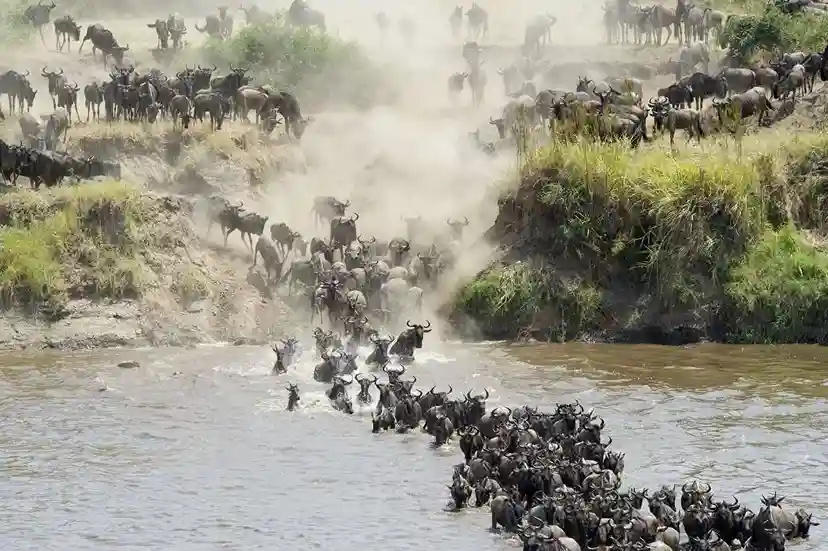
Over a million wildebeest, along with zebra and gazelle, follow the rains around the Serengeti in a loop that never really ends. Calving takes place on the southern plains from around January to March, with a peak in February. The herds move north and west through April and May, and they usually reach the Grumeti River in June and July. Mara River crossings in the north usually run from around July to October.
Treat these as patterns rather than dates. Crossings depend on rain and on the herds themselves, and nobody can promise one. If the migration is your main goal, tell us your dates, and we will plan the route to give you the best chance. See our Serengeti safari guide.
| Park | Best time | Why |
|---|---|---|
| Serengeti | All year, depending on the area | Calving in the south, crossings in the north |
| Ngorongoro Crater | All year | Animals are resident |
| Tarangire | June to October | Elephants gather along the river |
| Lake Manyara | June to October for animals, November to June for birds | Dry roads and easier viewing in the dry months |
Many camps and lodges charge more from June to October, and around the holidays. Lodging is often cheaper in the green season, particularly in April and May. Flights can also vary by season. Our safari cost guide shows the bigger picture, and we will confirm your actual price in writing for your dates.
Choose June to September, for reliable viewing and dry roads.
Choose August or September, and plan for the northern Serengeti. See our 9-day safari.
Choose February, and head for the southern plains.
Choose November, early December, or early June.
The green season offers dramatic skies and lush scenery, and the dry season offers clear, close sightings.
Consider the green season, but check which camps are open, and accept that some roads may be hard going.
The northern parks are at moderate altitude, so days are often warm and pleasant, while nights and early mornings can be cool. In open vehicles at dawn, it can feel cold, especially in June and July. The Ngorongoro rim is noticeably colder than the plains, so pack warm layers. See our safari packing list.
Both seasons work well for a climb too. See our guide to the best time to climb Kilimanjaro. Zanzibar is pleasant from June to October and in January and February, and the long rains affect the coast as well.
Many experienced safari travelers love the green season, which runs roughly from November to May. Rain tends to come as short afternoon storms, except in April and May, and it leaves behind clean air, dramatic skies and bright green landscapes. Baby animals are everywhere, and migratory birds arrive. You will also share sightings with far fewer vehicles.
The downsides are real. Wildlife spreads out over a larger area, longer grass makes cats harder to see, and some roads and camps close in the heaviest rains. If this is your first and only safari, choose the dry season. If you are flexible and enjoy photography, the green season can be wonderful.
July to September is the busiest time, especially in the central Serengeti and Ngorongoro Crater. To avoid the crowds, consider traveling in early June or in October. Choose quieter areas, such as the south of Tarangire. Leave early for the crater, as vehicles build up by mid-morning, and ask your guide to take a quieter track.
Families often need to travel in school holidays, and June to August works well, with dry weather and lower malaria risk than in the rains. Honeymooners may prefer January and February, when the Serengeti is full of calves and Zanzibar is warm and dry. See our guides to family safaris and honeymoon safaris.
For July to September, try to book six to twelve months ahead, particularly if you want a small camp near the Mara River. For other months, three to six months is often enough. Booking early also gives you time to plan your flights, your visa and your clinic visit. Our private safaris are flexible, but camps can fill up, so tell us your dates as soon as you can.
You can see them all year, though they are easier to spot in the dry months, when the grass is short.
They are often easiest to find on the short-grass plains from about December to March.
Tarangire is at its best from about June to October, when herds gather at the river.
Ngorongoro Crater is good at any time of year.
They come and go with water levels at Lake Manyara and in the crater.
February is the peak of wildebeest calving, and many other species give birth during the rains.
It depends on what you want, but September is hard to beat for dry weather, good viewing and possible Mara crossings.
April and May are the most difficult months, because of heavy rain, although they are quieter and greener.
The herds are in Tanzania for most of the year. They calve in the south from January to March, and they usually reach the Mara River from around July to October.
Yes, if you accept some rain. It has lower prices, fewer vehicles and beautiful scenery.
Early mornings can be cold, especially in June and July, and on the Ngorongoro rim.
If you can go at any time, choose between June and October, or February. If your dates are fixed, do not worry, because there is always wildlife somewhere in Tanzania. Tell us when you are coming, and we will show you the best route for that month.
Tell us when you can travel, and we will suggest the best parks and route.