What colors should you not wear on safari?
Avoid dark blue and black where there are tsetse flies, and avoid white because of the dust. Camouflage is best avoided too.

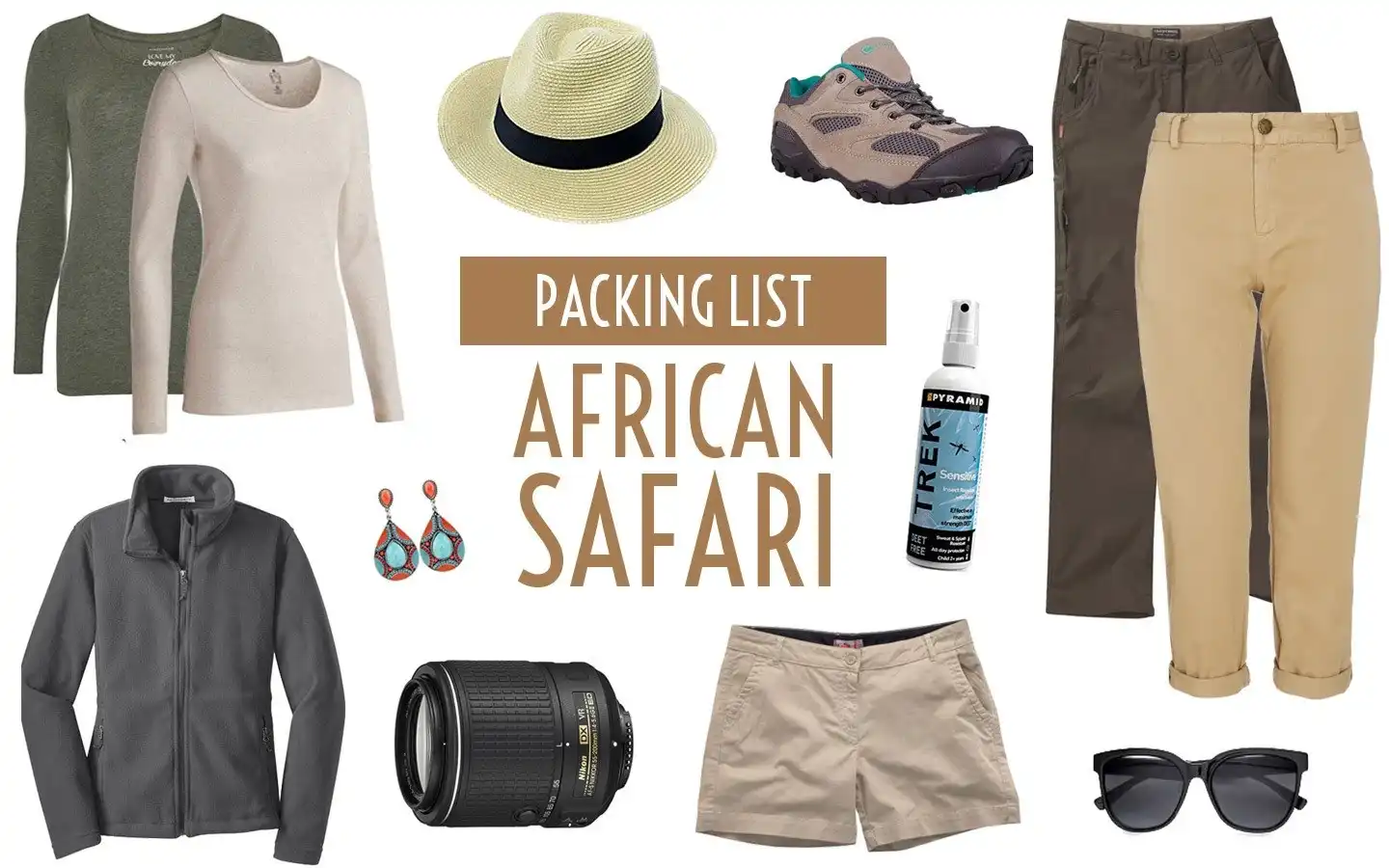
Most first-time safari travelers pack too much. You can spend hours in a vehicle in much the same clothes, lodges often offer laundry, and if you take a small plane between parks, there is a strict limit on your bag. A sensible safari packing list is shorter than you might expect.
This guide tells you what to wear, what to bring for the vehicle, what to leave at home and how to pack for a flight to Zanzibar or a fly-in camp.
Neutral colors such as khaki, olive and tan work best. They hide dust, and they fit the setting. Avoid dark blue and black in areas with tsetse flies, which are attracted to those colors. White gets dirty fast, and camouflage is best avoided, as it may be restricted in parts of East Africa.
Layers matter because dawn drives can be cold and midday can be hot. A light long-sleeved shirt and pants also help to keep off the sun and mosquitoes.
| Item | How many |
|---|---|
| Lightweight shirts, some long-sleeved | 3 to 4 |
| Lightweight pants or shorts | 2 to 3 |
| Fleece or light down jacket | 1 |
| Windproof or rain jacket | 1 |
| Comfortable closed shoes | 1 pair |
| Sandals for camp | 1 pair |
| Sun hat with a strap | 1 |
| Buff or scarf for dust | 1 |
| Warm hat and light gloves, for June to August and the crater rim | 1 of each |
| Underwear and socks | As needed |
| Swimwear | 1, if your lodge has a pool |
| Item | Why |
|---|---|
| Binoculars | They bring distant animals close, and many people find them essential. Try 8x42 or 10x42. |
| Camera and spare batteries | A zoom lens helps. Keep your gear in a dust-proof bag. |
| Power bank and adapter | Charging may be limited at some camps. |
| Sunscreen, sunglasses and lip balm | The sun is strong at this altitude. |
| Insect repellent | Use one with DEET or picaridin. |
| Small first-aid kit | Include your medicines, antihistamine and rehydration salts. |
| Copies of your documents | Passport, visa, insurance and flight details. |
| Headlamp or small flashlight | Useful at camp after dark. |
| US dollars in small bills | For tips and small purchases. |
Use a soft duffel bag rather than a hard suitcase. It is easier to fit in a vehicle, and it is required on many small planes. Domestic bush flights often limit you to about 15 to 20 kg (33 to 44 lb), including hand luggage. If you are flying on to Zanzibar, as on our 8-day safari and Zanzibar trip, weigh your bag before you leave home, and ask us to confirm your limit.
A phone is fine for landscapes and close sightings, but a camera with a zoom lens of about 100 to 400 mm makes a big difference for animals. Bring spare batteries and memory cards. A small bean bag or a rest for the vehicle's window helps keep the camera steady. Dust is your biggest enemy, so keep your gear covered between sightings.
See a travel clinic six to eight weeks before you leave. Malaria is a risk in the safari parks, so ask about tablets and bring repellent. Carry your prescriptions in their original packaging, in your hand luggage, with some extra in case of delays. Bring repellent, and wear long sleeves from dusk to dawn. Yellow fever certificates may be required if you travel through certain countries, so check your whole route.
Early drives are cold. Bring a warm jacket, a hat and light gloves.
It gets warmer and dustier. Bring a buff, and pack lighter layers.
Pack a good rain jacket, and keep your camera gear in a dry bag. See our best time guide.
Your main bag stays in the back or at camp, so keep what you need within reach: binoculars, camera, sunscreen, a hat, a light jacket, water, snacks, wet wipes and your medicines. A small daypack or a camera bag works well. Roads can be bumpy and dusty, so use padded, closed bags for your electronics.
Roads in the parks can be rough, so a comfortable sports bra helps. Loose, breathable clothes work best in the heat. A scarf can serve as dust protection and a warm layer, and as cover when you visit towns or communities. Bush toilet stops happen on many drives, so tissues and hand sanitizer are worth carrying.
Many travelers do both. Pack your climbing gear in one bag and your safari clothes in another, and leave whichever you are not using at your Moshi hotel. Your boots and warm layers can double up for cold game drives. See our Kilimanjaro packing list for what the mountain needs.
Add swimwear, sandals, a sarong or light cover-up, and reef-safe sunscreen. Zanzibar is largely Muslim, so bring something that covers your shoulders and knees for Stone Town. If you are flying, remember the baggage limit, and consider leaving unnecessary items in storage.
Many camps and lodges offer laundry, although some do not wash underwear for cultural reasons, so bring a little travel soap. Plan for about four days of clothes, and wash along the way. Quick-dry fabrics help a lot, because you can hang them up overnight and wear them the next morning.
For children, bring favorite snacks, simple games, sun hats, a small pair of binoculars and any medicine they need, in the correct dose for their age. For older travelers, a small cushion can make bumpy roads more comfortable, and walking poles can help in camp if needed. Carry any regular medication in your hand luggage, with a copy of your prescription. Tell us about any mobility needs, so that we can choose suitable lodges.
Both towns have shops for basics such as toiletries, snacks, sunscreen and repellent. You can also find some outdoor clothing, and even binoculars, but the choice is limited, and they are best bought at home. Bring any medicines you need, as well as camera gear, spare batteries and contact lens supplies. If you forget something, tell your guide before you leave town, so that you can stop on the way.
Avoid dark blue and black where there are tsetse flies, and avoid white because of the dust. Camouflage is best avoided too.
Not usually. Comfortable closed shoes are enough, unless you plan to walk or to climb Kilimanjaro.
It is best not to, especially if you are taking a small plane.
We strongly recommend them, ideally one pair per person.
Yes, especially on early drives from June to August and on the Ngorongoro rim.
Pack less than you think, in neutral colors and layers, with good binoculars and a soft bag. If you are also climbing Kilimanjaro, see our Kilimanjaro packing list, and tell us so that we can store your extra gear. Send us your questions at any time.
Tell us your dates and trip, and we will help you pack for the right season.