2-Day Tarangire and Ngorongoro Safari
From $1,295
View itinerary
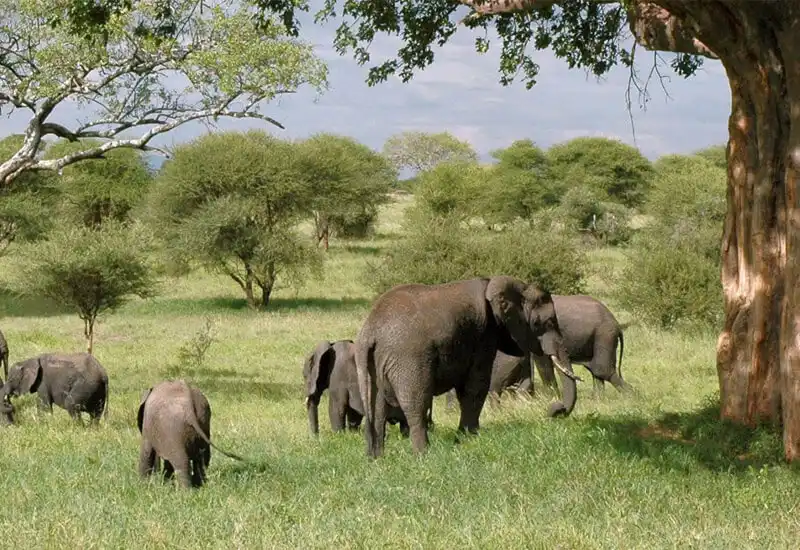
Tarangire National Park often gets overlooked by travelers who are rushing to the Serengeti, and that is their loss. In the dry season, it holds some of the largest elephant herds in northern Tanzania, moving between baobabs that have stood for hundreds of years.
This guide covers what the park offers, when to go and how to get there. For trips, see our Tarangire safari tours.
| Location | Northern Tanzania, about three to four hours from Moshi |
|---|---|
| Size | About 2,850 square kilometers (1,100 square miles) |
| Established | 1970 |
| Known for | Elephants, baobabs and birds |
| Best time | June to October |
| Main water source | The Tarangire River |
The Tarangire River is the key. When the land dries out, it becomes the main water source for a wide area, drawing elephant, zebra, wildebeest, giraffe and buffalo from far around. Baobabs add to the scene. These huge trees store water in their trunks, and some are very old.
Lion are seen regularly, and leopard and cheetah are present but harder to find. Over 500 species of birds have been recorded, which makes this a favorite for birders. The swamps in the south attract a great many in the wet season.
June to October is best for wildlife, especially from August on. In the wet months, animals spread out, although the park is very green, and it is a good time for birds.
The drive takes about three to four hours on good roads, so you can reach the park by lunchtime. It sits on the route to Lake Manyara and the Serengeti, so it fits neatly at the start of a longer trip.
Prices are at mid-range level with two people sharing. For route advice, see our Tarangire safari guide.
From $1,295
View itinerary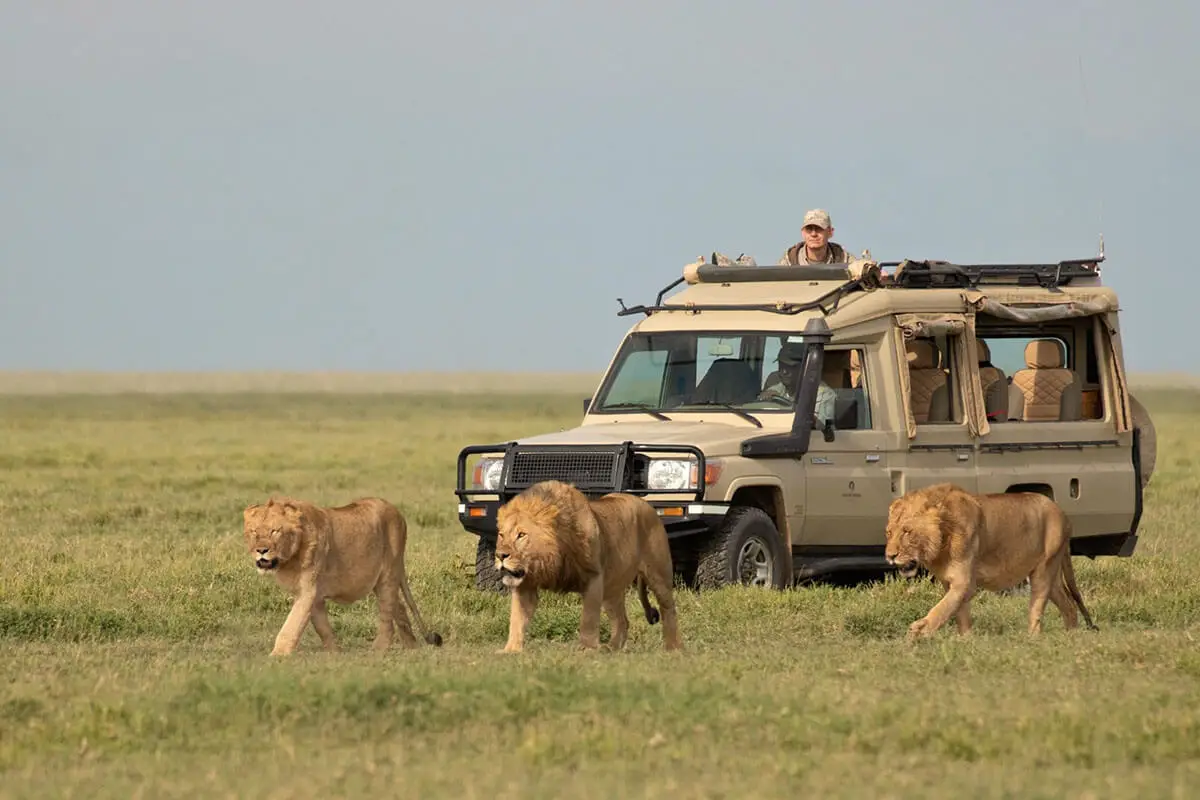
From $1,920
View itinerary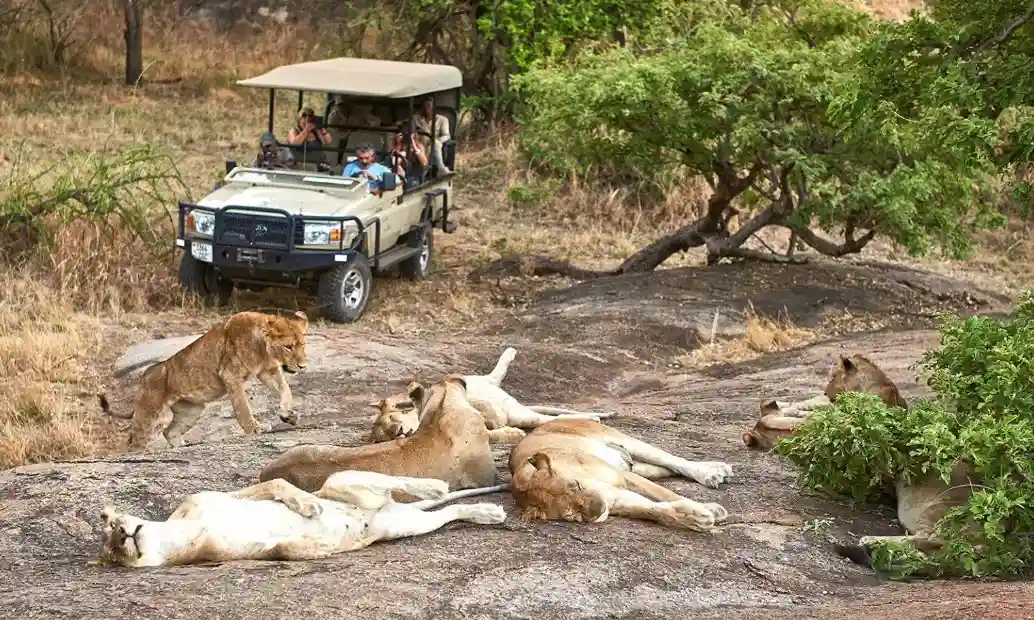
From $3,040
View itinerary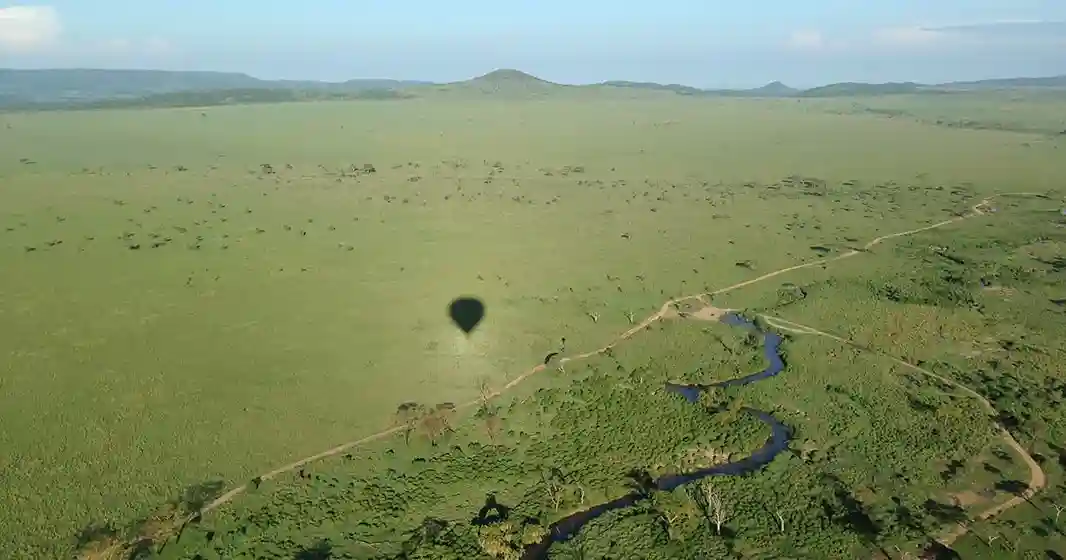
From $4,230
View itineraryThese huge, strangely shaped trees are the signature of the park. They store water in their swollen trunks, and they can live for many hundreds of years. Elephants often strip their bark in the dry season for moisture, leaving great scars. Their fruit is rich in vitamin C, and local people have many uses for them. Look for hollow trunks that were once used as shelter. They make a wonderful backdrop for photographs, especially at sunset.
Tarangire is known for having one of the highest concentrations of elephants in Tanzania, particularly from about July to October. Family groups can gather in very large numbers at the river, and it is common to see them digging in the dry riverbed for water. Your guide can read their mood and keep a respectful distance. Be patient, and you may watch young calves learning how to use their trunks.
Most short visits stay near the river in the north. If you have more time, the south of the park is well worth it, with fewer vehicles and a wilder feel. The Silale Swamp is a big draw, with buffalo, elephants and many birds, and with lions and leopards that hunt along its edges. Two nights in the park give you time to get there.
With over 500 species, this park is a joy for bird lovers, even if you do not usually notice birds. Look for yellow-collared lovebirds, red-and-yellow barbets, ostriches and huge kori bustards, as well as many raptors. The swamps and the wet season from November to April are especially rewarding, with migrants from Europe and Asia. Bring binoculars and ask your guide for help.
Some wooded parts of Tarangire have tsetse flies. Their bite is sharp, but they rarely cause more than irritation here. They are attracted to dark blue and black, so wear neutral colors, and use repellent. Also note that the park can get hot in the middle of the day. Plan on game drives in the morning and late afternoon, and bring plenty of water.
There are lodges and tented camps inside the park and just outside, near the gates. Staying inside means you are among the animals at dawn. Staying outside often costs less, and some places have a view across the park. We will suggest options that suit your level and your route, and we will tell you which camps are close to the river.
It suits travelers with limited time, thanks to its closeness to Moshi and Arusha, and it is a very rewarding park from June to October. Elephant lovers, photographers and birders will be especially happy. If you are traveling in the wet season, keep in mind that many large animals leave the park, so you may prefer to spend more of your time elsewhere.
The park was named after the Tarangire River, which flows through it. It was set aside as a game reserve in the 1950s and became a national park in 1970. It forms part of a larger ecosystem, as animals move to and from the Maasai Steppe outside the park with the seasons. Protecting those seasonal routes remains an important conservation issue, because many of them run across land used by people.
The river dominates the north of the park, cutting through gentle hills dotted with baobabs. Further south, the wide swamps around Silale fill during the rains and stay green long into the dry season, which attracts elephants and buffalo. Woodland and savanna fill the spaces in between. Look out for tall termite mounds, which are often used as lookouts by dwarf mongooses, and which make good subjects for photographs.
Elephants are gentle most of the time, but they deserve respect, especially mothers with young calves. Your guide will read their mood, keep some distance and give them space to cross the road. Stay quiet, and do not make sudden movements. If a large bull approaches, your guide may reverse slowly. These moments can be thrilling, and they are safe when you leave the decisions to your guide.
From here, most trips continue to Lake Manyara, the Ngorongoro Conservation Area and the Serengeti. Tarangire also works as a short stop before or after climbing Kilimanjaro, as the drive back to Moshi takes about three to four hours.
One night is a good minimum, and it gives you an afternoon and a morning on game drives. Two nights let you explore the south of the park, including the Silale Swamp. A day trip is possible, but you would miss the best hours of light. Our Tarangire safari guide has more.
Tarangire has more elephants than most parks, and more baobabs than any other park on the circuit. It has fewer big cats than the Serengeti, and it has no rhino sightings to compare with the crater. It is easier to reach than the Serengeti and usually quieter than the crater. For a first trip, it makes a good start before the bigger names on the route.
Yes, especially from June to October.
One night is a good minimum, and two let you see the quieter south.
Yes, although they are not as easy to see as elephants.
Its large elephant herds and baobab trees.
From June to October, it deserves at least a night. Send us your dates, and we will add it to your trip.
Tell us when you are traveling and what interests you, and we will build your itinerary.