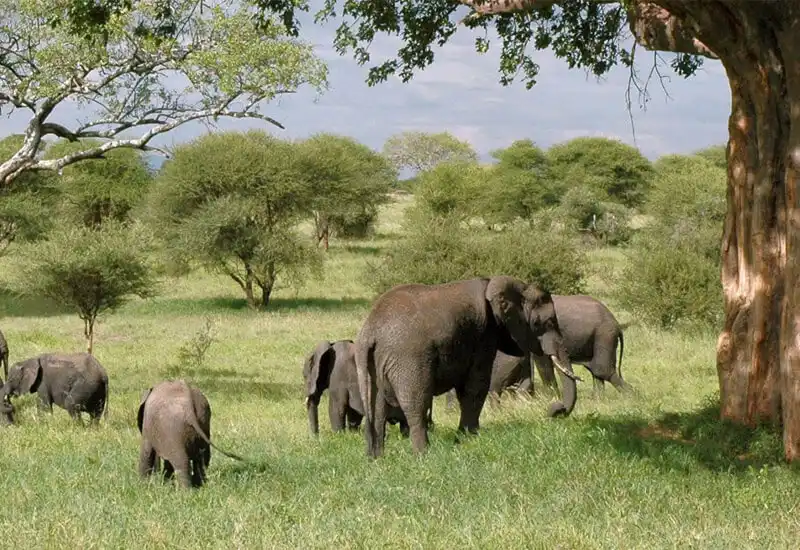
2-Day Tarangire and Ngorongoro Safari
From $1,295
View itinerary
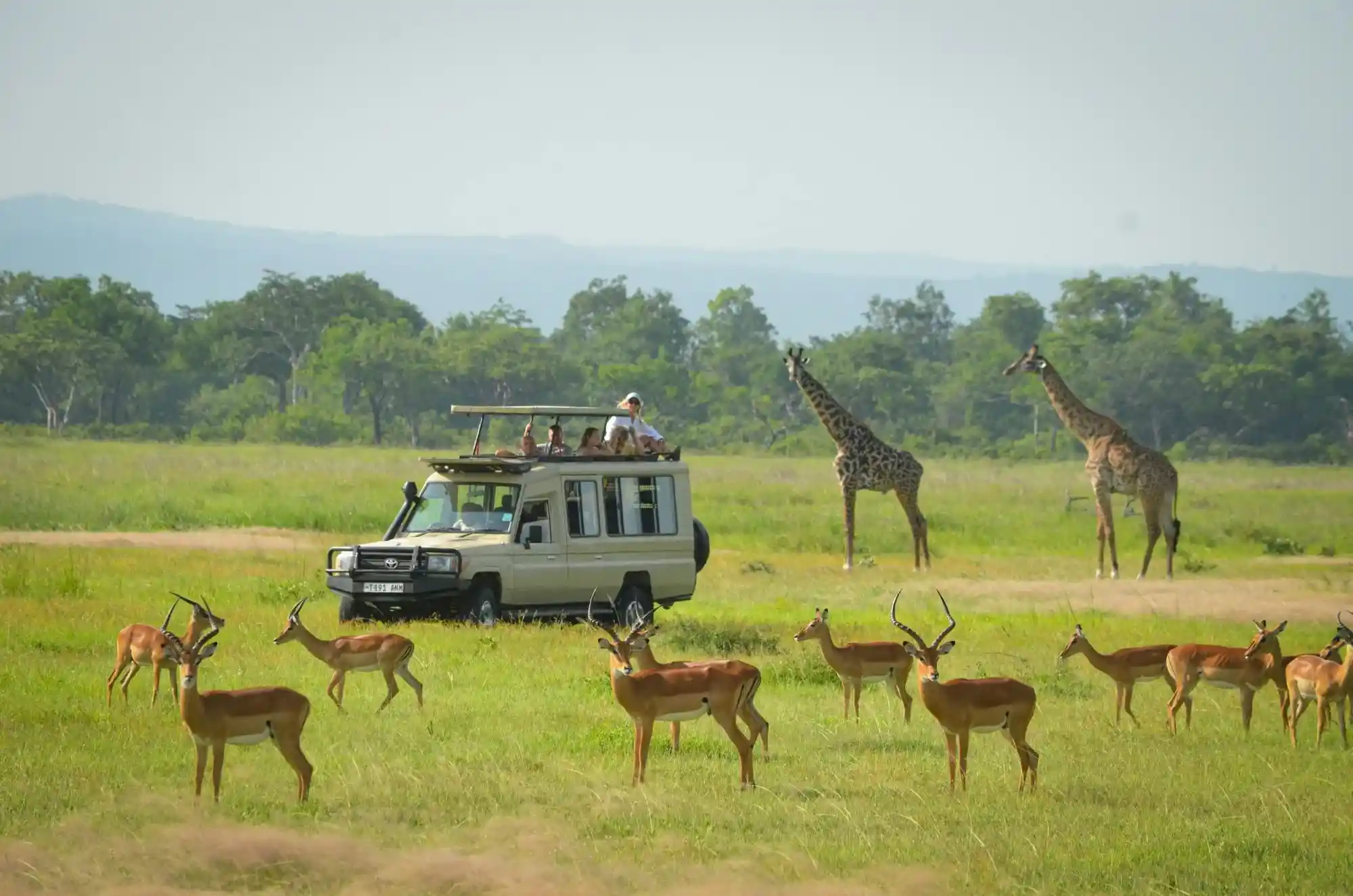
The Ngorongoro Conservation Area is unusual among Tanzania's protected areas, because people and wildlife share the land. Maasai herders graze their cattle on its highlands, while below them lies the great crater, one of the most striking landscapes in Africa and home to thousands of animals.
This guide explains the area, the crater and how to visit. For trips, see our Ngorongoro Crater safaris.
| Location | Between Lake Manyara and the Serengeti, northern Tanzania |
|---|---|
| Size | About 8,290 square kilometers (3,200 square miles) |
| Crater size | About 260 square kilometers (100 square miles) on the floor |
| Status | UNESCO World Heritage Site since 1979 |
| Known for | Ngorongoro Crater, black rhino, Maasai culture |
| Best time | All year |
Ngorongoro Crater is a huge volcanic caldera, formed when a volcano collapsed millions of years ago. It is about 19 kilometers (12 miles) across, with walls that rise about 600 meters (2,000 feet). Its floor holds grassland, swamps, forest and a soda lake, and the animals there have water all year, so many stay put.
The crater floor supports lion, hyena, elephant, buffalo, zebra, wildebeest, hippo and black rhino, along with flamingos when water levels suit them. In the wider area, the southern plains are part of the migration's calving grounds from around January to March.
The Maasai have lived here for generations, and they still graze cattle in the conservation area. Some communities welcome visitors for cultural tours. If you visit, ask before taking photos, and talk to your guide about how to do it respectfully.
Olduvai Gorge, on the way to the Serengeti, is one of the world's most important sites for the study of human origins, with a small museum. The Empakaai and Olmoti craters offer quieter hiking, for those with more time. Tell us if you would like to add them.
The crater rim is about four to five hours by road from Moshi. Most visitors pass through on the way to or from the Serengeti, or stop on a shorter trip. Nights on the rim are cold, so bring warm layers.
Prices are at mid-range level with two people sharing. For route advice, see our Ngorongoro Crater safari guide.
From $1,295
View itinerary
From $1,920
View itinerary
From $3,040
View itinerary
From $4,230
View itineraryThe crater was formed about two to three million years ago, when a huge volcano collapsed. Early human ancestors lived in this region, as the discoveries at nearby Olduvai Gorge have shown. The Maasai moved into the area in more recent centuries. The conservation area was established in 1959, separate from the Serengeti, so that people and wildlife could continue to share the land. UNESCO listed it as a World Heritage Site in 1979.
The floor holds several habitats within a small area. Lake Magadi is a shallow soda lake that draws flamingos at times. Lerai Forest offers shade for elephants and monkeys. The Gorigor Swamp attracts hippos and buffalo, while open grassland feeds the zebra and wildebeest. Big old bull elephants are often seen in the crater, and the walls rise on every side, which makes for extraordinary photographs.
Ngorongoro is one of the most reliable places in Tanzania to see black rhino, a critically endangered species. Numbers are small, and they are carefully protected. They often stay a long way from the tracks, so bring binoculars. Your guide will not be able to drive off-road to get closer, as rules on the crater floor are strict for good reason.
Rim lodges have views across the crater that you will never forget, and they get you to the descent road quickly. Karatu, about an hour from the gate, is cooler and greener than the plains, with farm lodges and coffee estates at lower prices. Some travelers split their stay, and either option can work. We will suggest what suits your budget.
At about 2,300 meters (7,500 feet), the rim is much cooler than the plains, and it can be misty and cold in the morning, especially from June to August. Bring a warm jacket. The floor is warmer during the day. Rain falls mainly from November to May, and the road down can get slippery.
Nearly everyone who visits northern Tanzania should try to include it. It suits travelers with little time, as a single day can bring a wide range of animals. It suits families and photographers too. The main drawbacks are the crowds at busy times and the cost of the fees. If you want complete solitude, the crater floor may not be the place for you, although the wider highlands can be very quiet.
The conservation area covers far more than the crater. Its green highlands are home to Maasai herders, forest and other craters such as Olmoti and Empakaai, which offer guided hikes. To the west, it falls away to the short-grass plains around Lake Ndutu, a key part of the migration from about January to March. Most visitors see only the crater, so it is worth asking about the rest if you have the time.
Olduvai Gorge, sometimes spelled Oldupai, is where Louis and Mary Leakey found fossils and tools that changed our understanding of human evolution. A small museum and a guided talk explain the site, and it makes an easy stop on the way to the Serengeti. Nearby Laetoli preserves ancient footprints of early human ancestors, around 3.6 million years old, although a replica is what most visitors see at the museum.
Big animals get most of the attention, but the crater is also rich in birds, from flamingos on the lake to crowned cranes, kori bustards and ostriches. Serval cats, jackals and bat-eared foxes are also seen at times. Ask your guide to slow down for these smaller sightings, which can be the most memorable on a busy day. Binoculars are especially useful here.
Ngorongoro links easily with the Serengeti to the west and with Lake Manyara and Tarangire to the east. Moshi is about four to five hours by road, so you can reach Mount Kilimanjaro easily. We can link any of these into a single trip.
One night and one game drive is enough for most visitors. Two nights give you time to add a Maasai village visit, Olduvai Gorge or a highland walk. Our Ngorongoro safari guide shows you how to fit the crater into a longer trip.
No. It is a conservation area, which allows Maasai people to live alongside the wildlife.
About 19 kilometers (12 miles) across, with a floor of about 260 square kilometers (100 square miles).
It is one of the best places in Tanzania to try, although they are often distant.
The Ngorongoro Conservation Area Authority manages it, separately from Tanzania National Parks.
It is close to the main safari route, and it has something no other park can offer. Send us your dates, and we will include it on your trip.
Tell us when you are traveling and what interests you, and we will build your itinerary.