
Marangu Route on Kilimanjaro: The Only Hut Route, and Who It Suits
The Marangu Route is the oldest way up Kilimanjaro and the only one where you sleep in a hut every night. It climbs from the south-east on a gentle, well-made path and comes down the same way. Its nickname, the "Coca-Cola Route", suggests an easy walk, and that reputation catches out many climbers every year.
The walking is the gentlest on the mountain, yet the short schedule gives your body little time to adapt. This guide explains what the huts are really like, how hard Marangu is, and why we recommend 6 days over 5. If you do not want to camp, this is your route. Just go in knowing what you are choosing.
Marangu Route at a glance
| Days | 5 or 6 |
|---|---|
| Distance | About 72 km (45 mi) |
| Start and finish | Marangu Gate (1,860 m / 6,100 ft) |
| Sleeping | Shared huts: Mandara, Horombo and Kibo |
| Summit approach | From Kibo Huts (4,703 m / 15,430 ft), via Gilman's Point |
| Crowds | Busy, with the same path up and down |
| Price | From $1,600 per person |
Why climbers choose the Marangu Route
People choose Marangu for practical reasons. They would rather sleep in a bed than a tent, they are climbing in a wetter month and want to stay dry, or they want the shortest and lowest-priced climb. Marangu Gate is also the closest to Moshi, only about 45 minutes away.
The Marangu Route trail, hut by hut
Mandara Huts (2,720 m / 8,920 ft)
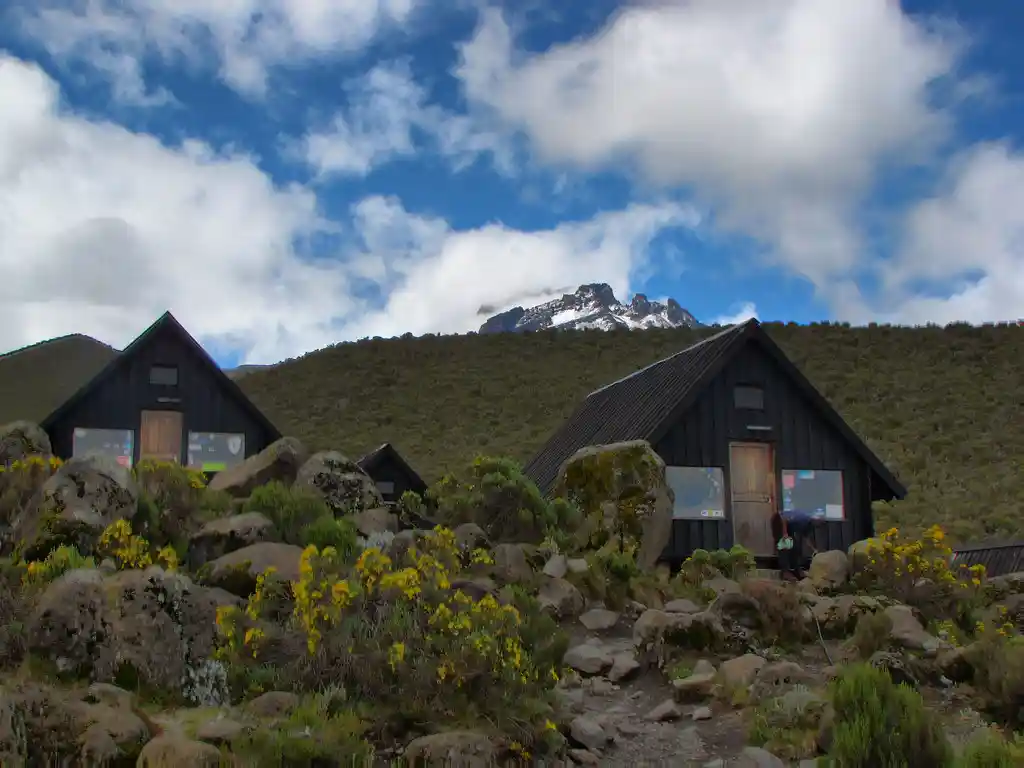
The first day climbs through rainforest on a wide path, with colobus monkeys often seen near the huts. Mandara is a group of wooden A-frame huts.
Horombo Huts (3,720 m / 12,200 ft)
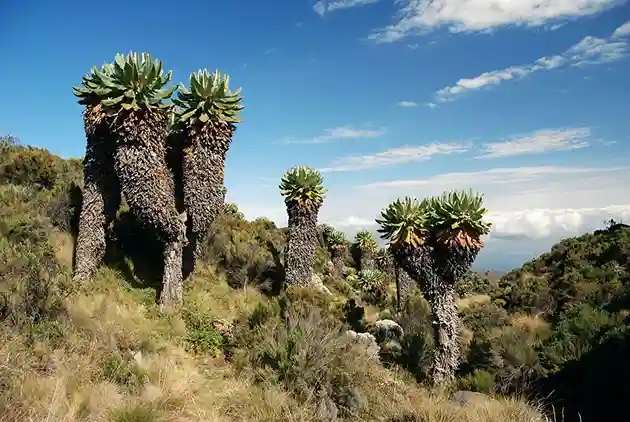
You come out of the forest into moorland, with Kibo and Mawenzi ahead and giant groundsels beside the path. Horombo is the busiest stop, because climbers going up and coming down share it. On the 6-day climb, you spend two nights here.
Kibo Huts (4,703 m / 15,430 ft)
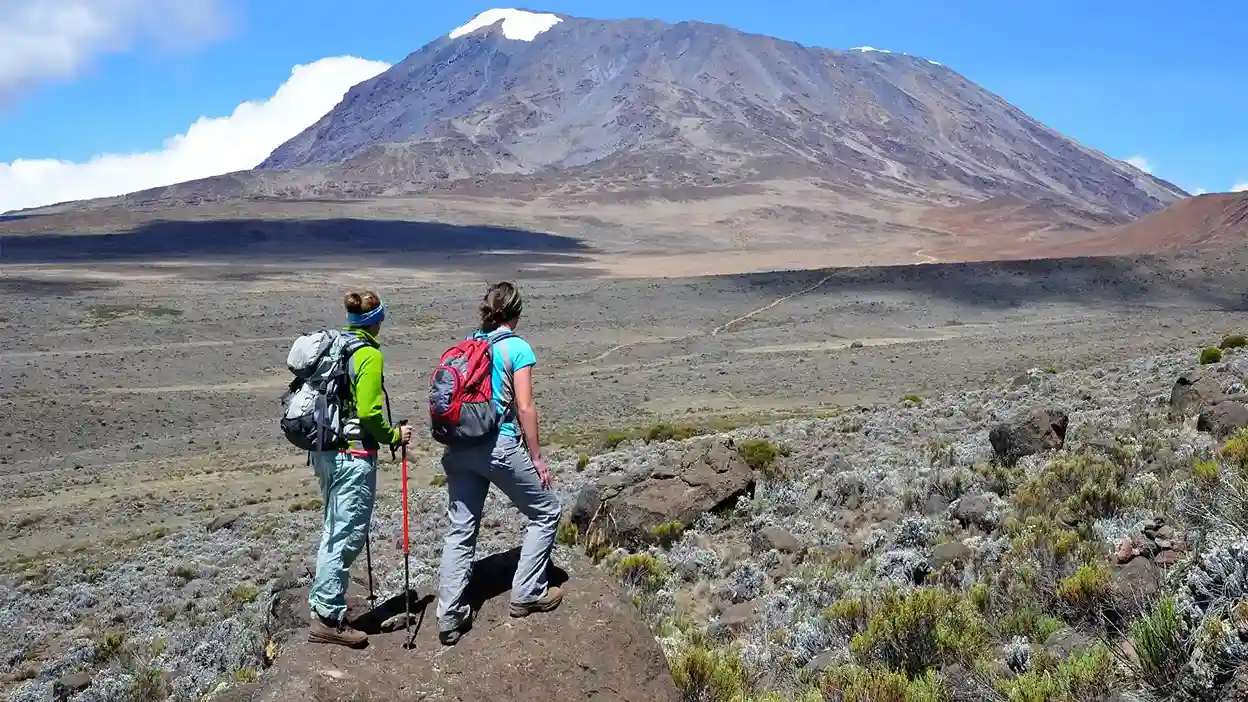
The path crosses the Saddle, a bare alpine desert between Mawenzi and Kibo, to basic stone dormitories at the foot of the summit cone. Dinner is early, and you try to sleep before a midnight start.
Gilman's Point and Uhuru Peak
Summit night climbs steep scree to Gilman's Point on the crater rim at 5,685 meters (18,652 feet), then follows the rim to Uhuru Peak at 5,895 meters (19,341 feet). You come back down to Horombo the same day.
Marangu Route climbs and prices
Prices are per person for two sharing, and include two hotel nights in Moshi, airport transfers, park fees and your full crew of one guide, five porters and one cook per climber.
What the Marangu Route huts are really like
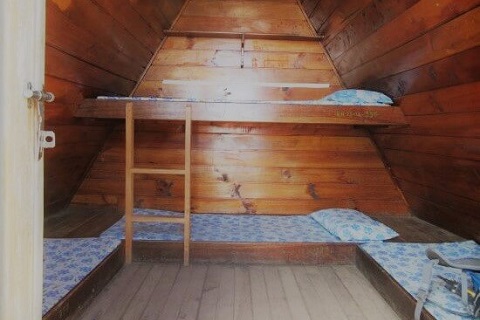
The huts are shared dormitories with bunk beds and mattresses. You need your own sleeping bag, and they are not heated, so it gets cold at night, especially at Kibo. Meals are served in dining halls. They keep you dry and they feel secure, which many people value. On the other hand, they can be noisy, and you may share a room with other climbers, including the occasional snorer.
How hard is the Marangu Route, really?
The walking is easy, but the climb is not. You gain height quickly and have little chance to climb high and sleep low. Summit night is arguably the toughest of any route, because you climb about 1,200 meters (3,900 feet) of steep scree after sleeping at 4,703 meters (15,430 feet). Read our guide to altitude sickness before you choose this route.
5 or 6 days on the Marangu Route?
The sixth day is an acclimatization day at Horombo. You walk higher, then return to sleep at the same hut. For $245 more per person, it gives you a much better chance of feeling well on summit night.
| 5-day Marangu | 6-day Marangu | |
|---|---|---|
| Price from | $1,600 | $1,845 |
| Nights in huts | 4 | 5 |
| Acclimatization day | None | At Horombo |
| Best for | People with recent altitude experience | Most Marangu climbers |
Operators publish very different summit figures and none are independently audited, so treat any single number with caution. Commonly quoted ranges run from about 27 to 42 percent on 5-day climbs, and from about 64 to 92 percent on 7-day climbs, with 8 and 9-day climbs reported higher still. The exact figures matter less than the pattern: more days means better odds.
Who should not choose the Marangu Route
Skip Marangu if your main goal is reaching the summit and you can spare more days, because longer camping routes give you more time. Skip it if you want varied scenery too, since you see the same path twice. The Machame Route costs the same at 6 days and comes down a different way.
Best time to climb the Marangu Route
The driest months are January to mid-March and June to October. Marangu is a practical choice in the wetter months because you sleep under a solid roof, although paths can still be muddy and summit views are less likely. Huts can fill up in peak season, so book early for July to September. See our month-by-month guide.
Summit night on the Marangu Route: what to expect
Summit night on the Marangu Route starts from Kibo Huts around midnight. You climb steep, loose scree through a series of tight zigzags to Hans Meyer Cave and then to Gilman's Point on the crater rim, typically taking 5 to 7 hours. The last section is the hardest. Uhuru Peak is a further hour or two along the rim, and some climbers turn back at Gilman's Point, which still earns a certificate. Wear every layer you have, because temperatures can fall to around -20°C (-4°F) with wind.
What a typical day on the Marangu Route feels like
Most days start with a hot drink at your tent or bunk around 6:30 a.m., followed by breakfast. You set off by about 8 a.m. with your guide, walking slowly with regular stops for water and photos. Your porters pack up behind you, pass you on the trail and have the next stop ready by the time you arrive. Lunch comes either on the trail or at camp, depending on the day.
Afternoons are for resting, reading, washing with a bowl of warm water and getting to know your crew. Dinner is hot and filling, and most climbers are asleep soon after dark. It is a simple rhythm, and many people say it is the part of the Marangu Route they miss most.
Getting to the Marangu Route from Moshi
Marangu Gate is the closest to Moshi, about 45 minutes by road. That makes it the simplest start and finish of any route. We collect you from your hotel, handle the registration at the gate and meet you there at the end of the climb to drive you back. Fly into Kilimanjaro International Airport (JRO), about an hour from Moshi, and we meet you there. All these transfers are included in your price.
How to prepare for the Marangu Route
Start training at least 12 weeks before you fly, with long hikes on back-to-back days. Our Kilimanjaro training plan shows you how. Our packing list covers what to bring and what you can rent in Moshi. See a travel clinic six to eight weeks before you leave, and ask about altitude medication and malaria tablets for the lower areas.
Your crew and safety on the Marangu Route
Every climber on our Kilimanjaro climbs has one guide, five porters and one cook. A group of two therefore has two guides, ten porters and two cooks. That ratio is higher than many operators offer, and it means that if one climber needs to slow down or turn back, the other can continue with their own guide.
Our guides have worked on Tanzania tours for 7 years. They are graduates of the College of African Wildlife Management, Mweka, and the National College of Tourism, and they hold certification from those institutions. We are also a partner of the Kilimanjaro Porters Assistance Project (KPAP), which works for the fair treatment of mountain crews.
We carry pulse oximeters to track your blood-oxygen levels each day, emergency oxygen cylinders for emergency descents and severe altitude illness, and a Gamow bag, a portable pressure chamber used to treat advanced altitude sickness. Helicopter evacuation is available through providers including Kili MedAir and Proflight Helicopters, with fees starting from $3,500 per person. It is not part of the climb price, so check that your travel insurance covers trekking to 6,000 meters (19,685 feet) and evacuation before you buy it.
Marangu Route: your questions answered
Is the Marangu Route the easiest way up Kilimanjaro?
It has the gentlest path, but altitude is what stops most people, and 5 days gives little time to adapt. The 6-day climb is the better choice.
Do you need a tent on the Marangu Route?
No. You sleep in huts on every night of the climb.
Is the Marangu Route less scenic?
It is less varied than other routes because you use the same path both ways. The Saddle and views of Mawenzi are still impressive.
Is the Marangu Route good in the rainy season?
Sleeping under a roof is a clear advantage in wet weather, although the paths can still be muddy.
Why is it called the Coca-Cola Route?
It got the nickname because of its gentler path and because drinks were once sold at the huts.
How the Marangu Route compares with other Kilimanjaro routes
Still deciding? Our Kilimanjaro route comparison shows all five side by side.
-
Machame Route
The classic: varied scenery and a scramble up the Barranco Wall.
From $1,845
View route -
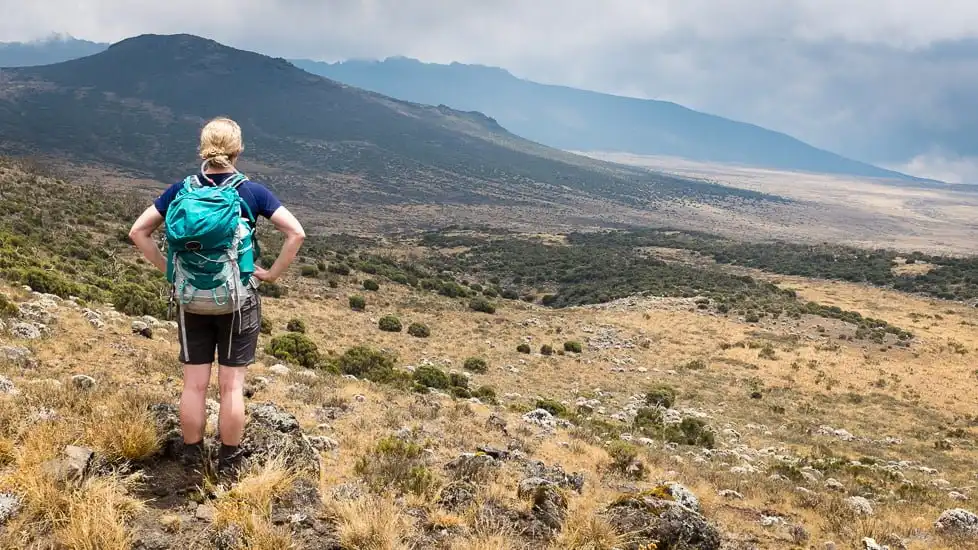
Lemosho Route
A quiet western start, fine views and our top pick for first-timers.
From $2,090
View route -
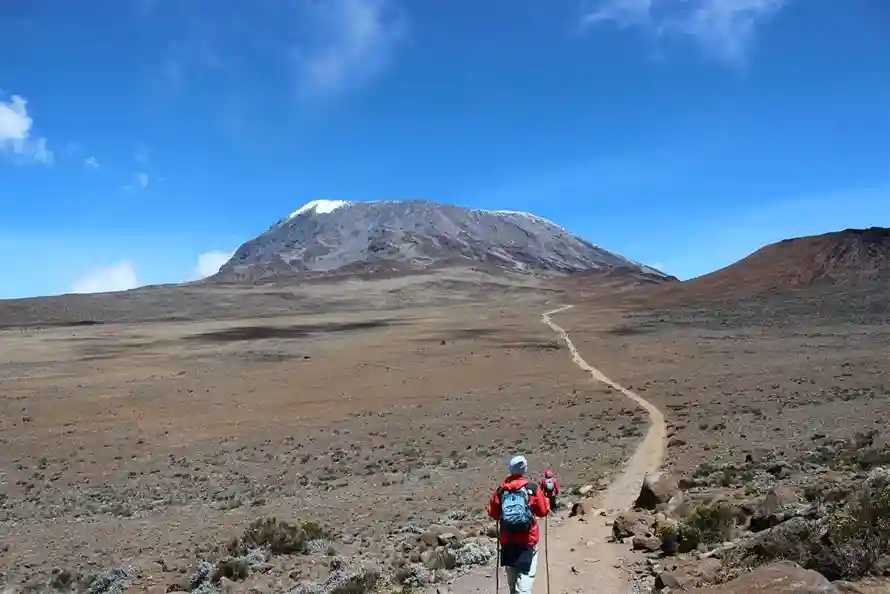
Rongai Route
The quiet, drier northern approach, with steady walking and no scrambling.
From $1,845
View route -
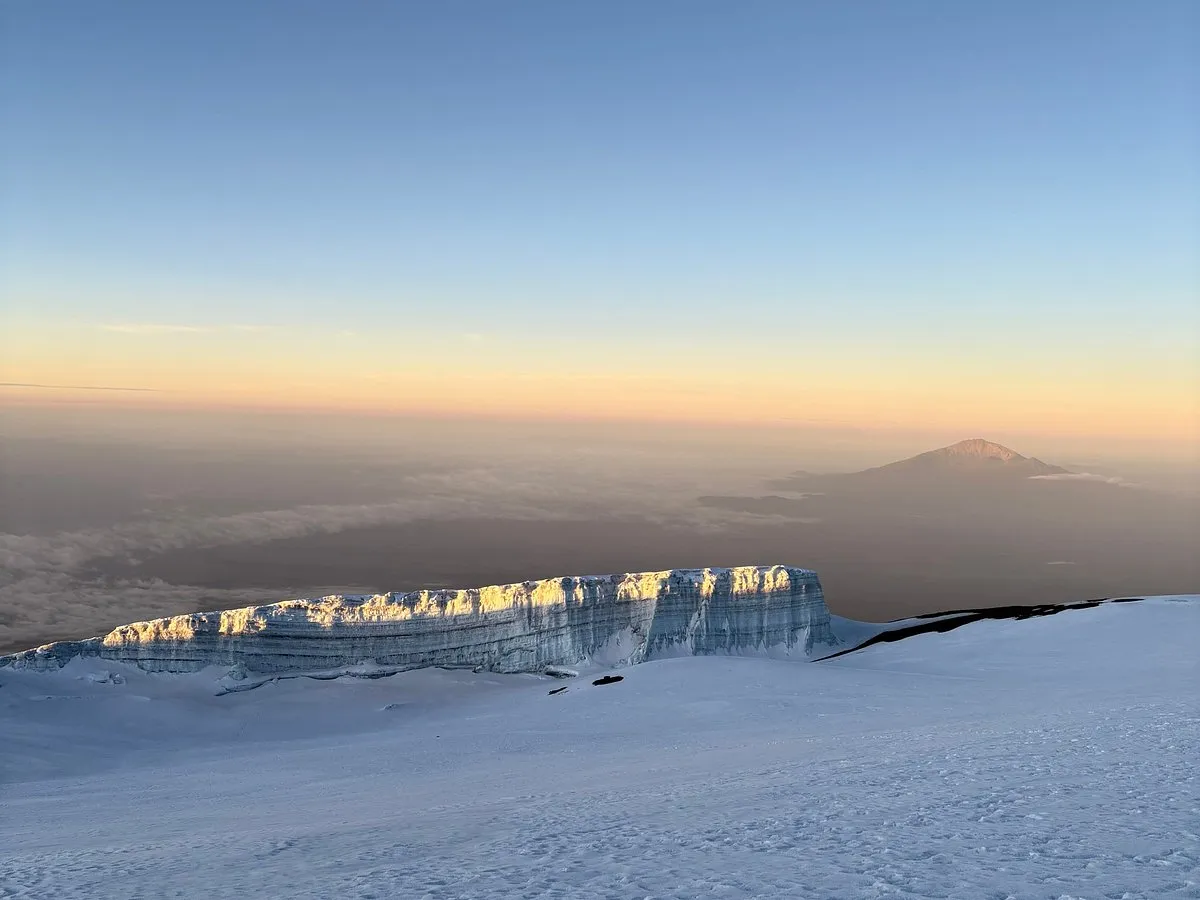
Northern Circuit Route
The longest route, with the most time to adapt and very few people.
From $2,580
View route
Should you climb the Marangu Route?
If you do not want to camp, yes, and take 6 days. If you are happy in a tent and you have a little more time, another route will likely serve you better. Send us your dates and we will help you decide.
Ready to climb the Marangu Route?
Tell us your dates and group size, and we will send a full quote from our office in Moshi.