How common is altitude sickness on Kilimanjaro?
Most climbers feel some mild symptoms, such as a headache or poor sleep. Serious cases are much less common, but they do happen, so you need to know the signs.

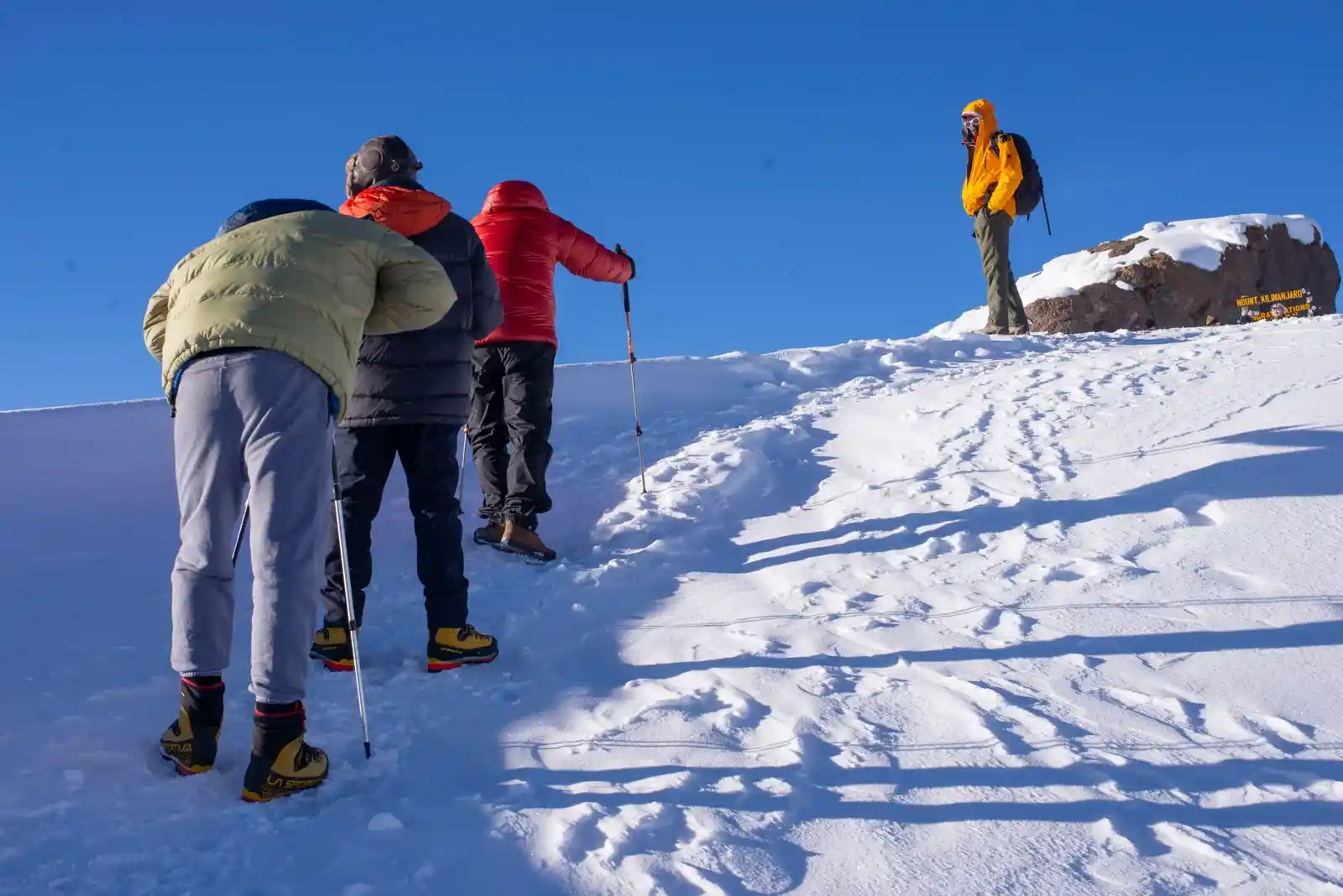
Altitude sickness is the most common reason climbers turn back on Kilimanjaro, and it does not care how fit you are. You can run marathons at sea level and still feel terrible at 4,000 meters (13,100 feet), while the slower, less athletic person next to you feels fine. Nobody can tell in advance how they will respond, and that is why understanding it matters.
Most symptoms are mild and pass with rest. A few are a true emergency. This guide explains how to tell the difference, how to lower your risk, what Diamox does and what happens if someone needs to come down. It is general information, not medical advice, so please talk to your doctor before you climb.
As you climb, the air pressure falls and each breath brings in less oxygen. At the summit of Kilimanjaro, you have about half the oxygen you would have at sea level. Your body can adapt, by breathing faster and making changes in your blood, but that takes days. Altitude sickness happens when you climb faster than your body can adapt.
Kilimanjaro makes this harder than many mountains, because you can walk from the gate to nearly 6,000 meters (19,700 feet) in under a week. Few other treks gain so much height in so little time.
| Level | Symptoms | What to do |
|---|---|---|
| Mild altitude sickness (AMS) | Headache, nausea, tiredness, dizziness, loss of appetite, poor sleep | Tell your guide. Rest, drink and do not go higher until you feel better. Descend if it gets worse. |
| Fluid on the brain (HACE) | Confusion, loss of balance, unusual behavior, severe headache that does not ease | Emergency. Descend immediately with help. |
| Fluid on the lungs (HAPE) | Breathlessness at rest, persistent cough, gurgling chest, blue lips | Emergency. Descend immediately with help. |
Symptoms can begin from about 2,500 meters (8,200 feet). A simple test for loss of balance is to walk heel to toe in a straight line. If you cannot do this, or a friend seems confused, treat it as an emergency.
Hiding a headache to keep up with the group is one of the most dangerous things you can do on this mountain. Your guide can only help with what you tell them. Because we send one guide per climber, one person's need to slow down or turn back does not end the climb for anyone else, which removes much of the pressure to push on. Our guides have worked on Tanzania tours for 7 years. They are graduates of the College of African Wildlife Management, Mweka, and the National College of Tourism, and they hold certification from those institutions.
This is the biggest thing you can do. The 8-day Lemosho and 9-day Northern Circuit give you the most time. Operators publish very different summit figures and none are independently audited, so treat any single number with caution. Commonly quoted ranges run from about 27 to 42 percent on 5-day climbs, and from about 64 to 92 percent on 7-day climbs, with 8 and 9-day climbs reported higher still. The exact figures matter less than the pattern: more days means better odds.
You will hear "pole pole", Swahili for "slowly, slowly", all week. It is good advice, even on the easy first day. If you are out of breath, you are going too fast.
Days such as the climb to Lava Tower and down to Barranco help your body adapt. It is one reason we like the Machame, Lemosho and Northern Circuit routes.
Aim for about 3 liters (3 quarts) of water a day, and keep eating even if you have no appetite. Dehydration can make symptoms feel worse, although drinking more will not cure altitude sickness on its own.
Both can slow your breathing during sleep and hide symptoms. Save your celebration for Moshi.
No. Being fit makes the walking easier, and that matters, but it does not protect you from altitude. Very fit climbers can even be at greater risk if they walk too fast because it feels easy. Train properly so that the walking leaves you with energy to spare, and then let your guide set the pace.
Diamox (acetazolamide) is a prescription medicine that many climbers use to help with acclimatization. It works by making you breathe more deeply. It can cause tingling in the fingers and more frequent urination, and it is not suitable for everyone, including some people with sulfa allergies. It does not replace a sensible schedule or remove the need to descend if symptoms get worse.
Talk to your doctor well before you travel, and ask whether to try a dose at home first to see how you respond.
Long routes with climb-high, sleep-low days are best. In order, we would suggest the 9-day Northern Circuit, the 8-day Lemosho, the 7-day Machame and the 7-day Rongai. The 5-day Marangu gives you the least time. Compare them all in our route guide.
Going down is the most effective treatment, and it is usually done on foot with your guide. Even a descent of a few hundred meters can make a big difference, and most people feel better quickly. We carry pulse oximeters to track your blood-oxygen levels each day, emergency oxygen cylinders for emergency descents and severe altitude illness, and a Gamow bag, a portable pressure chamber used to treat advanced altitude sickness. Helicopter evacuation is available through providers including Kili MedAir and Proflight Helicopters, with fees starting from $3,500 per person. It is not part of the climb price, so check that your travel insurance covers trekking to 6,000 meters (19,685 feet) and evacuation before you buy it. Weather and altitude can limit flying, so helicopter evacuation is not guaranteed.
Your body will behave differently up here, even if everything is going well. Knowing what to expect helps you stay calm and tell your guide what they need to know.
Being short of breath when you walk uphill, a faster heartbeat, waking up often at night, breathing that seems to pause briefly during sleep, needing to urinate more, and having less appetite than usual are all common.
A headache that does not ease with rest and water, vomiting, or unusual tiredness may be the start of altitude sickness. Most cases improve if you stop going higher.
Confusion, stumbling, breathlessness when you are resting, or a wet cough all need an immediate descent. Do not wait until morning, and do not let anyone talk you into carrying on.
Most climbers feel worse on summit night than at any other time. You are at your highest, you have had little sleep, and it is cold and dark. Many people get a headache, feel sick or find their thinking slows down. Slow, steady steps and small sips of water help more than you might expect. Your guide will check on you regularly, and you should answer honestly. Turning back is never a failure, and the walk down usually brings relief quickly.
Your guide watches how you are doing every day, and we carry equipment for when things go wrong.
This small clip on your finger measures your blood-oxygen level and pulse. We use it to track how you are acclimatizing each day. Low numbers are normal at altitude, so a single reading means little by itself. Your guide looks at the trend, along with how you feel.
We carry oxygen cylinders for emergency descents and severe altitude illness. It is not there to help you reach the summit. Oxygen can buy time and ease symptoms, but it does not replace going down.
A Gamow bag is a portable, inflatable chamber that a person lies inside. Pumping it up raises the pressure, which simulates a lower altitude and can treat advanced altitude sickness for a time, especially if weather or darkness delays a descent. As with oxygen, the person still needs to go down afterward.
Most climbers feel some mild symptoms, such as a headache or poor sleep. Serious cases are much less common, but they do happen, so you need to know the signs.
Symptoms can begin from about 2,500 meters (8,200 feet) and become more likely the higher you go. Barafu, the high camp on several routes, is at 4,673 meters (15,330 feet).
Yes. Fitness does not protect you from altitude. Pace and the number of days matter more.
Often, yes, but talk to your doctor first and choose a longer route. Tell us about it when you book.
Mild symptoms usually pass with rest at the same height. If they get worse, the answer is to go down.
Take as many days as you can, walk slowly, keep drinking and tell your guide the truth. The mountain will be there another time, so never push through serious symptoms. If you want advice on a schedule for your experience, send us a message.
Tell us your experience and available days, and we will suggest a sensible schedule.