4-Day Tarangire, Serengeti and Ngorongoro Safari
From $2,610
View itinerary
Serengeti National Park is one of the most famous wild places on Earth, and it is easy to see why. Its name comes from a Maasai word often translated as "endless plains", and from the first view at Naabi Hill, that is exactly how it feels. It is home to large populations of big cats, and it hosts the Great Migration, one of nature's great spectacles.
This guide explains what the park is, how it works and how to get the most from a visit. If you are ready to look at trips, see our Serengeti safari tours.
| Location | Northern Tanzania, bordering Kenya's Maasai Mara |
|---|---|
| Size | About 14,750 square kilometers (5,700 square miles) |
| Established | 1951; UNESCO World Heritage Site since 1981 |
| Known for | Great Migration, big cats, open plains |
| Best time | All year, depending on the area |
| Getting there | A long day by road from Moshi or Arusha, or a short flight |
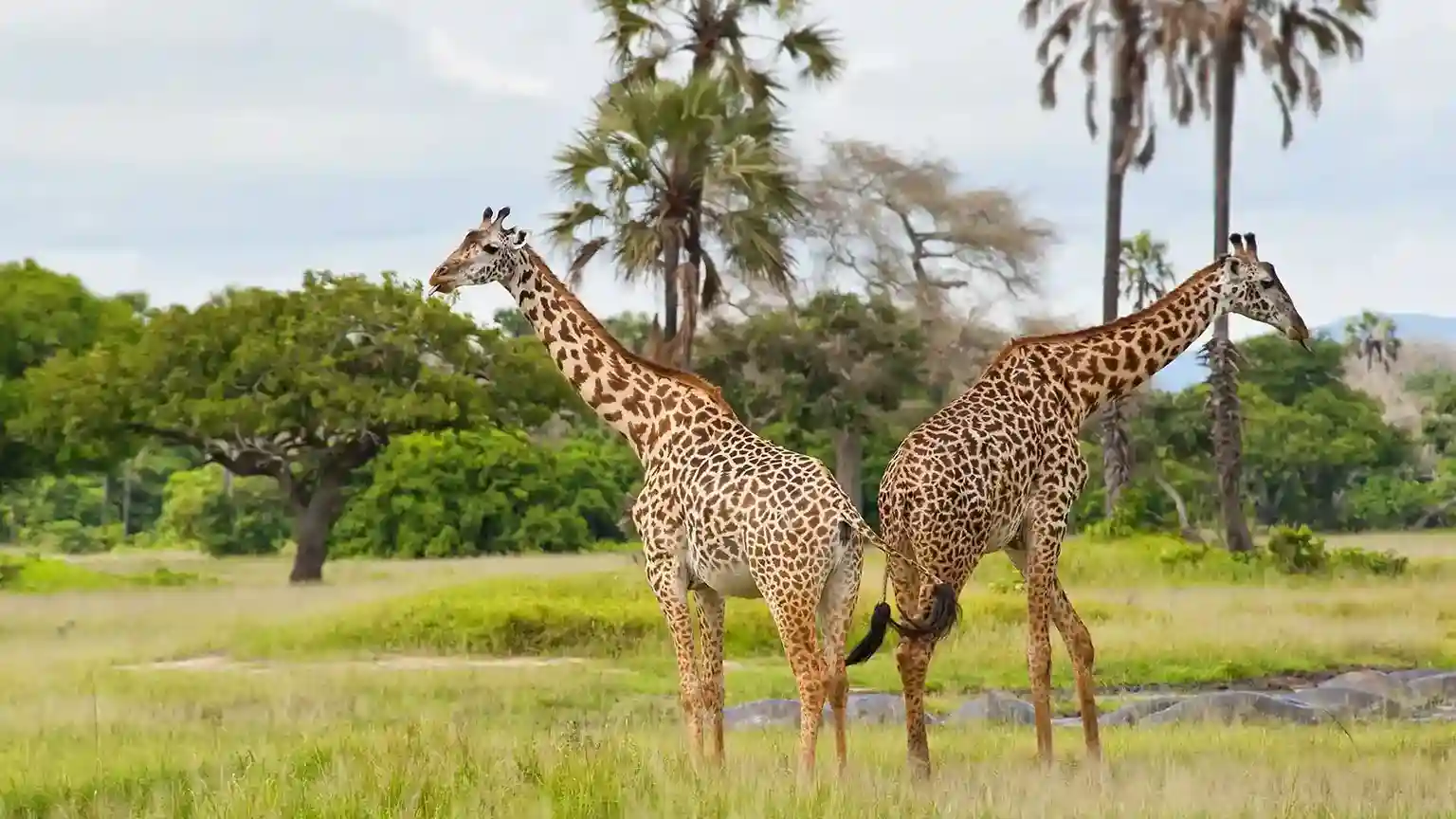
The park supports lion, leopard, cheetah, elephant, buffalo, giraffe, hippo, zebra and many species of antelope. It is especially known for lions, which are often seen on rock outcrops called kopjes. Over 500 species of birds have been recorded here. Black rhino are present, but very hard to see in the Serengeti.
The central Seronera Valley has good wildlife all year. The southern plains and Ndutu host calving from around January to March. The Western Corridor sees the herds around June and July, and the northern Kogatende area is known for Mara River crossings. Each area feels different, so where you stay matters a lot.
The herds follow the rains in a yearly circle through the park and into Kenya's Maasai Mara. Their timing changes from year to year. See our month-by-month guide for the usual pattern.
Most visitors drive from Moshi or Arusha via the Ngorongoro highlands, which takes most of a day, often with stops at other parks. Small planes also fly from Arusha to airstrips within the park, which saves time at extra cost.
Prices are at mid-range level with two people sharing. For route advice, see our Serengeti safari guide.
From $2,610
View itinerary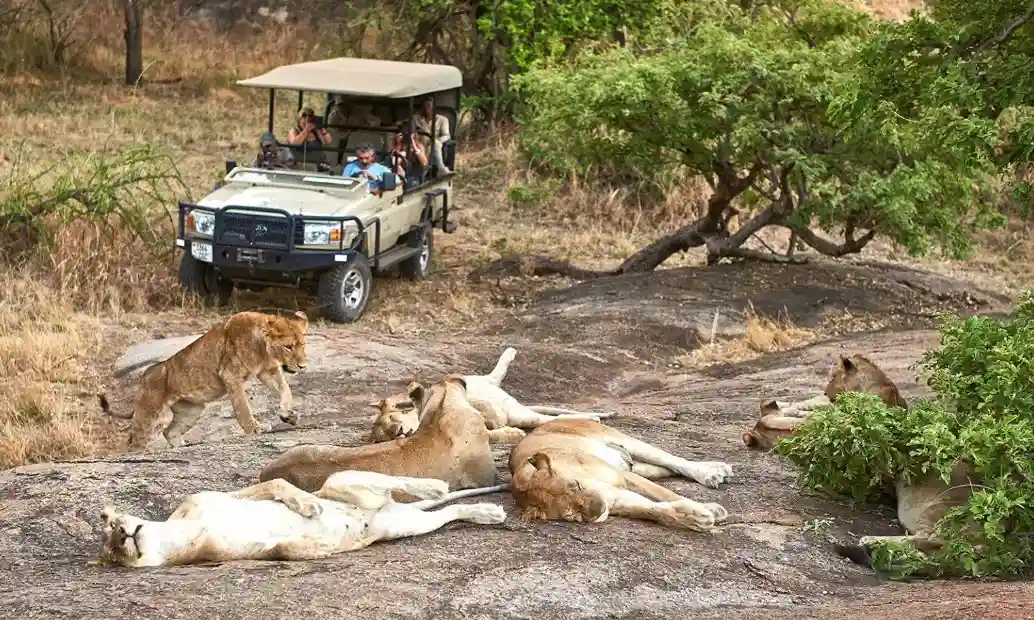
From $3,040
View itinerary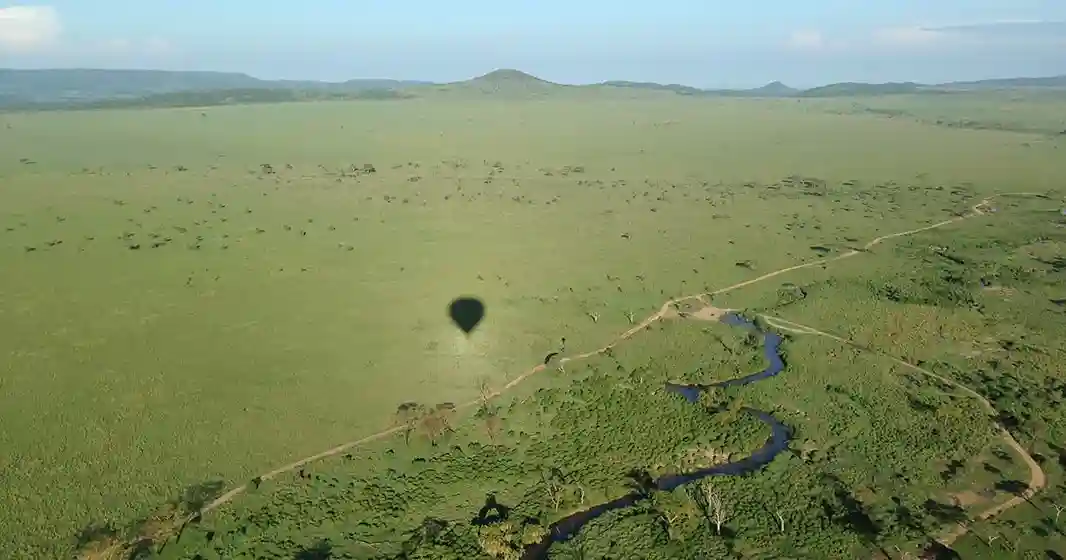
From $4,230
View itinerary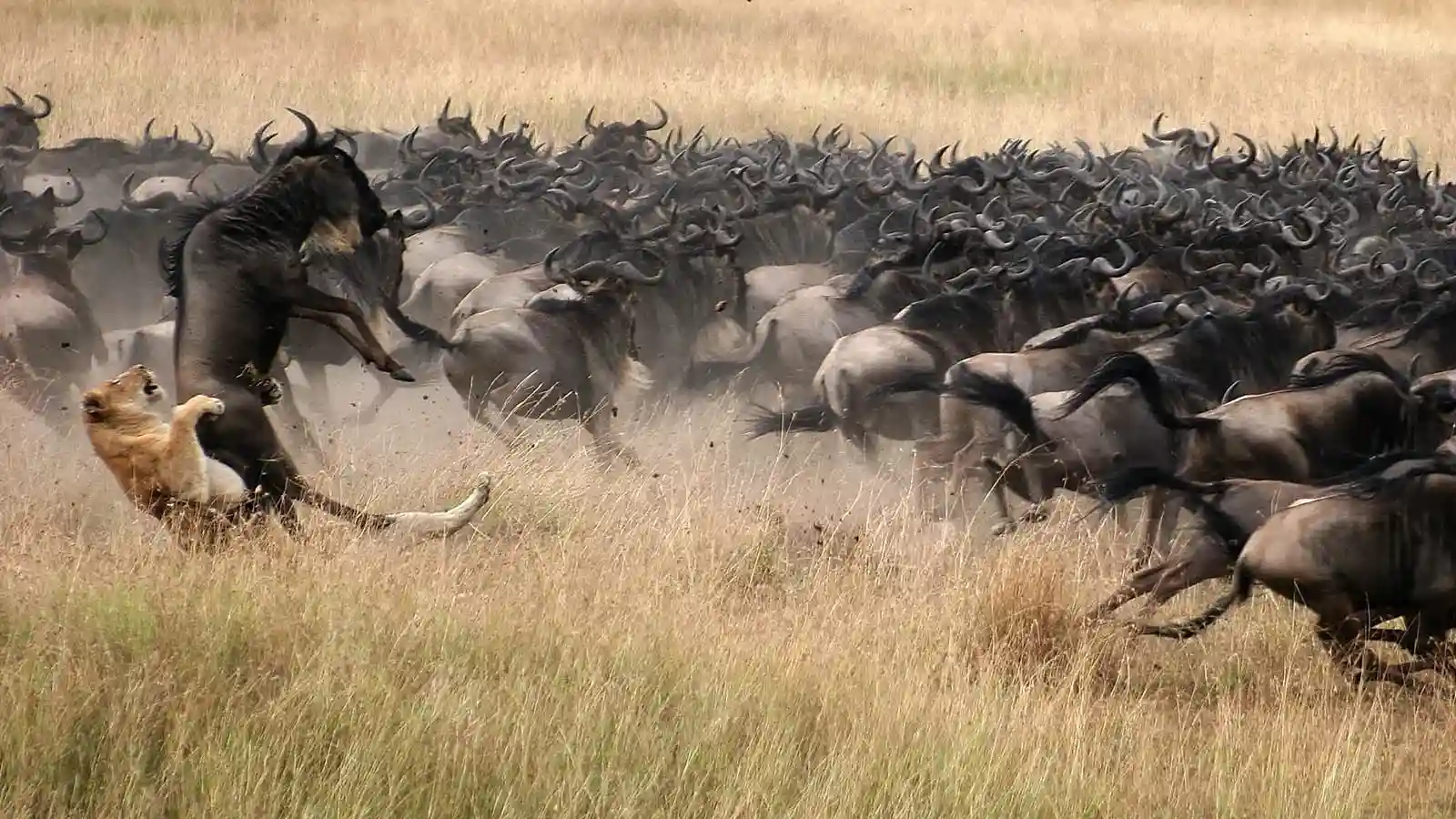
From $5,215
View itineraryThe Maasai grazed their cattle on these plains for generations. Parts of the area were protected as a game reserve from the 1920s, and Serengeti National Park was established in 1951. The German conservationist Bernhard Grzimek and his son Michael brought it to worldwide attention in the late 1950s with their film and book, Serengeti Shall Not Die. The park became a UNESCO World Heritage Site in 1981, and today it is at the heart of one of the largest protected ecosystems in Africa.
The park is far more varied than its reputation suggests. In the south are the short-grass plains that feed the calving herds. In the center, the Seronera River runs through savanna dotted with acacia trees and kopjes, the granite outcrops where lions like to rest. The west has the Grumeti River and its forests, and the north is a land of rolling hills, woodland and the Mara River. Each has a different feel, and that is why a longer stay is so rewarding.
These ancient granite outcrops rise from the plains like islands, and they are worth asking your guide about. They offer shade and lookouts for lions, as well as homes for rock hyrax and agama lizards. The Moru Kopjes in the center of the park also have Maasai rock art and a rock that rings like a gong. The Simba Kopjes are a favorite place to look for lions.
Your park fees help to protect this ecosystem. To travel responsibly, stay on the marked tracks, keep your voice down around animals, and do not ask your guide to get too close. Please do not leave any litter or feed the wildlife. Our responsible tourism page explains how we work.
There are lodges and tented camps in all parts of the park, from simple public campsites to some of the finest camps in Africa. Your choice of area should follow the season, not the other way around. In February, a camp near Ndutu makes sense. In August, you may want to be in the north. We will suggest options in your written quote, at the level you choose.
Early morning and late afternoon offer the best light. A zoom lens of about 100 to 400 mm is very useful, and a bean bag helps to steady your camera on the vehicle. Dust is common in the dry season, so keep your gear covered. Above all, be patient. The best photos usually come after you have waited a while.
The Serengeti suits almost anyone who wants a classic safari, but it does ask for time. It takes most of a day to reach by road, and it is too large to see properly on a quick visit. If you have only two or three days, you may be better off with Tarangire and the crater. If you have four days or more, include it. It also suits photographers and anyone hoping for the migration, as long as you plan around the season.
The national park is only part of a much larger ecosystem, which includes the Ngorongoro Conservation Area, the Maswa and Grumeti reserves, the Loliondo area and Kenya's Maasai Mara. Animals move freely across these areas, following rain and fresh grass. That is why wildebeest can be seen in Ndutu, inside the Ngorongoro area, in February, and in Kenya in some months. Thinking of the whole system helps to explain why the herds keep moving.
Over 500 species have been recorded here, from the huge ostrich and kori bustard to the bright lilac-breasted roller. The Serengeti is also home to species found nowhere else, such as the grey-breasted spurfowl and the Fischer's lovebird, which is found in this region. Vultures, eagles and storks follow the herds. Even if you did not come for birds, it is hard not to notice them, and your guide can help you identify them.
Most trips continue to Ngorongoro, on the way back toward Arusha and Moshi. Many travelers then fly from Arusha to Zanzibar for a beach break, or climb Mount Kilimanjaro from Moshi. Small planes also link the Serengeti directly with Arusha and Zanzibar. Ask us how to link these together into a single trip.
Two to three nights is ideal for most people. One night is possible, but you will spend much of it arriving and leaving. Four nights or more lets you visit two areas, such as the central plains and the north. Our Serengeti safari guide shows how to plan by season.
About 14,750 square kilometers (5,700 square miles).
It is usually said to come from a Maasai word meaning endless plains.
Serengeti National Park is in Tanzania. It borders Kenya's Maasai Mara, which is part of the same ecosystem.
It depends on your goals. February suits calving, and August to September suits Mara crossings.
Few places live up to their fame, but this one does. Give it at least two nights, and choose your area by the season. Send us your dates, and we will help you plan.
Tell us when you are traveling and what interests you, and we will build your itinerary.