2-Day Tarangire and Ngorongoro Safari
From $1,295
View itinerary
Imagine a collapsed volcano about 19 kilometers (12 miles) across, with steep green walls, a soda lake on its floor and thousands of animals living inside. That is Ngorongoro Crater, and it is one of the best places in Africa to see large animals in a single day, including black rhino.
It is also busy and expensive, and worth planning properly. This guide explains what you can realistically see, how to avoid the crowds and how to fit the crater into your safari.
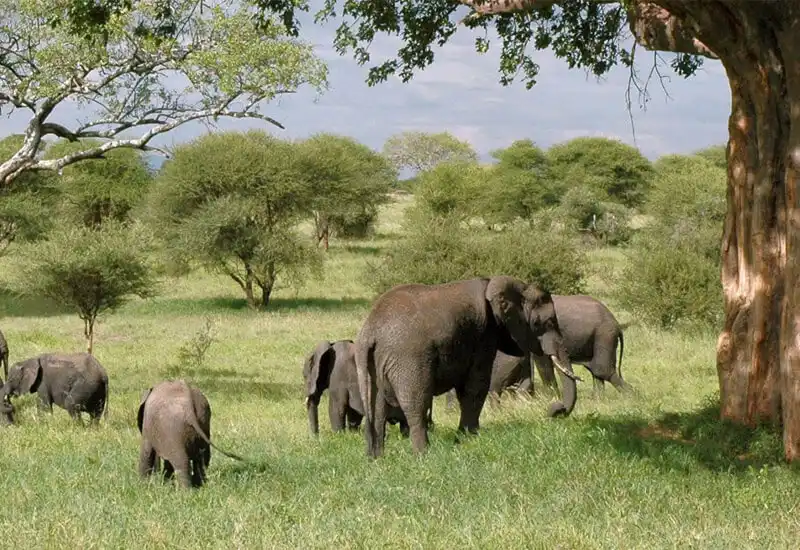
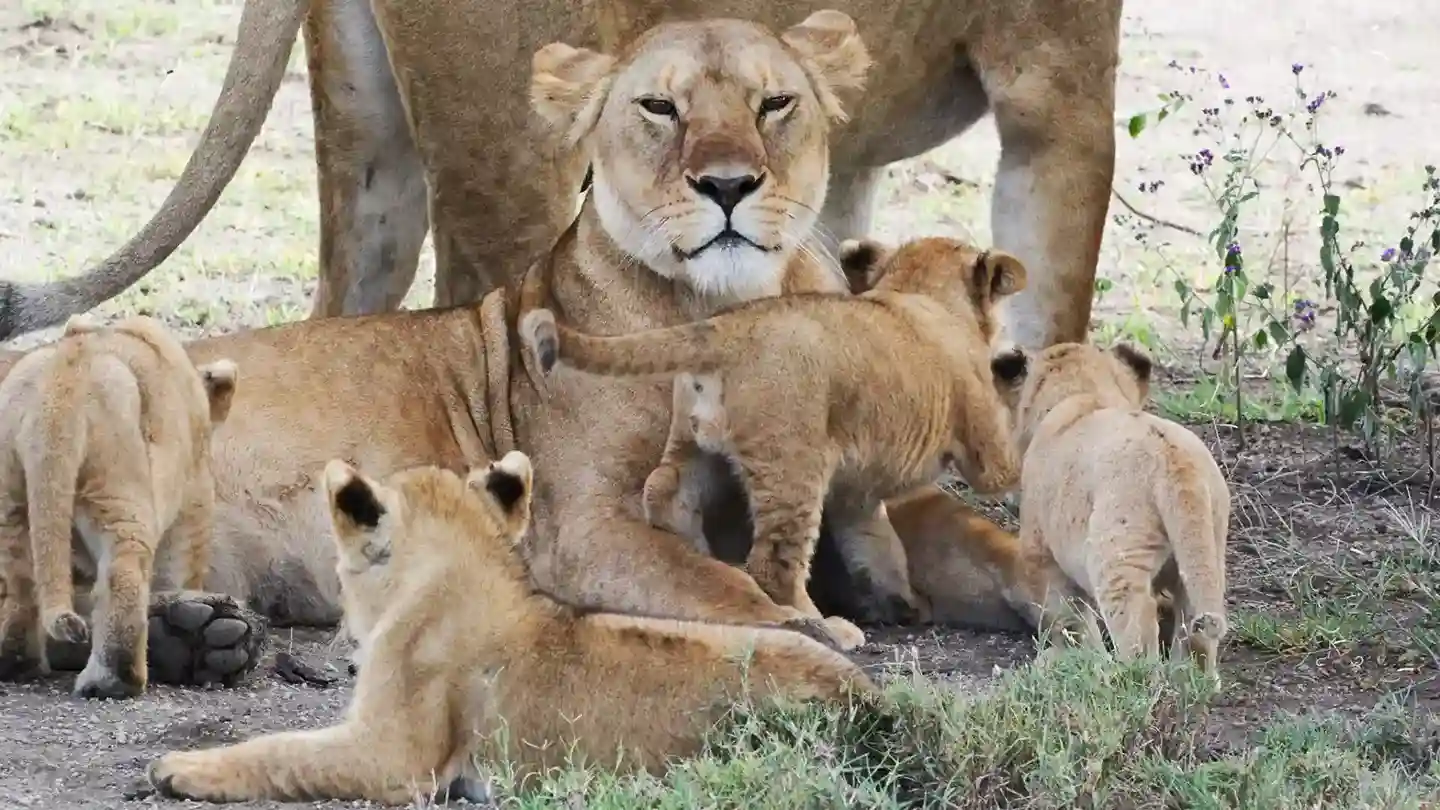
The crater has a large resident population, so animals are there all year. Expect lion, elephant, buffalo, hyena, zebra, wildebeest and hippo, and flamingos when water levels suit them. It is one of the best places in Tanzania for black rhino, although they often stay at a distance. Leopard is rare on the crater floor.
It is possible, though leopard is the hardest, and no sighting is guaranteed.
You leave early and descend a steep road to the floor. Being among the first in means better light and fewer vehicles. Your guide works around the lake, the swamps and the grassland through the morning. You stop for a picnic, often near a hippo pool, and climb out in the afternoon. Vehicles have a time limit on the crater floor, which your guide will manage.
Prices are at mid-range level with two people sharing. Each trip can be changed to suit your dates and budget.
From $1,295
View itinerary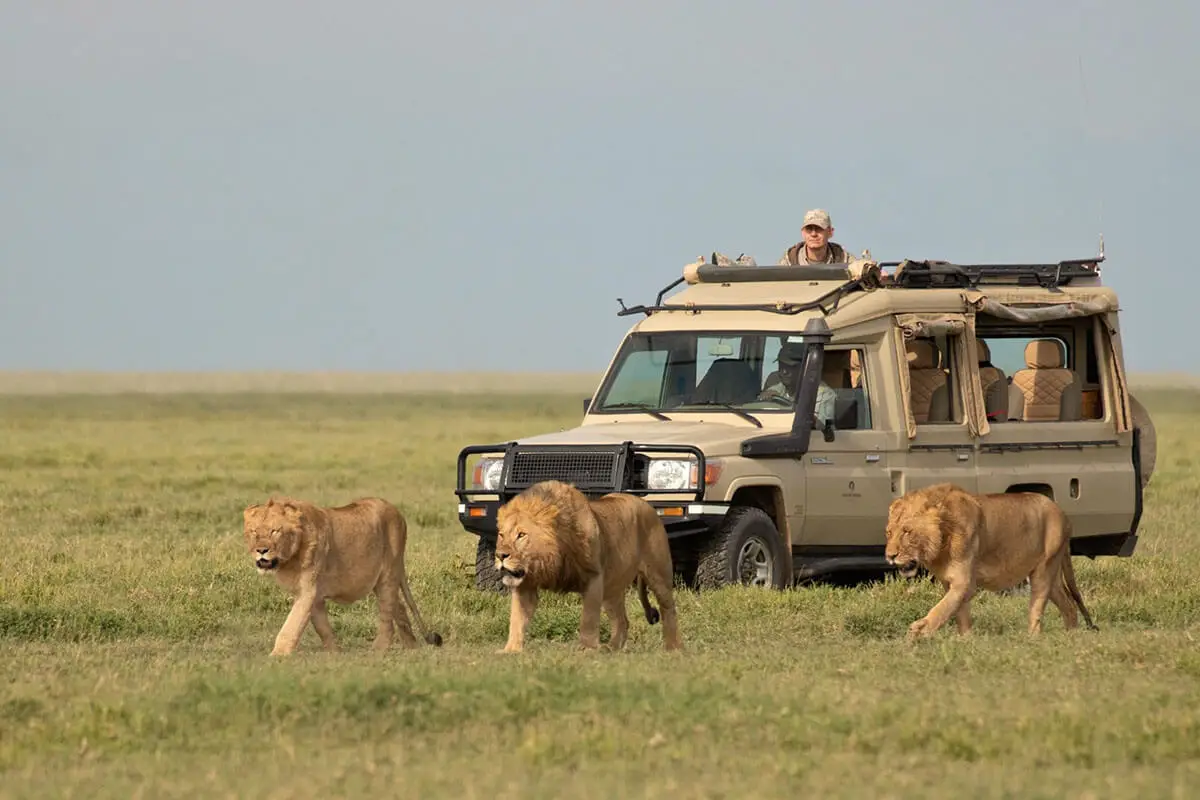
From $1,920
View itinerary
From $2,610
View itinerary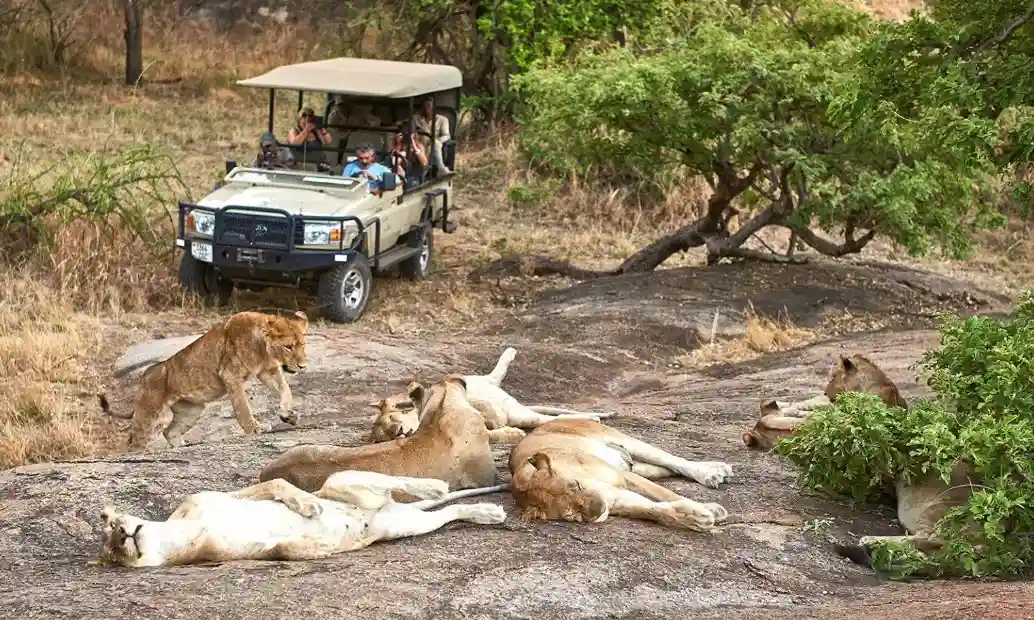
From $3,040
View itinerary
From $4,230
View itineraryThe crater can feel busy, especially around lunchtime. Your best options are to go down as soon as the gates open, to visit outside peak months, and to let your guide head for quieter corners. Vehicles often gather at big sightings, so do not be surprised if you share a lion with others.
Lodges on the rim have superb views, and they put you closest to the descent road. Karatu, a farming town about an hour from the gate, is a good, lower-cost alternative with a pleasant climate. The rim is cold at night, so bring warm layers. Tell us your preference, and we will suggest options at your level.
The crater is good all year, because the animals stay. June to October has dry conditions and clear views, but it is the busiest. November to March is greener and quieter, and January to March can bring wildebeest and zebra on the nearby plains. April and May are the wettest months.
Your driver-guide is with you from the first morning to the last drive, and much of what you see depends on them. Our guides have worked on Tanzania tours for 7 years. They are graduates of the College of African Wildlife Management, Mweka, and the National College of Tourism, and they hold certification from those institutions.
You travel in a private 4WD Land Cruiser with a pop-up roof, clear windows for wildlife viewing and comfortable seats. We run private safaris, so you choose your dates and share the vehicle only with your own group. If you are traveling alone and would like company to share the cost, ask us and we will check whether a suitable shared departure is available with a trusted partner company.
Pack neutral clothing, warm layers for early mornings, a hat, sunscreen and binoculars, using our safari packing list. See a travel clinic six to eight weeks before you leave. Malaria is a risk in the safari parks, so ask about tablets and bring repellent. Travel insurance is not included, and we strongly recommend a policy that covers medical care and evacuation. Our safari cost guide shows what to budget beyond the safari price.
Because it sits between Lake Manyara and the Serengeti, the crater fits naturally at the start or end of a safari. Most of our trips visit on the way back from the Serengeti, so you finish with a big day. That can mean a long drive home, so if you prefer a slower pace, ask about an extra night in Karatu or on the rim. On short trips, it pairs well with Tarangire, as on our 2-day and 3-day safaris.
There is more to the area than the crater. Maasai communities in the highlands welcome visitors for cultural tours, and Olduvai Gorge is one of the most important places in the world for the story of human origins. The Empakaai Crater offers a quiet forest walk down to a soda lake. Ask us if you would like to add any of these. See our Ngorongoro Conservation Area guide.
Go down early for soft light and fewer vehicles. The crater walls make a beautiful backdrop, so a wider lens is useful as well as a zoom. Mist can linger until mid-morning, especially in the cooler months, which can make for very atmospheric photos. Rhino are often far away, so a long lens and binoculars help a great deal.
Visiting the crater means paying a conservation fee per person plus a separate fee per vehicle to go down to the floor, and that adds noticeably to a safari's price. These fees are included in our prices. See our safari cost guide for how fees fit into the total, and why it is still worth the money.
If you can, yes, because they are so different. The Serengeti is about space and movement, and it can take hours to find what you are looking for. The crater is about concentration, with many animals in a small area and spectacular scenery all around. If you have only two or three days, the crater is much easier to reach, and it gives you a strong chance of seeing a wide range of animals. If you have four days or more, include both.
Yes. Sightings tend to come quickly, so children stay interested, and a single game drive can be enough. Keep in mind that the road down is steep and bumpy, and the day can be long if you drive back to Moshi the same evening. If that sounds tiring, ask about staying a night in Karatu or on the rim. See our family safari guide.
Most visitors eat a picnic lunch at a marked site, often near a hippo pool. Keep your food out of sight, because black kites can swoop down and take it from your hand. Basic toilets are available at picnic areas. Bring a warm layer for the morning, sunscreen for midday and binoculars for spotting rhino. You must stay on the marked tracks, and your guide will watch the time limit on the crater floor.
The migration does not pass through the crater itself, as the animals there stay all year. However, the wider conservation area includes the Ndutu plains, where the herds gather to calve from about January to March. If you are traveling during those months, ask us about a route that includes both the crater and the plains. See our Serengeti safari guide.
The crater costs more than most parks, because of its per-person fees and the separate fee per vehicle. For most travelers, it is still worth it. Few places offer such a mix of animals and scenery within a single game drive. If you are on a tight budget and already visiting Tarangire and the Serengeti, you could skip it, but you would miss the best chance of seeing black rhino and one of the most striking views in Africa.
It suits short-trip travelers, first-time visitors, photographers and anyone hoping to see rhino. It may disappoint those who want wilderness without other vehicles, particularly around midday in peak months. Going down as soon as the gates open is the best answer to that problem.
Yes. It is one of the best single days on safari, although it can be busy.
One game drive of several hours is enough for most people.
No. Lodges are on the rim or nearby, so you drive down for the day.
Our shortest trip that includes it starts from $1,295 per person at mid-range level, with two sharing.
It is one of the best places in Tanzania to try, but they are often distant.
Almost always, yes. It is close to the main route, and it offers something no other park can. Send us your dates, and we will build it into your trip.
Tell us your dates and group size, and we will send a written quote from Moshi.