
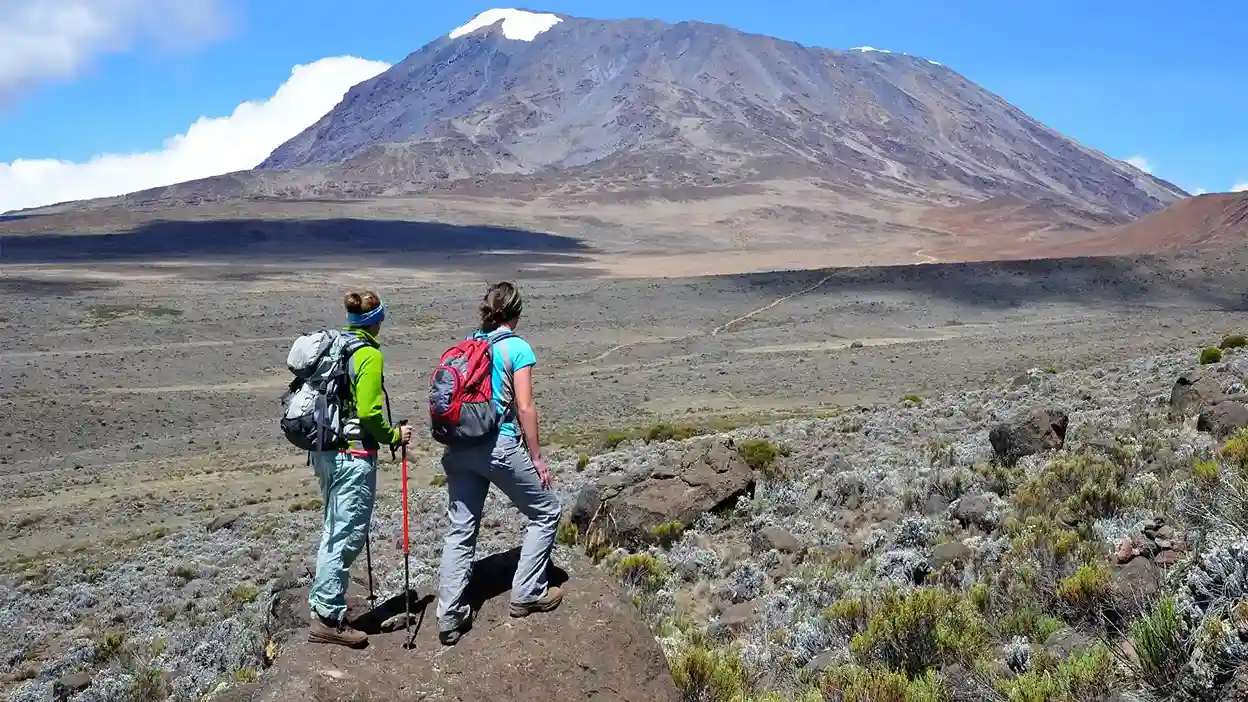
Lemosho Route on Kilimanjaro: Why First-Time Climbers Choose It
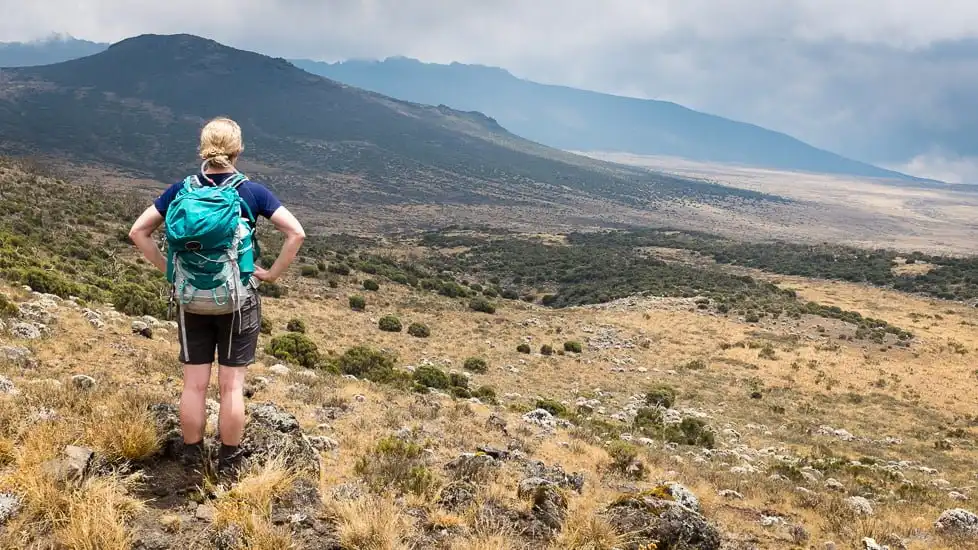
If you asked us to choose one route on Kilimanjaro for someone climbing their first high mountain, we would pick the Lemosho Route. It starts on the quiet western side, far from the crowds at Machame Gate, and crosses the wide Shira Plateau before it joins the main path near Lava Tower. Those first days give you time, space and some of the best views on the mountain.
This guide explains what makes the Lemosho Route different, how hard it is, and whether to take 7 or 8 days. We will also tell you when another route might suit you better, because Lemosho is not right for everyone.
Lemosho Route at a glance
| Days | 7 or 8 |
|---|---|
| Distance | About 70 km (43 mi) |
| Start and finish | Londorossi Gate (western side), Mweka Gate (1,650 m / 5,410 ft) |
| Sleeping | Tents, set up by your crew |
| Summit approach | From Barafu Camp (4,673 m / 15,330 ft), via Stella Point |
| Crowds | Quiet until Lava Tower, then shared with Machame |
| Price | From $2,090 per person |
Why the Lemosho Route suits first-time climbers
The main reason is pacing. Lemosho spends several days gaining height slowly, which gives your body time to adapt before the demanding upper mountain. The second reason is quiet: the western forest and the Shira Plateau see far fewer climbers than the southern side. The third is scenery, and many climbers say the moment Kibo appears over the Shira rim is the most memorable of the first week.
You also get the best of the southern route, because Lemosho joins Machame in time for Lava Tower, the Barranco Valley and the Barranco Wall.
The Lemosho Route trail, section by section
Londorossi Gate and the western forest
The climb begins with a drive of about three hours to Londorossi Gate, then a short walk through rich forest to Mti Mkubwa, or "Big Tree" Camp. Colobus monkeys are the most likely sighting, and elephant and buffalo live in this forest too, though you are unlikely to see them.
The Shira Plateau
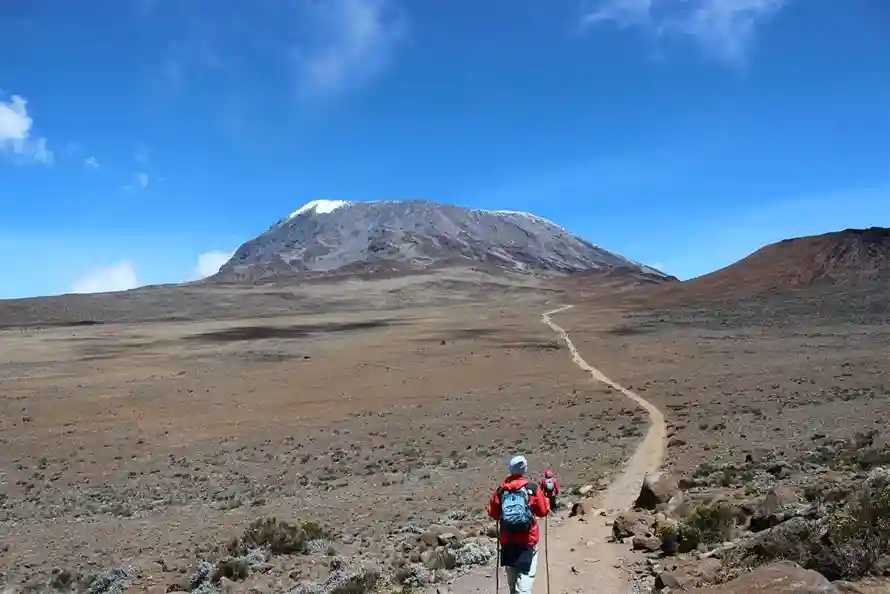
Next you climb through heath onto the Shira Plateau, a high moorland formed from a collapsed volcano. Kibo fills the view ahead. On the 8-day climb, you take two easy days to cross it, and on the 7-day climb you do it in one long day.
Lava Tower to Barafu
You climb to Lava Tower at 4,600 meters (15,090 feet), then drop to Barranco, climb the Barranco Wall, and traverse to Karanga and Barafu. From here on, you share the path with Machame climbers.
Summit night and the descent
You leave Barafu around midnight, reach Stella Point around dawn and walk the crater rim to Uhuru Peak at 5,895 meters (19,341 feet). You then descend through Mweka Camp to Mweka Gate.
Lemosho Route climbs and prices
Prices are per person for two sharing, and include two hotel nights in Moshi, airport transfers, park fees and your full crew of one guide, five porters and one cook per climber.
-
-
 Best pacing
How difficult is the Lemosho Route?
The Lemosho Route is a hard walk, but a very fair one. The early days are moderate, and the only section that needs your hands is the Barranco Wall. As on every route, summit night is the real test. You do not need any climbing experience, but you should be able to walk on hills for 6 to 8 hours and do it again the next day.
The biggest risk on Lemosho is treating the easy early days as a warm-up and walking too quickly. Listen to your guide when you hear "pole pole", which means "slowly, slowly".
7 or 8 days on the Lemosho Route?
The difference is the plateau. The 7-day climb crosses it in one long day of about 16 km (10 miles). The 8-day climb takes two easier days, which helps your body adjust before you go higher. The eighth day costs $245 more per person, and it is the best value for reducing your risk.
| 7-day Lemosho | 8-day Lemosho | |
|---|---|---|
| Price from | $2,090 | $2,335 |
| Nights in tents | 6 | 7 |
| Day 2 | Long walk to Shira 2 | Moderate walk to Shira 1 |
| Best for | Fit climbers short of a day | First-timers and anyone who wants the best margin |
Operators publish very different summit figures and none are independently audited, so treat any single number with caution. Commonly quoted ranges run from about 27 to 42 percent on 5-day climbs, and from about 64 to 92 percent on 7-day climbs, with 8 and 9-day climbs reported higher still. The exact figures matter less than the pattern: more days means better odds.
Lemosho Route vs Machame Route: which should you choose?
At 7 days, they cost the same, at $2,090 per person, and they share the same path from Lava Tower up. Lemosho has the quieter start and finer early scenery. Machame has the shorter transfer and a shorter second day. If you are unsure, ask yourself whether you would rather have quiet trails or an easier journey to the start. Most people who can spare an eighth day should take Lemosho.
Best time to climb the Lemosho Route
The driest months are January to mid-March and June to October. Lemosho stays quiet for its first days even in peak months, so it is a good way to avoid crowds in July, August and September. The forest section can be very muddy in the rains from mid-March to May. See our month-by-month guide.
Summit night on the Lemosho Route: what to expect
Summit night on the Lemosho Route follows the same path as Machame, starting from Barafu around midnight. You climb long zigzags of scree for around 6 to 8 hours by headlamp, usually reaching Stella Point around dawn, and then walk the crater rim to Uhuru Peak in about an hour. After the extra days on the plateau, many climbers feel stronger here than they expected. It is still very cold and can be windy, so wear every layer, and keep your water insulated.
What a typical day on the Lemosho Route feels like
Most days start with a hot drink at your tent or bunk around 6:30 a.m., followed by breakfast. You set off by about 8 a.m. with your guide, walking slowly with regular stops for water and photos. Your porters pack up behind you, pass you on the trail and have the next stop ready by the time you arrive. Lunch comes either on the trail or at camp, depending on the day.
Afternoons are for resting, reading, washing with a bowl of warm water and getting to know your crew. Dinner is hot and filling, and most climbers are asleep soon after dark. It is a simple rhythm, and many people say it is the part of the Lemosho Route they miss most.
Getting to the Lemosho Route from Moshi
Londorossi Gate is on the far western side of the mountain, about three hours by road from Moshi including park registration. We collect you from your hotel in the morning, so you will reach the trailhead around midday. The climb finishes at Mweka Gate, about an hour from Moshi, and we drive you back to your hotel. Fly into Kilimanjaro International Airport (JRO), about an hour from Moshi, and we meet you there. All these transfers are included in your price.
How to prepare for the Lemosho Route
Start training at least 12 weeks before you fly, with long hikes on back-to-back days. Our Kilimanjaro training plan shows you how. Our packing list covers what to bring and what you can rent in Moshi. See a travel clinic six to eight weeks before you leave, and ask about altitude medication and malaria tablets for the lower areas.
Your crew and safety on the Lemosho Route
Every climber on our Kilimanjaro climbs has one guide, five porters and one cook. A group of two therefore has two guides, ten porters and two cooks. That ratio is higher than many operators offer, and it means that if one climber needs to slow down or turn back, the other can continue with their own guide.
Our guides have worked on Tanzania tours for 7 years. They are graduates of the College of African Wildlife Management, Mweka, and the National College of Tourism, and they hold certification from those institutions. We are also a partner of the Kilimanjaro Porters Assistance Project (KPAP), which works for the fair treatment of mountain crews.
We carry pulse oximeters to track your blood-oxygen levels each day, emergency oxygen cylinders for emergency descents and severe altitude illness, and a Gamow bag, a portable pressure chamber used to treat advanced altitude sickness. Helicopter evacuation is available through providers including Kili MedAir and Proflight Helicopters, with fees starting from $3,500 per person. It is not part of the climb price, so check that your travel insurance covers trekking to 6,000 meters (19,685 feet) and evacuation before you buy it.
Lemosho Route: your questions answered
Is the Lemosho Route harder than Machame?
The upper mountain is the same. Lemosho's extra time usually makes it easier on your body, though the 7-day version has one long day on the plateau.
How long is the Lemosho Route?
About 70 km (43 miles) from Londorossi Gate to Mweka Gate.
Why is the Lemosho Route more expensive?
It is not more expensive per day. The 7-day Lemosho and 7-day Machame cost the same, and price rises only as you add days.
Is the Lemosho Route good for beginners?
Yes. It is one of the best choices for beginners, especially at 8 days.
How far is Londorossi Gate from Moshi?
It takes about three hours by road, including registration. Your transfer is included in the price.
How the Lemosho Route compares with other Kilimanjaro routes
Still deciding? Our Kilimanjaro route comparison shows all five side by side.
-
Machame Route
The classic: varied scenery and a scramble up the Barranco Wall.
From $1,845
View route -
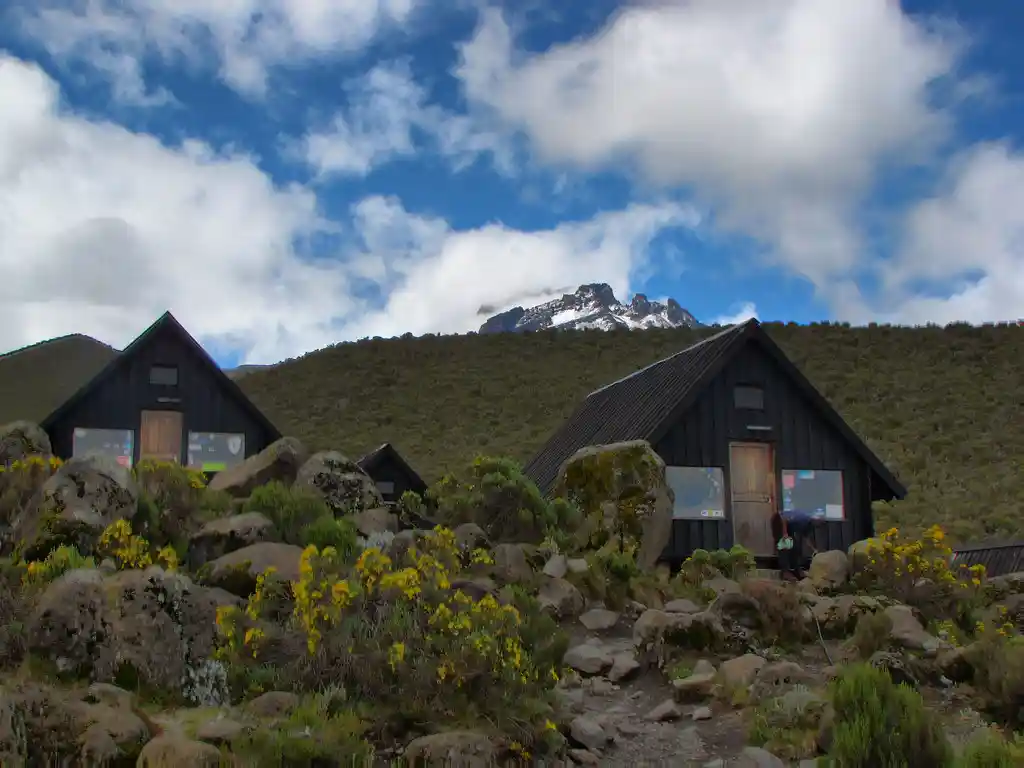
Marangu Route
The only route with a bed in a hut each night, up and down one path.
From $1,600
View route -
Rongai Route
The quiet, drier northern approach, with steady walking and no scrambling.
From $1,845
View route -
Northern Circuit Route
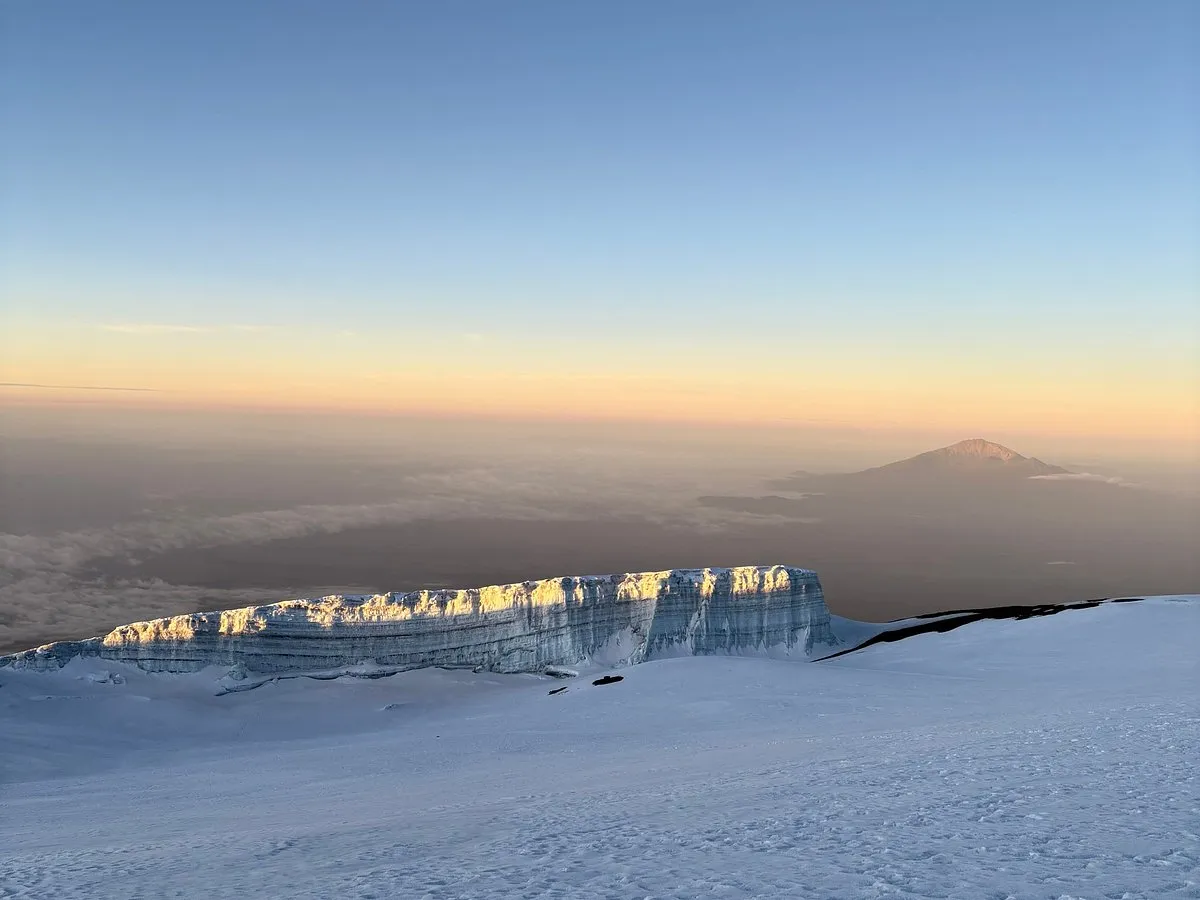
The longest route, with the most time to adapt and very few people.
From $2,580
View route
Should you climb the Lemosho Route?
If you have the time and this is your first high mountain, yes. Take 8 days if you can. You will have quieter trails, better pacing and more time to enjoy the climb. Send us your dates and we will send you a written quote.
Ready to climb the Lemosho Route?
Tell us your dates and group size, and we will send a full quote from our office in Moshi.