What is the best month to climb Kilimanjaro?
February and September are among the most reliable. February is usually quieter, and July to September has the most climbers.

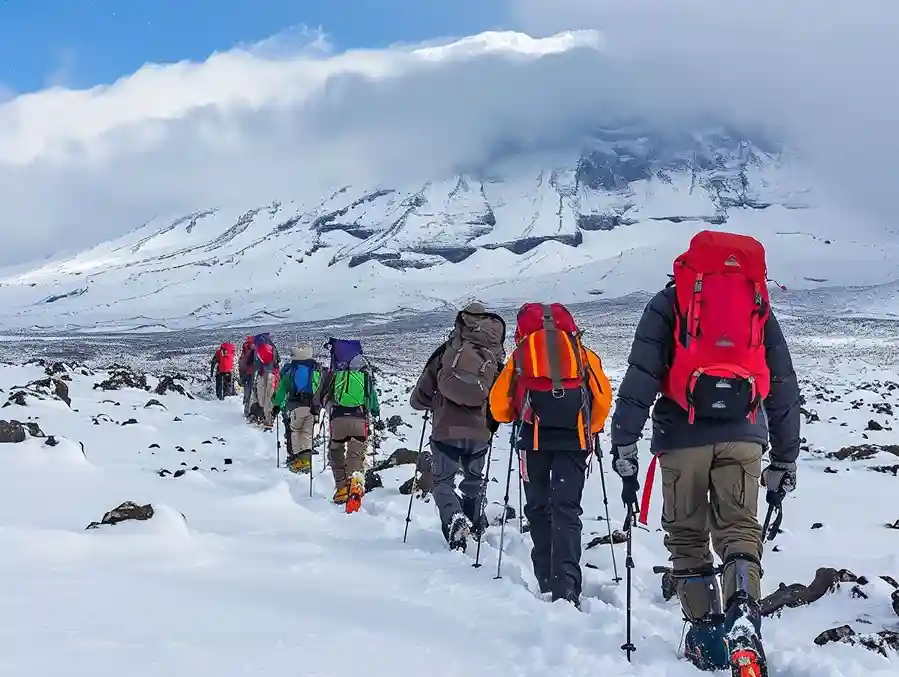
Timing shapes your Kilimanjaro climb more than most people expect. Pick the right month and you get clear skies, firm paths and long views across Africa. Pick the wrong one and you may spend a week in cloud, climbing through mud, and see nothing at all from the top. You can climb all year, but the mountain is not the same in every month.
The best time to climb Kilimanjaro is during the two dry seasons: January to mid-March and June to October. This guide goes through the year month by month, explains what changes on the mountain, and shows which route suits each season, so you can choose your dates with confidence.
Kilimanjaro sits just south of the equator, so its seasons are set by rain rather than by summer and winter. There are two dry seasons and two rainy seasons, and they decide almost everything about how your climb will feel.
Skies are generally clear, and the days are warm on the lower slopes. Summit nights are cold, and fresh snow near the top is more likely than in the later dry season, which makes for beautiful photos. Crowds are moderate, so this is one of the best periods overall.
This is the main climbing season, peaking from July to September. Conditions are the most reliable of the year, and the upper mountain is usually clear. You pay for that reliability with more people on the popular routes.
This is the wettest time of year. Forest paths turn to mud, cloud sits on the upper mountain, and summit views are unlikely. Few people climb, and for good reason. We advise most first-time climbers to avoid this period.
November brings shorter, less predictable showers. Conditions usually improve through December, and the holidays are a popular time to climb.
| Month | Conditions | Crowds | Our advice |
|---|---|---|---|
| January | Mostly dry and clear. Cold nights. | Moderate | One of the best months. Good for the calving season in the Serengeti too. |
| February | Often the clearest of this season. | Moderate | One of the best months overall. |
| March | Dry at first, with rain from mid-month. | Low | Good early in the month. Risky after that. |
| April | Very wet. Muddy forest and heavy cloud. | Very low | Avoid for a first climb. |
| May | Wet at first, drying late in the month. | Very low | Avoid for a first climb. |
| June | Dry season begins. Forest may still be damp. | Moderate | A very good choice for fewer people. |
| July | Dry and clear, with cold nights. | High | Excellent, but book early. |
| August | Dry and clear. Often windy up high. | Highest | Excellent, but book early. |
| September | Dry and clear, slightly warmer. | High | Excellent. Pairs well with the migration in the north. |
| October | Mostly dry, with cloud building late in the month. | Moderate | A good quieter option. |
| November | Short rains. Variable, with cloud and showers. | Low | Possible for experienced climbers. |
| December | Improves through the month. Holidays are busy. | Busy late in the month | A popular holiday climb. Book early. |
Altitude matters much more than the month. The mountain goes from warm forest to arctic conditions on every climb, whatever the season.
| Part of the mountain | Typical conditions |
|---|---|
| Rainforest, up to about 2,800 m (9,200 ft) | Warm and humid by day, around 20 to 25°C (68 to 77°F) |
| Moorland, up to about 4,000 m (13,100 ft) | Sunny days, cold nights around freezing |
| Alpine desert, up to about 5,000 m (16,400 ft) | Hot sun, strong wind, nights well below freezing |
| Summit | Around -7 to -20°C (19 to -4°F), colder with wind |
These are rough figures, and a clear night can be colder than a cloudy one. See our Kilimanjaro packing list for the layers you will need.
In the dry seasons, any route works, so choose by the number of days you have. If you want quieter paths in the peak months, try the 8-day Lemosho or the 9-day Northern Circuit.
In wetter months, the Rongai Route usually gets less rain, because it is on the north side of the mountain. On the Marangu Route, you sleep under a roof every night, which helps a lot in the rain. Your choice of route cannot remove bad weather, but it can make it more bearable.
Machame and Marangu get busy from July to September and around the Christmas holidays. If you want a quieter climb, you have three good options.
Some climbers time summit night for a full moon, because the extra light can make the mountain glow and reduce the need for a headlamp. It is a lovely idea, and those dates are popular, so book early. Do not let it override everything else. A climb in the right season with the right number of days matters far more. Tell us your preference, and we can plan your dates around it.
Many climbers add a safari afterward, and the timing can work well. January to March suits a climb followed by the calving season in the southern Serengeti. July to October suits a climb followed by the migration in the north. See our guide to the best time for a safari and our northern circuit safaris.
Book as early as you can for July to September and the Christmas holidays. Our climbs are private, so you set the dates, but park and hotel arrangements still fill up in busy periods. Early booking also gives you time to train, buy gear and find good flights. We run private climbs and have no joining dates of our own. If you would like company, we can ask trusted partner companies whether one of their departures matches your dates, at the same price with nothing added.
Choose January, February, late June or September. You get reliable weather and enough other climbers around to make camps feel lively without being crowded.
Choose January to early March or August to September. Cloud can still appear on any day, but these months give you the best odds of a clear sunrise from the rim.
Aim for January to March, when fresh snow is more common. It makes for beautiful photos, although the top can be colder underfoot.
Flights are often cheaper outside July, August and the holidays. A climb in early June or late October can bring your total cost down without much risk from the weather.
You can still climb. Choose Rongai or Marangu, add a day if you can, pack extra dry bags and accept that the views may be limited. Plenty of people have had a wonderful, quiet climb in November.
Even in the driest month, Kilimanjaro makes its own weather. A clear morning can turn to cloud by noon, particularly in the forest and on the moorland, and clouds often sink back below camp by evening, leaving a clear night sky. Rain is possible on any day of the year, which is why a waterproof jacket and pants belong on every packing list.
The summit area stays cold all year. On a clear night, there is little to hold in the heat, so a beautiful sky often means the coldest conditions of all. Your guide watches the weather closely and can adjust your start time on summit night if needed.
February and September are among the most reliable. February is usually quieter, and July to September has the most climbers.
Yes, the mountain stays open, but paths are muddy and summit views are less likely. Most first-time climbers should choose a drier month.
The summit is cold all year. January to March and June to August tend to feel the coldest at night.
It can be, especially later in the month, when the short rains ease. Book early for the holidays.
Yes, near the summit. Fresh snow is more likely from January to March.
Aim for January to mid-March or June to October, and avoid April and May unless you have a good reason. Then match the month to the route, and give yourself as many days as you can. Tell us when you can travel, and we will suggest the best option for those dates.
Tell us when you can travel, and we will suggest the best route for that month.