When is the best time for this 9-day safari?
From about July to October, when the migration is usually in the north.

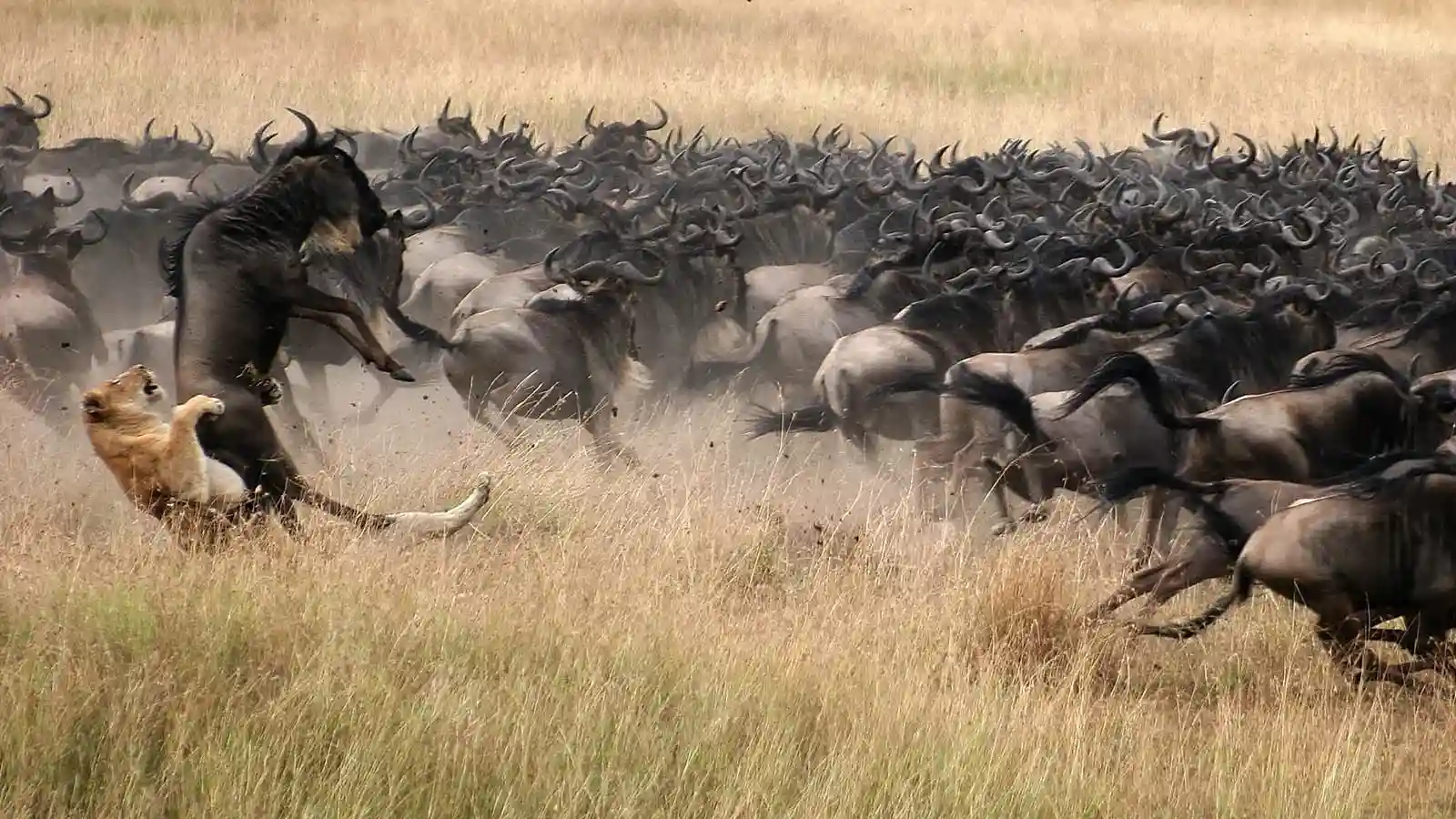
Most safaris stop in the central Serengeti. This one keeps going, north to the Mara River, where the best-known scenes of the Great Migration happen. You also get two nights in Tarangire, a night at Lake Manyara and a final day in Ngorongoro Crater. Prices start from $5,215 per person.
It involves a lot of driving, especially the long day back from the north. Flying some sections is possible at extra cost, so ask us if you would rather spend that time watching wildlife.
| Parks | Tarangire, Lake Manyara, central and northern Serengeti, Ngorongoro |
|---|---|
| Duration | 9 days, 8 nights |
| Style | Private safari; mid-range as standard |
| Vehicle | Private 4WD Land Cruiser with a pop-up roof |
| Start and finish | Moshi |
| Best months | June to October, January to March |
| Price | From $5,215 per person, mid-range, two sharing |
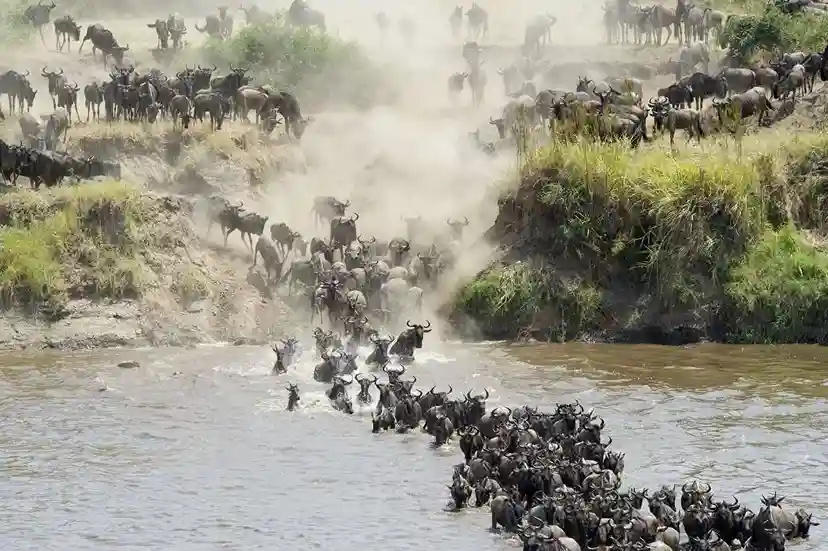
No, and you should be wary of anyone who says you can. Crossings usually happen from about July to October, and they depend on rain and on the herds' own decisions. You may wait for hours, and it may not happen. Two nights in the north gives you a fair chance in that season. Outside it, the north is still a quiet and beautiful part of the park.
It suits serious wildlife lovers and photographers, and anyone traveling from about July to October who wants the migration. If you are visiting in January to March, the herds are in the south, so ask us about a different route.
Here is how this safari usually runs. Drive times are approximate, and your guide will adjust each day around the wildlife, the roads and the season.
We collect you from your hotel in Moshi after breakfast and drive about three to four hours to Tarangire, with the plains opening up as you go. You enter the park around lunchtime and spend the afternoon on your first game drive along the Tarangire River. In the dry season, this river pulls in elephants by the hundred, and ancient baobabs give the park a look found nowhere else on the circuit. You sleep at a mid-range camp or lodge in the Tarangire area.
A second day here lets you go beyond the busy river section. You set off early, when the light is soft and predators are active, and explore the quieter swamps and woodland in the south of the park. Your guide will look for lion, and for the tree-climbing pythons and over 500 bird species that the park is known for. Lunch can be a picnic at a viewpoint over the river, and there is time to stop and watch elephants without rushing.
After a morning drive in Tarangire, you make the short journey of about an hour and a half to Lake Manyara. In the afternoon, you go down below the Rift Valley wall into a compact park with groundwater forest, hippo pools and a soda lake that attracts flamingos when conditions are right. The tree-climbing lions are famous, but do not count on them, because they are seen only some of the time. You sleep near the park, in the Mto wa Mbu area.
This is a big travel day, and one of the most beautiful. You climb over the green Ngorongoro highlands, stop at the rim for your first view of the crater, then drop to the vast plains of the Serengeti at Naabi Hill. The drive takes four to six hours with stops, and your game drive effectively starts as you enter the park. You reach the central Seronera area for the late afternoon, when the big cats begin to stir, and sleep inside the park.
This is the day people come to Tanzania for. You leave early, when lions are often still on the move, and spend the day following your guide's knowledge of the Seronera Valley. The river here is a reliable place to find leopard resting in sausage trees, and rock outcrops called kopjes are favorite lookouts for lions. Back at camp in the middle of the day, or with a picnic in the bush, you rest through the heat before the late afternoon drive.
You head north on a long game drive through the wooded Lobo area, where far fewer vehicles go. The landscape changes to rolling hills and rocky outcrops. If you are here between about July and October, you are heading for the Mara River and the migration. You arrive at your camp in the north by late afternoon.
Your day centers on the Mara River and the plains around it. In migration season, your guide will read the herds and wait at likely crossing points, although crossings cannot be predicted and may take hours of patience. Outside that season, the north is one of the quietest parts of the park, with resident lion, elephant and giraffe and room to enjoy them.
This is the longest drive of the trip, about eight to nine hours with stops, and it is effectively a game drive for the first half. You travel the length of the Serengeti, leave at Naabi Hill and climb to the Ngorongoro highlands. You sleep in Karatu, a cool farming town near the crater, ready for an early start.
You leave Karatu early and descend into the crater, a collapsed volcano about 260 square kilometers (100 square miles) across. Lion, elephant, buffalo and hyena are regular sightings, and this is one of the best places in Tanzania to see black rhino, although they are often distant. After a picnic lunch, you climb out and drive back to Moshi, arriving in the evening.
Wild animals keep their own schedule, so no one can promise a sighting. What we can promise is enough time in the right places, with a guide who knows them.
Tarangire is known for its big elephant herds and its giant baobabs. In the dry season, the river is the only reliable water for miles around, which draws in huge numbers of animals. It is also excellent for birds, with over 500 species recorded.
This small park packs a lot in, with forest, grassland, hippo pools and a soda lake below the Rift Valley wall. Flamingos gather when water levels suit them, and it is known for its tree-climbing lions and baboon troops.
The Serengeti is Tanzania's largest and most famous park. It has big cats in large numbers, and it hosts the Great Migration of over a million wildebeest. The central Seronera area has good wildlife year-round, while the migration moves through different areas through the year.
The Kogatende area, close to the Mara River, is famous for migration crossings, usually from around July to October. Outside those months, it is one of the quietest parts of the park.
The crater floor is home to a resident population of lion, elephant, buffalo, hyena and black rhino, within steep walls that make for some of the most striking scenery on safari. It gets busy, and leaving early helps.
The 9-day Tanzania safari starts from $5,215 per person at mid-range level with two people sharing. The per-person price usually falls as your group grows, because the vehicle cost is shared, although room sharing can change that for odd numbers. Your final price is confirmed in your written quotation.
| Group size | Budget | Mid-range | Luxury |
|---|---|---|---|
| 1 traveler | $5,550 | $7,205 | $11,230 |
| 2 travelers | $3,805 | $5,215 | $8,350 |
| 3 travelers | $3,235 | $4,520 | $7,690 |
| 4 travelers | $3,150 | $4,560 | $7,700 |
| 5 travelers | $2,940 | $4,275 | $7,430 |
| 6 travelers | $2,935 | $4,345 | $7,480 |
Our Tanzania safari cost guide explains how prices work, and what to budget on top.
Your driver-guide is with you from the first morning to the last drive, and much of what you see depends on them. Our guides have worked on Tanzania tours for 7 years. They are graduates of the College of African Wildlife Management, Mweka, and the National College of Tourism, and they hold certification from those institutions.
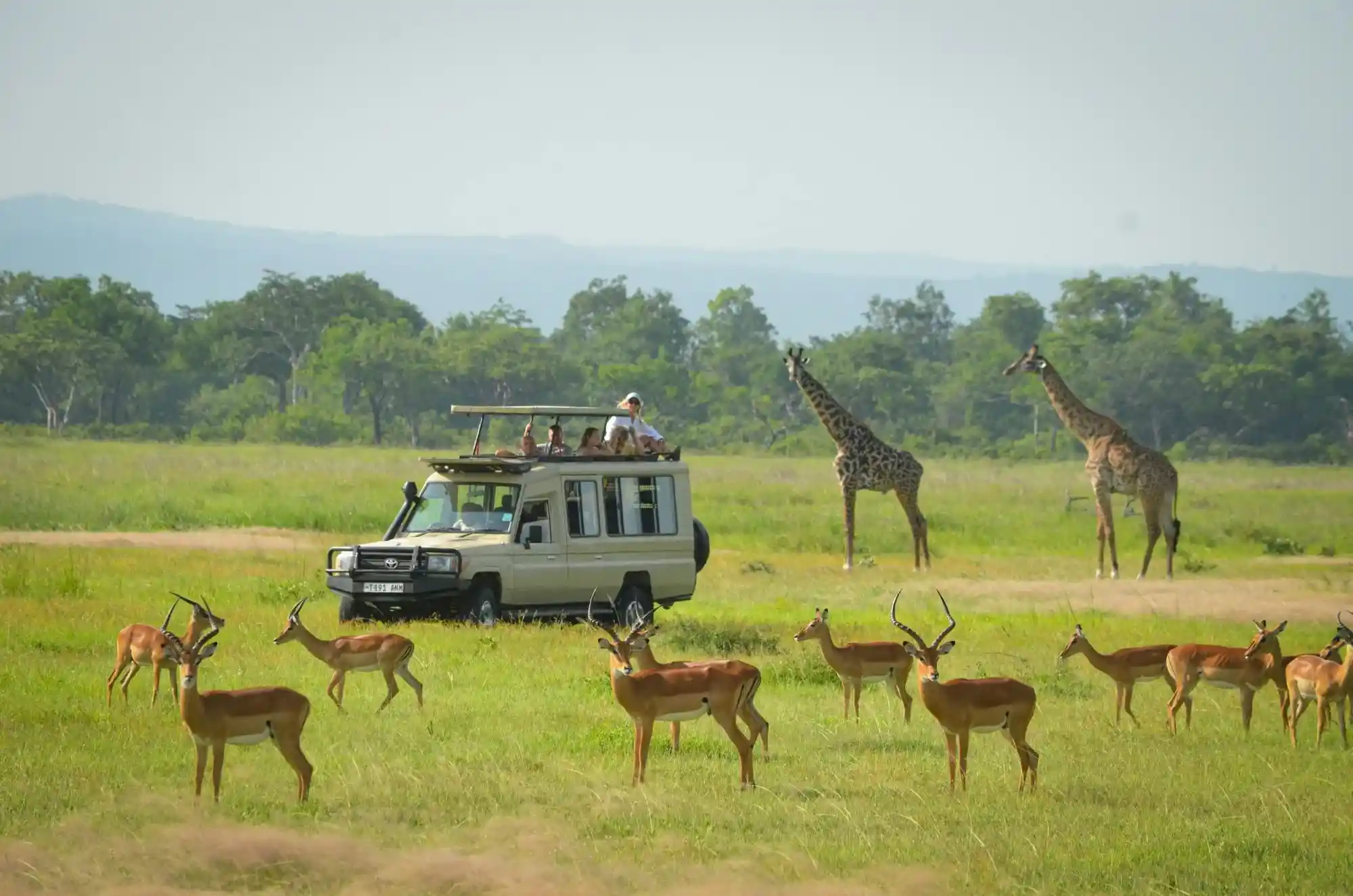
You travel in a private 4WD Land Cruiser with a pop-up roof, clear windows for wildlife viewing and comfortable seats. The pop-up roof lets you stand up and watch wildlife in the open air. We run private safaris, so you choose your dates and share the vehicle only with your own group. If you are traveling alone and would like company to share the cost, ask us and we will check whether a suitable shared departure is available with a trusted partner company.
Tips are not included in the price, and they are appreciated. Common guidance is about $15 to $25 per traveler per day for your guide, or about $40 to $50 per vehicle per day on a private safari, plus about $10 to $15 per guest per night for camp and lodge staff.
Most days begin early. You are up with a hot drink before dawn, and out on the first drive as the sun comes up, when predators are active and the air is cool. You may stop for a picnic breakfast, or return to camp for a proper meal. Midday is hot, and many animals rest, so you do the same. The late-afternoon drive runs until the park closes around sunset, when the light turns gold. Then it is dinner, stories by the fire and an early night.
You can always change this rhythm. Because this is a private safari, your guide can start later, stay longer at a sighting or go back early if you prefer.
Prices are based on mid-range tented camps and lodges, usually with en-suite bathrooms and full-board meals, either in or close to the parks. Your written quote will list where you are staying. If you would prefer simpler rooms or a higher level of comfort, compare the budget and luxury prices above.
Stay in the vehicle unless your guide tells you it is safe to get out. Keep your voice down near animals, do not stand on the roof, and never ask your guide to leave the track or get too close. Parks usually close around sunset, and your guide will plan around that.
From about July to October, the migration is usually in the north, which is when this route works best. At other times, we may suggest a different route. See our guide to the best time for a Tanzania safari.
This safari starts and finishes in Moshi. Kilimanjaro International Airport (JRO) is about an hour away. Your airport transfers are included in the price. Extra hotel nights are not, but we can add them. Tell us if you would rather start in Arusha.
Neutral clothing, layers for cold early drives, a hat, sunscreen and binoculars will serve you well. See our safari packing list. See a travel clinic six to eight weeks before you leave. Malaria is a risk in the safari parks, so ask about tablets and bring repellent. Travel insurance is not included, and we strongly recommend a policy that covers medical care and evacuation.
Moshi is the base for climbing Kilimanjaro, so many travelers combine the two. You can also add a day trip from Moshi.
From about July to October, when the migration is usually in the north.
About eight to nine hours with stops. We can quote flights instead.
Ours starts from $5,215 per person at mid-range level, with two people sharing.
Yes. In January to March, we would head south instead. Ask us for a quote.
Tell us your dates and group size, and we will send a full quote from our office in Moshi.
Price per personFrom $5,215 USD
Request a quote