Is the Rongai Route easier than Machame?
The walking is gentler, with no Barranco Wall and fewer steep sections. The altitude is the same, so it still needs proper fitness and time to adapt.

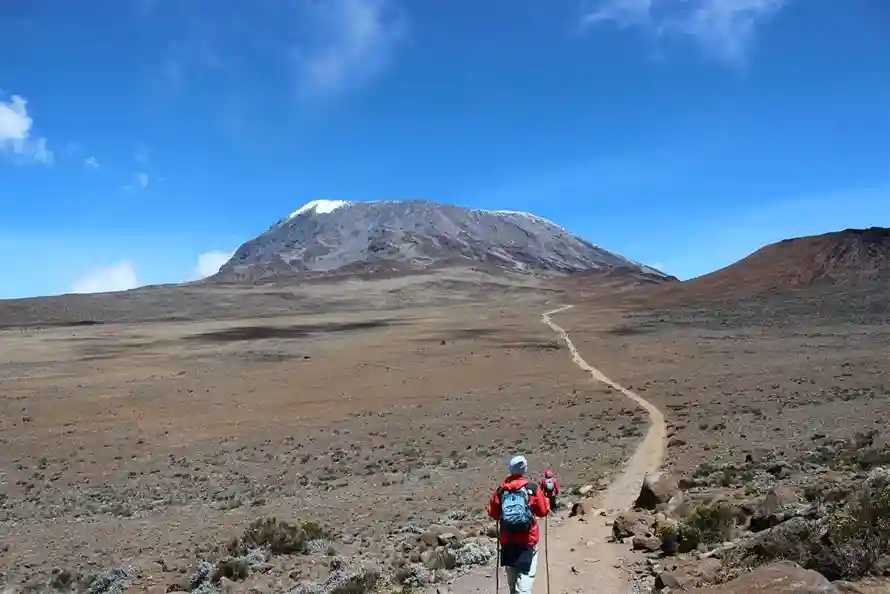
The Rongai Route climbs from the north, close to the Kenyan border, and it is the only route that approaches from that side. It is quieter than the southern routes, tends to be drier, and the walking is steady with no scrambling. If crowds and the Barranco Wall are what put you off Kilimanjaro, this is the route to look at. Prices start from $1,845 per person.
The 6-day version moves up faster than we would choose for most first-timers. If you can spare one more day, the 7-day Rongai climb splits the hardest early day in two.
| Route | Rongai up, Marangu down |
|---|---|
| Days on the mountain | 6 days, 5 nights, tents then one in a hut |
| Total distance | About 73 km (45 mi) |
| Start and finish | Rongai Gate (north), Marangu Gate (1,860 m / 6,100 ft) |
| Summit | Uhuru Peak, 5,895 m (19,341 ft) |
| Difficulty | Hard, with steady walking |
| Best seasons | January to mid-March, June to October |
| Price | From $1,845 per person, two sharing |
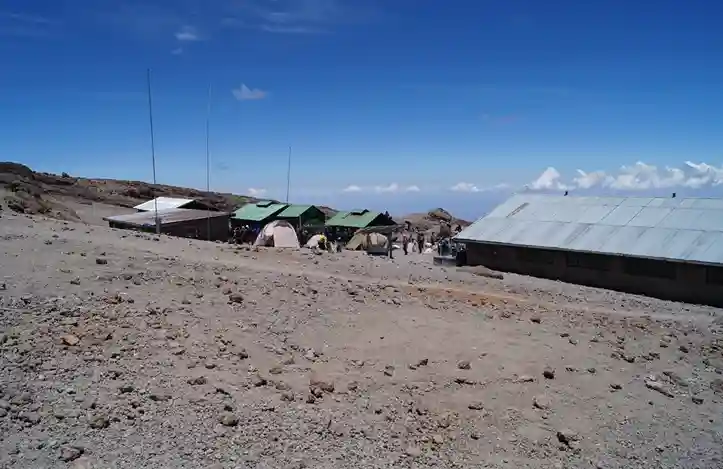
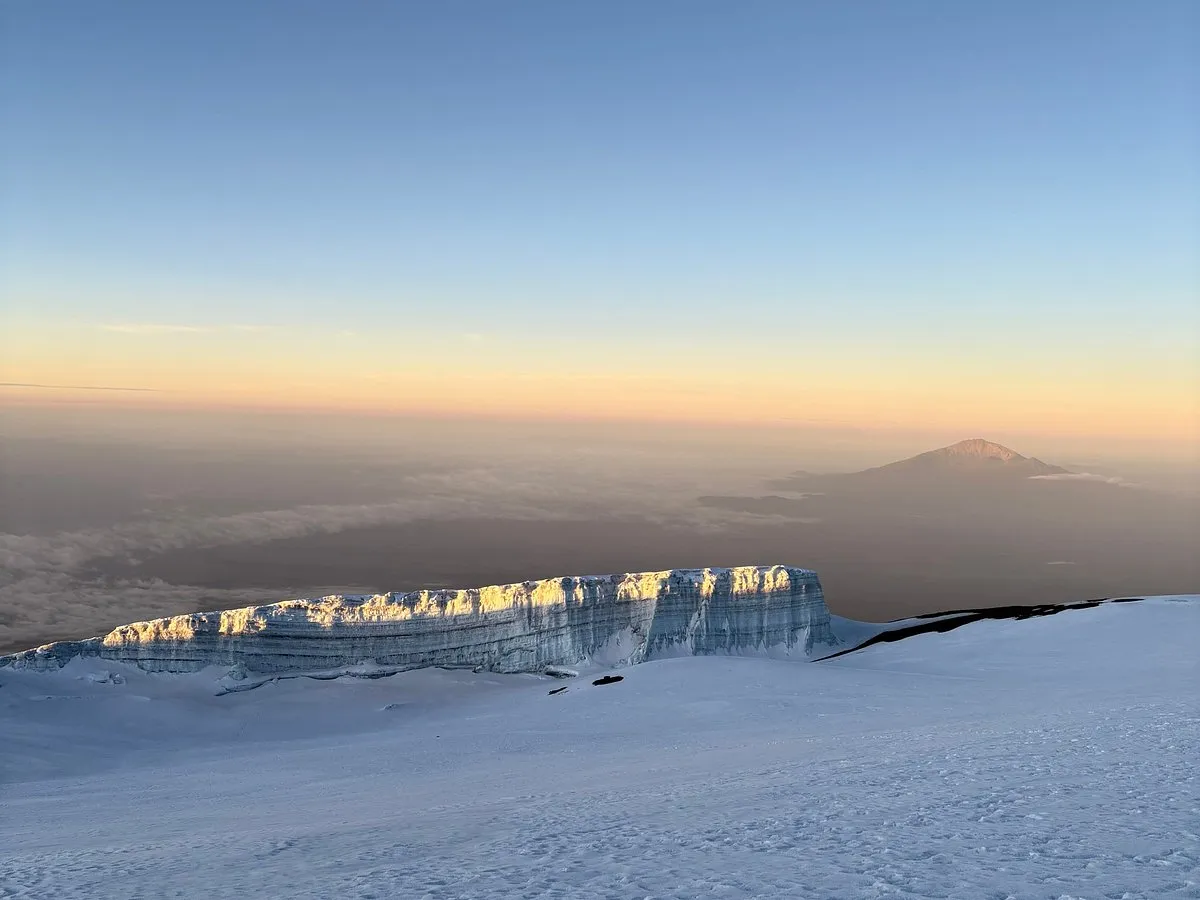
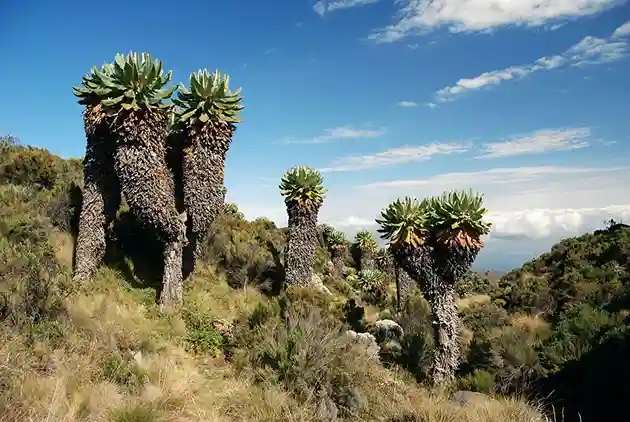
The 6-day climb walks straight from First Cave to Kikelewa on day 2, a long day with a big gain in height. The 7-day climb breaks that into two short days, for $245 more per person. Everything after that is the same. Choose 6 days if you have recent altitude experience or a fixed schedule.
It suits fit walkers who want quiet trails, who are nervous about scrambling, or who are climbing in a wetter month. It is less suitable if scenery is your top priority, because the first days are gentler but less dramatic than the Shira Plateau or the Barranco Valley. For that, look at the 6-day Machame or the 8-day Lemosho.
Here is how the 6-day Rongai climb runs from gate to gate. Distances and walking times are typical figures, and your guide will set a pace that is slower than you expect. You also spend one night in a Moshi hotel before the climb and one after it.
The drive around the mountain to the northern side, close to the Kenyan border, takes 3 to 4 hours including registration. A gentle path then leads through farmland and pine plantation into forest, where colobus monkeys are sometimes seen. It is a quiet start with very few other climbers, and the first camp sits on the edge of the moorland with views north across the plains.
A long day climbs through moorland toward Mawenzi with open views into Kenya. You gain about 1,000 meters (3,300 feet), which is the main reason the 6-day Rongai has a tighter acclimatization profile than the 7-day. Keep your pace slow, because there is no need to arrive early, and drink more than you think you need.
A short, steep climb brings you to a small lake below the spires of Mawenzi, one of the most striking camps on the mountain. You arrive by midday. An afternoon walk nearby with your guide helps you acclimatize, and the view of Mawenzi's rock towers in the evening light is the reason many climbers remember this route.
You cross the Saddle's bare alpine desert, with Kibo growing ever larger ahead. The walking is not steep, but the height makes it feel harder. School Hut is the high camp below Kibo. After an early dinner, you lay out your summit clothing and sleep for a few hours before you set off.
You leave around midnight and climb to Gilman's Point (5,685 m / 18,652 ft) on the crater rim, then walk along it past Stella Point to Uhuru Peak (5,895 m / 19,341 ft). Temperatures can fall to around -20°C (-4°F) with wind. You descend by the Marangu path, so you see a different side of the mountain on the way down, and you spend the night in a bed at Horombo Huts.
A long downhill through moorland and forest takes you back to the gate, with the air getting warmer and thicker with every hour. Certificates are issued at the gate: climbers who reach Uhuru Peak receive a gold summit certificate, and those who reach Gilman's Point receive a green one. We then drive you back to your hotel in Moshi for a shower and your second included night.
The Rongai Route is one of the gentler ways up Kilimanjaro. The gradient is steady, there is no scrambling, and the daily distances are moderate. That makes it a good choice if you are nervous about the Barranco Wall or heights. It does not make the summit any easier, however. You still climb about 1,150 meters (3,800 feet) in the dark from School Hut, and the altitude is the same as on every other route.
On 6 days, the main difficulty is day 2, when you gain about 1,000 meters (3,300 feet) early in the climb. Take that day slowly.
Summit night on the Rongai Route starts from School Hut around midnight. You climb steep scree to Gilman's Point on the crater rim, usually around dawn, and then walk along the rim past Stella Point to Uhuru Peak. It is cold and slow going, like every summit night on Kilimanjaro, but the sunrise over Mawenzi from the rim is one of the great views in Africa. On the way down, you follow the Marangu path, so the descent is on new ground.
The 6-day Rongai climb starts from $1,845 per person with two people sharing. Prices differ slightly by group size because of how hotel rooms are shared in Moshi, not because of your crew, who are arranged per climber. For more than six climbers, or a different hotel level, ask us for a quote. Your final price is confirmed in your written quotation.
| Group size | Price per person |
|---|---|
| 1 climber | $1,890 |
| 2 climbers | $1,845 |
| 3 climbers | $1,880 |
| 4 climbers | $1,845 |
| 5 climbers | $1,865 |
| 6 climbers | $1,845 |
Budget separately for flights, your visa, insurance and tips. Our Kilimanjaro cost guide shows what to expect in total, so nothing catches you out.
Every climber on our Kilimanjaro climbs has one guide, five porters and one cook. A group of two therefore has two guides, ten porters and two cooks. That ratio is higher than many operators offer, and it means that if one climber needs to slow down or turn back, the other can continue with their own guide.
Our guides have worked on Tanzania tours for 7 years. They are graduates of the College of African Wildlife Management, Mweka, and the National College of Tourism, and they hold certification from those institutions. We are also a partner of the Kilimanjaro Porters Assistance Project (KPAP), which works for the fair treatment of mountain crews.
Mild headaches and poor sleep are normal above 3,000 meters (10,000 feet). Severe symptoms are an emergency, and the treatment is to go down. Be honest with your guide about how you feel each day, and read our guide to altitude sickness on Kilimanjaro before you travel. We carry pulse oximeters to track your blood-oxygen levels each day, emergency oxygen cylinders for emergency descents and severe altitude illness, and a Gamow bag, a portable pressure chamber used to treat advanced altitude sickness. Helicopter evacuation is available through providers including Kili MedAir and Proflight Helicopters, with fees starting from $3,500 per person. It is not part of the climb price, so check that your travel insurance covers trekking to 6,000 meters (19,685 feet) and evacuation before you buy it.
Tips are paid at the end of the climb and are not in the price. Common guidance is about $20 to $30 a day for a guide, $12 to $20 for a cook and $5 to $10 for each porter. With our crew of seven, that works out at about $340 to $600 per climber on this 6-day climb. We go through how to do this fairly at your briefing.
The driest months are January to mid-March and June to October. The northern side of the mountain usually gets less rain than the south, which makes the Rongai Route a popular choice in shoulder months and in the short rains of November. It is quiet all year. Rain is still possible on any day, so pack for it, even in a dry month. Our month-by-month guide goes into more detail.
The Rongai trailhead is on the north side of the mountain near the Kenyan border, 3 to 4 hours by road from Moshi including registration. We collect you from your hotel in the morning. The climb finishes on the Marangu side, about 45 minutes from Moshi, so your drive back is short. Fly into Kilimanjaro International Airport (JRO), about an hour from Moshi, and we meet you there.
Start training at least 12 weeks before you travel, with long hikes on back-to-back days. Our Kilimanjaro training plan shows you how, and our packing list covers what to bring and what you can rent in Moshi. Two nights in a mid-range Moshi hotel are included by default, one before and one after the climb. If you would prefer a different standard, tell us and we will adjust your quote.
Your legs will need a day or two, and then many climbers add a northern circuit safari. We can build this into one quote.
The walking is gentler, with no Barranco Wall and fewer steep sections. The altitude is the same, so it still needs proper fitness and time to adapt.
You descend by the Marangu path, so your last night on the mountain is at Horombo Huts. Tents are used on the way up.
The northern side usually gets less rain than the south, so it is a common choice in wetter months. Rain is still possible, so pack for it.
It takes 3 to 4 hours by road from Moshi including registration. The drive back from Marangu Gate at the end takes about 45 minutes.
We run private climbs and have no joining dates of our own. If you would like company, we can ask trusted partner companies whether one of their departures matches your dates, at the same price with nothing added.
Tell us your dates and how many are climbing, and we will send a full quote from our office on Mawenzi Road in Moshi.
Price per personFrom $1,845 USD
Request a quote