How much is a Lake Chala day trip?
It starts from $150 per person with two people sharing, from Moshi. Any kayak hire is extra.

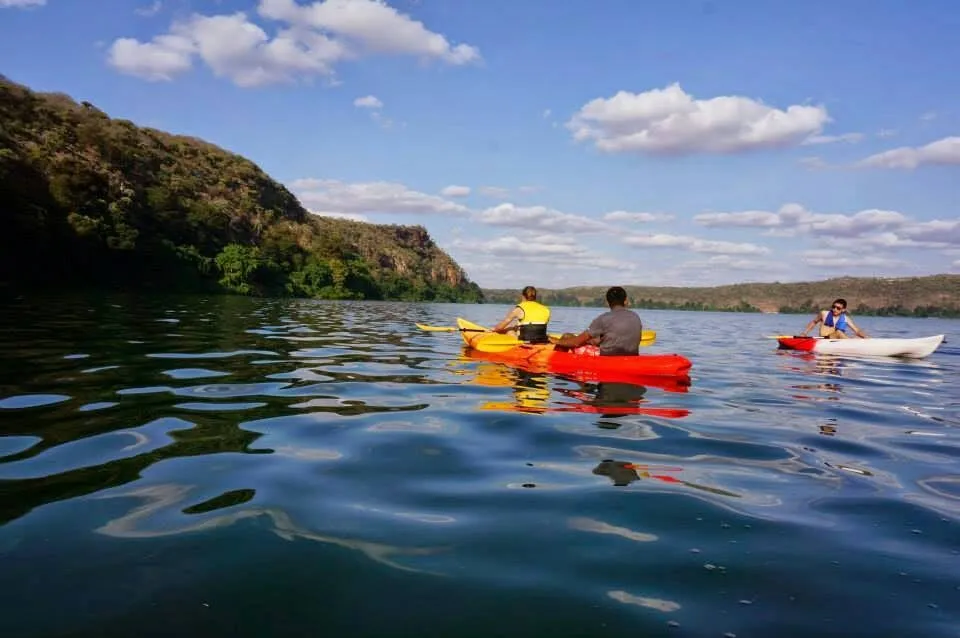
Few visitors to Moshi have heard of Lake Chala, and that is a large part of its appeal. Hidden in an ancient volcanic crater on the border with Kenya, this deep blue-green lake sits below steep forested walls, with monkeys in the trees and, on a clear morning, Kilimanjaro rising behind you. You may have the view almost to yourself.
This guide explains what the day involves, how hard the walk is, what you should know about swimming and whether it is the right trip for you.
Lake Chala is a crater lake, formed in a volcanic basin east of Moshi, that straddles the border between Tanzania and Kenya. It is about 4 kilometers (2.5 miles) across and very deep, and it is fed by water that seeps underground from Kilimanjaro rather than by rivers. That is why its water stays so clear and why its color can shift between blue and green. Scientists have studied the layers of sediment at the bottom of the lake, because they hold a long record of East Africa's past climate.
| Time | What happens |
|---|---|
| Around 8 a.m. | We collect you from your Moshi hotel for the drive of about 1.5 to 2 hours, past farms and small towns, with Kilimanjaro behind you on clear days. |
| Morning | You walk to viewpoints on the crater rim, then down through the forest toward the water with your guide. |
| Midday | A picnic lunch overlooking the lake. |
| Afternoon | Time by the water, or optional kayaking where it is available, followed by the climb back up. |
| Late afternoon | We drive you back to your hotel in Moshi. |
Timings are a guide. Start early if you hope to see Kilimanjaro, because clouds often build by midday.
The walk is moderate, and the climb back up is the hardest part. The path down the inside of the crater is steep and rocky in places, and it can be hot, so go slowly and carry plenty of water. Allow about an hour for a walk along the rim, and more if you go down to the water. You should be reasonably fit and steady on your feet. If you would rather not climb, you can still enjoy the views from the rim, so tell your guide what suits you.
Look out for blue monkeys and vervet monkeys in the trees, and for the many birds around the rim. Your guide can point out plants and explain how the crater was formed, so take your time.
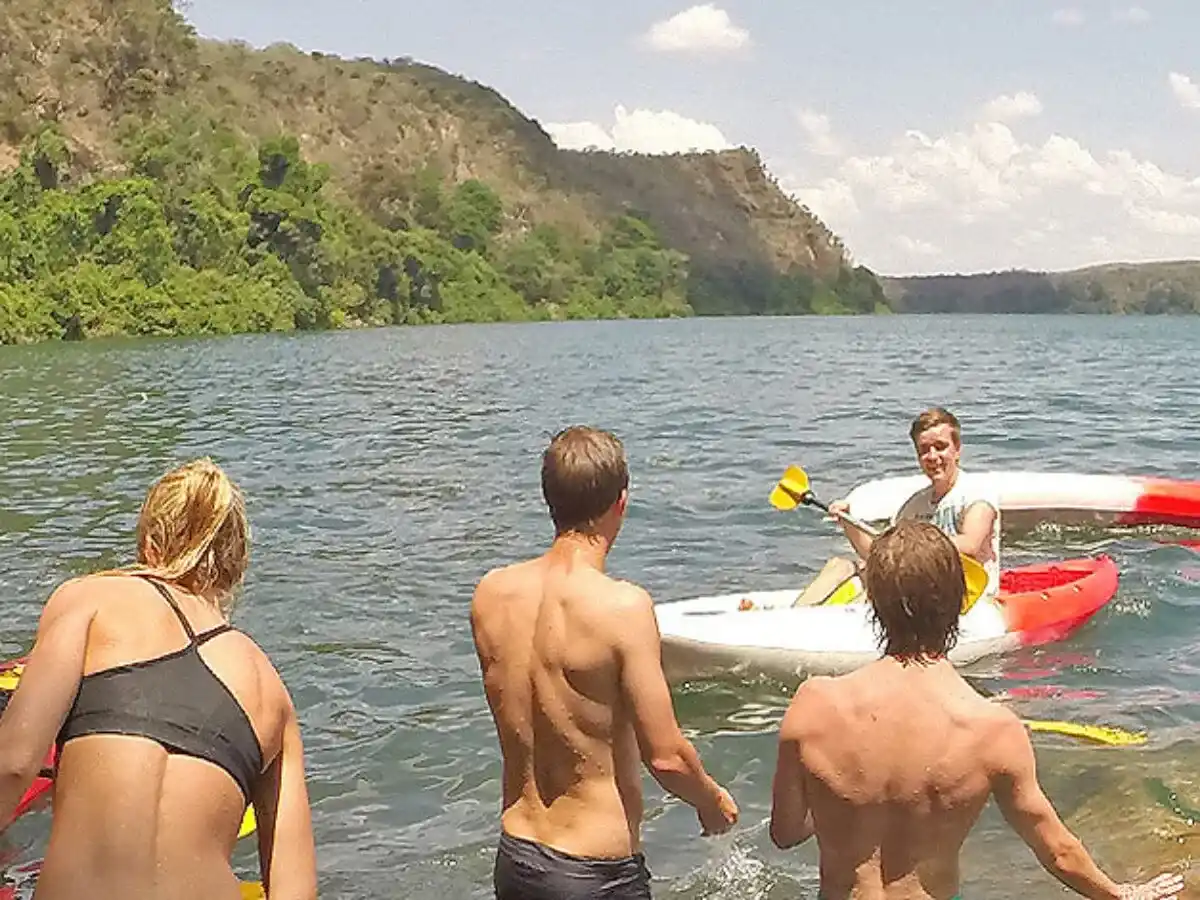
Some operators offer swimming, but you should be cautious. Lake Chala is very deep, with steep sides and no lifeguards. Crocodiles are also known to have lived in the lake, and a fatal attack was reported there in 2002. Always follow your guide's advice on the day, ask about current conditions before going in, and choose not to swim if you are in any doubt. If swimming is your main goal, Chemka Hot Springs is a far simpler choice. Kayaking may be possible through a local operator, at extra cost, and we can check availability.
On a clear day, Kilimanjaro rises beyond the rim, and it is one of the best views of the mountain's eastern side, with both Kibo and Mawenzi visible. Mornings give you the best chance, and clouds tend to build up later in the day. The drier months from June to October and from January to mid-March are usually clearest. Do not be disappointed if the mountain stays hidden, because the lake itself is still a remarkable sight.
The border runs through the lake, and part of the rim lies in Kenya. You do not usually need to cross it on this trip, but bring your passport in case you are asked for ID, and follow your guide's direction on where to walk. Do not walk beyond the areas your guide takes you to. Local rules and access can change, and we will confirm the details when you book.
It suits active travelers and photographers who enjoy a walk with a view, and anyone who has already been to Materuni and wants something quieter. It is a good choice if you dislike crowds. It suits you less if you want to relax all day or if you are traveling with very young children, because of the steep paths and deep water. It is also a poor choice the day before a Kilimanjaro climb, as the climb back up the crater can leave your legs tired.
The Lake Chala day trip starts from $150 per person with two people sharing. The price per person falls as your group grows, because the vehicle and guide cost is shared. These are prices from Moshi, and your final price is confirmed in your written quotation.
| Group size | Price per person |
|---|---|
| 1 traveler | $275 |
| 2 travelers | $150 |
| 3 travelers | $105 |
| 4 travelers | $85 |
| 5 travelers | $70 |
| 6 travelers | $65 |
Tips are not included, and they are appreciated. Common guidance is about $15 to $25 per traveler per day for your guide.
June to October and January to mid-March offer dry paths and the best chance of mountain views. In the rains, from mid-March to May and in November, the crater path can be slippery and roads can be slow, although the forest is very green. It can be hot in the middle of the day at any time of year, so it is best to start your walk early.
Lake Chala takes longer to reach than Materuni or Chemka, and it has fewer visitors. Materuni offers more culture, and Chemka offers easier swimming. Lake Chala offers space and scenery, with a sense of having found something few others see. If you have several free days in Moshi, it makes a good second or third trip. See our Moshi day trips guide.
Bring good walking shoes, a hat, sunscreen, at least two liters of water, a light rain jacket, a camera, binoculars, your passport and some small bills. A swimsuit is useful if you plan to kayak. See a travel clinic before your trip, and ask about malaria protection for the lowlands around Moshi.
It starts from $150 per person with two people sharing, from Moshi. Any kayak hire is extra.
It usually takes about 1.5 to 2 hours by road, depending on your hotel and on conditions.
Be cautious. The lake is deep, there are no lifeguards, and crocodiles have been reported. Follow your guide's advice, and do not swim if you are unsure.
You do not usually need to cross into Kenya on this trip. Bring your passport, and stay in the areas your guide shows you.
Yes, on clear days, and most often in the morning.
It is moderate, with a steep climb back up from the water.
Older children who enjoy walking usually do well. It is less suitable for very young children.
If you enjoy a good walk and a quiet place, yes. It is one of the most beautiful spots near Moshi, and few people get there. Start early, carry plenty of water and be careful around the water. Send us your date, and we will arrange the rest.
Tell us your date, hotel and group size, and we will send a written quote.